法医学杂志 ›› 2026, Vol. 42 ›› Issue (1): 1-7.DOI: 10.12116/j.issn.1004-5619.2024.440510

• 论著 •    下一篇

基于有限元仿真的颅脑摔跌伤成伤机制分析

杨杰1(), 胡毅磊2, 王金明3, 李正东3()   

  1. 1.上海公安学院,上海 200137
    2.浦东分局梅园新村派出所,上海 200120
    3.司法鉴定科学研究院 上海市法医学重点实验室 司法部司法鉴定重点实验室 上海市司法鉴定专业技术服务平台,上海 200063
  • 收稿日期:2024-05-11 发布日期:2026-04-28 出版日期:2026-02-25
  • 通讯作者: 李正东
  • 作者简介:杨杰(1981—),女,博士,副教授,主要从事刑事科学技术研究;E-mail:974470387@qq.com
  • 基金资助:
    上海市教育发展基金会和上海市教育委员会“曙光计划”资助项目(21SG58);上海市2023年度“科技创新行动计划”启明星培育资助项目(23YF1448700);上海市法医学重点实验室资助项目(21DZ2270800)

Analysis of the Injury Mechanism of Traumatic Craniocerebral Injury from Falls Based on Finite Element Simulation

Jie YANG1(), Yi-lei HU2, Jin-ming WANG3, Zheng-dong LI3()   

  1. 1.Shanghai Police College, Shanghai 200137, China
    2.Meiyuan Xincun Police Station of Pudong Branch, Shanghai 200120, China
    3.Shanghai Key Laboratory of Forensic Medicine, Shanghai Forensic Service Platform, Academy of Forensic Science, Ministry of Justice, Shanghai 200063, China
  • Received:2024-05-11 Online:2026-04-28 Published:2026-02-25
  • Contact: Zheng-dong LI
  • About author:First author contact:YANG J,HU Y L,WANG J M,et al. Analysis of the injury mechanism of traumatic brain injury from falls based on finite element simulation[J].

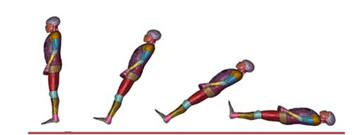
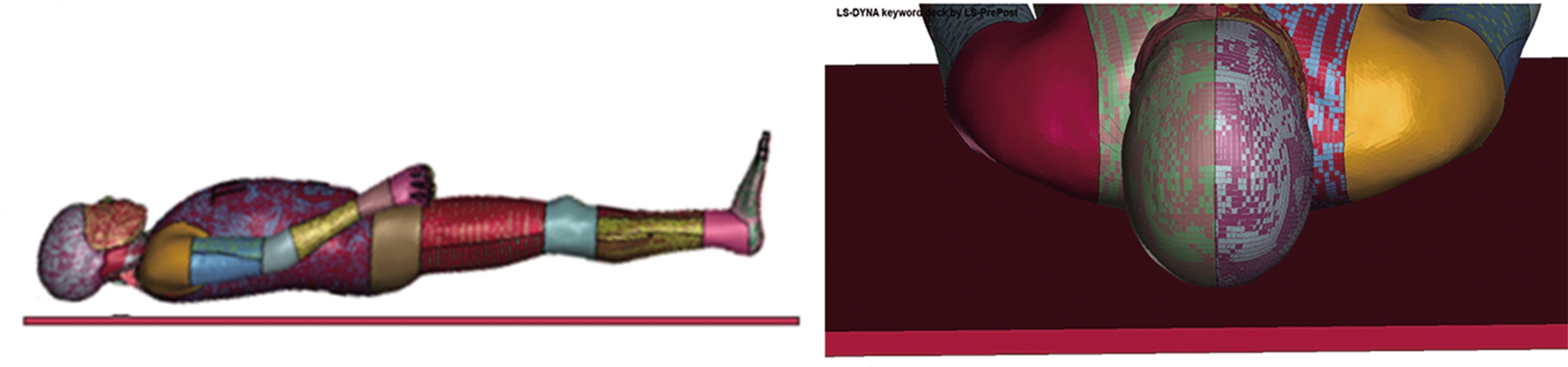
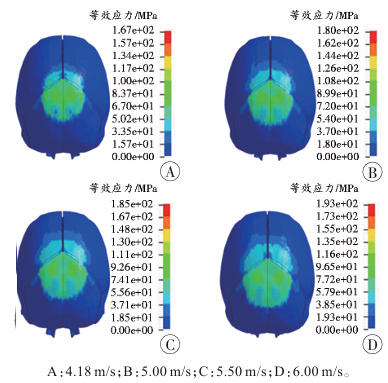
摘要:

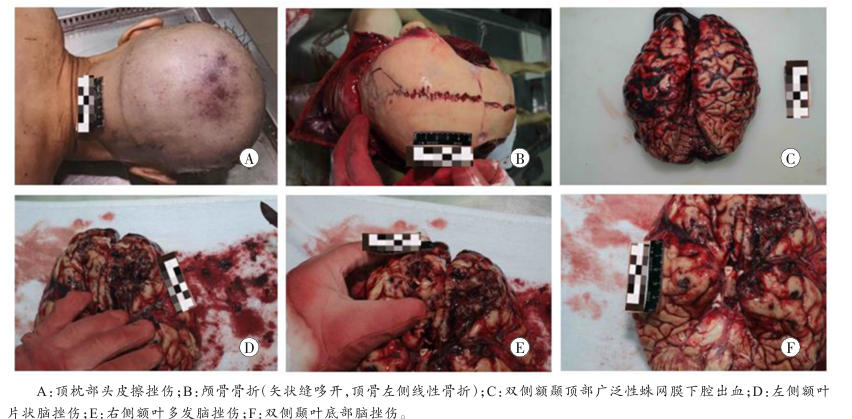
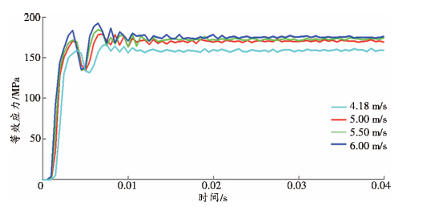
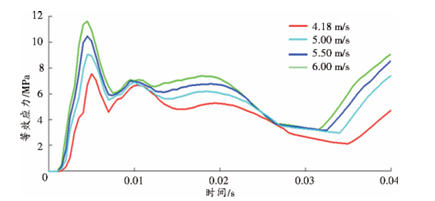
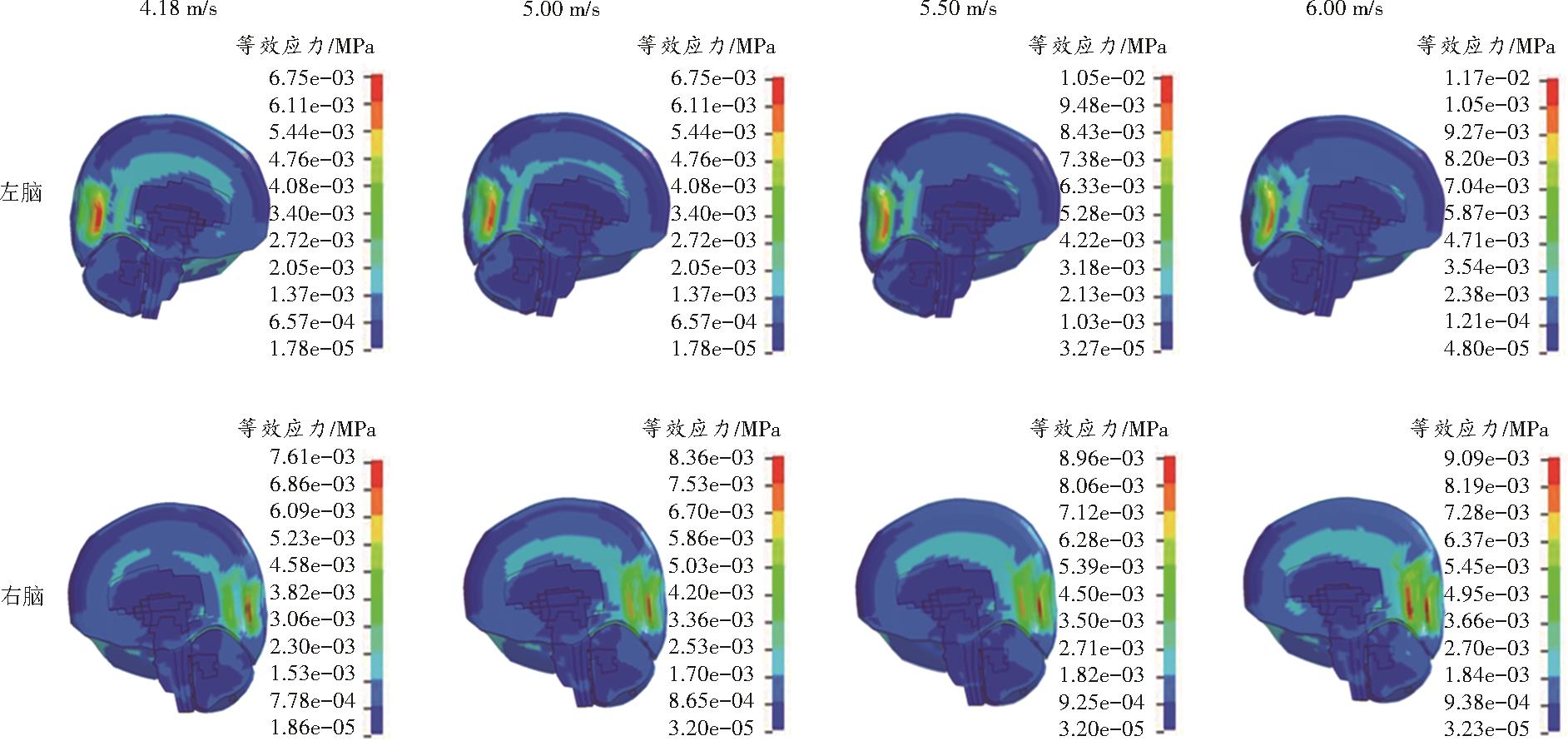
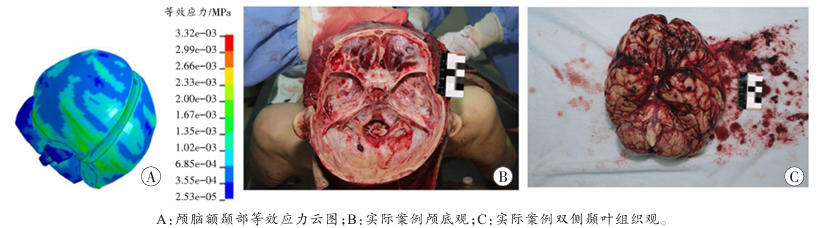
目的 利用有限元方法对1例致伤方式存疑的颅脑损伤死亡案例进行数字化仿真试验,基于生物力学数据量化分析死者颅脑损伤的成伤机制,为致伤方式鉴定提供量化、可视的客观依据。 方法 利用THUMS 4.02人体有限元模型模拟人体枕部摔跌至平地的颅骨和脑组织损伤过程,着地速度分别为4.18、5.00、5.50和6.00 m/s,结合实际尸体检验结果,从损伤特征及组织应力特征分析颅脑损伤的成伤机制。 结果 当人体不受外力自由摔跌(4.18 m/s)以枕部着地后,可造成枕骨轻微骨折、脑组织轻度损伤;当人体遭外力推击,以(5.00、5.50和6.00 m/s)枕部着地后,颅骨的骨折范围可累及颅底,造成中度脑组织损伤,结合实际损伤结果,可排除案例自由摔跌的可能。 结论 利用有限元法重建颅脑损伤过程,通过损伤生物力学指标可为疑难案件致伤方式的鉴定提供新思路。

关键词: 法医病理学, 有限元法, 生物力学, 颅脑损伤, 成伤机制

Abstract:

Objective To use finite element methods to conduct a digital simulation of a craniocerebral injury death case in which the manner of injury was questionable. Based on biomechanical data, the injury mechanism of the deceased’s brain injury was quantitatively analyzed to provide a quantitative and visual objective basis for determining the manner of injury. Methods The THUMS 4.02 human finite element model was used to simulate the process of skull and brain tissue injury when the occipital region fell and struck flat ground, with impact velocities of 4.18, 5.00, 5.50 and 6.00 m/s. Combined with the actual autopsy results, the injury mechanism was analyzed based on injury patterns and tissue stress characteristics. Results When the human body fell freely without external force (4.18 m/s) and landed on the occipital region, it caused minor fractures of the occipital bone and mild brain tissue injury; when the body was pushed to the ground by external forces (5.00, 5.50 and 6.00 m/s), the fracture range of the skull extended to the skull base, causing moderate brain tissue injury. Based on the actual injury findings, the possibility that the deceased fell freely can be ruled out. Conclusion Reconstructing the process of traumatic brain injury using the finite element method can provide new ideas for determining the mechanism of injury in complex forensic cases through biomechanical indicators.

Key words: forensic pathology, finite element method, biomechanics, craniocerebral injury, injury mechanism

中图分类号: