
Journal of Forensic Medicine ›› 2025, Vol. 41 ›› Issue (6): 585-592.DOI: 10.12116/j.issn.1004-5619.2024.141001
• Original Articles • Previous Articles Next Articles
Chen-huai-yu ZHU1( ), Jie-yu WANG1, Ying LIU1, Bi-yu WANG2, Zhi-jun HUANG2, Yang YU1, Yan-ni ZENG1,3,4(), Yan-wei SHI1,2,3,4()
Received:2024-10-21
Online:2026-02-27
Published:2025-12-25
Contact:
Yan-ni ZENG, Yan-wei SHI
CLC Number:
Chen-huai-yu ZHU, Jie-yu WANG, Ying LIU, Bi-yu WANG, Zhi-jun HUANG, Yang YU, Yan-ni ZENG, Yan-wei SHI. Analysis of the Reasons for the Inconsistent Opinions on the Mental Disability Assessments[J]. Journal of Forensic Medicine, 2025, 41(6): 585-592.
Add to citation manager EndNote|Ris|BibTeX
URL: http://www.fyxzz.cn/EN/10.12116/j.issn.1004-5619.2024.141001
| 项目 | 例数(%) |
|---|---|
| 性别 | |
| 男性 | 40(80.0) |
| 女性 | 10(20.0) |
| 文化程度 | |
| 小学及以下 | 21(42.0) |
| 初中 | 24(48.0) |
| 高中或中专或技校 | 2(4.0) |
| 大学 | 3(6.0) |
| 职业 | |
| 工人 | 30(60.0) |
| 服务业人员 | 12(24.0) |
| 农民 | 8(16.0) |
| 损伤方式 | |
| 交通事故 | 47(94.0) |
| 高坠 | 3(6.0) |
| 重新鉴定原因 | |
| 对鉴定意见提出异议 | 48(96.0) |
| 病情变化 | 1(2.0) |
| 未提及 | 1(2.0) |
Tab. 1 Demographic information ofthe assessed individuals
| 项目 | 例数(%) |
|---|---|
| 性别 | |
| 男性 | 40(80.0) |
| 女性 | 10(20.0) |
| 文化程度 | |
| 小学及以下 | 21(42.0) |
| 初中 | 24(48.0) |
| 高中或中专或技校 | 2(4.0) |
| 大学 | 3(6.0) |
| 职业 | |
| 工人 | 30(60.0) |
| 服务业人员 | 12(24.0) |
| 农民 | 8(16.0) |
| 损伤方式 | |
| 交通事故 | 47(94.0) |
| 高坠 | 3(6.0) |
| 重新鉴定原因 | |
| 对鉴定意见提出异议 | 48(96.0) |
| 病情变化 | 1(2.0) |
| 未提及 | 1(2.0) |
| 编号 | 初次鉴定诊断 | 重新鉴定诊断 | 例数(%) |
|---|---|---|---|
| 1 | 器质性智能损害(痴呆)(0x.xx1,-) | 脑挫裂伤后综合征(02.42,F07.8) | 9(34.6) |
| 器质性遗忘(0x.xx2,F04) | 3(11.5) | ||
| 器质性神经症样综合征(0x.xx8,F06.4/F06.6) | 2(7.7) | ||
| 器质性遗忘(0x.xx2,F04),器质性人格改变(0x.xx3,F07) | 1(3.8) | ||
| 器质性癔症样综合征(0x.xx7,F06.5) | 1(3.8) | ||
| 2 | 器质性智能损害(痴呆)(0x.xx1,-),器质性人格改变(0x.xx3,F07) | 脑挫裂伤后综合征(02.42,F07.8) | 3(11.5) |
| 3 | 器质性遗忘(0x.xx2,F04) | 脑挫裂伤后综合征(02.42,F07.8) | 2(7.7) |
| 4 | 器质性人格改变(0x.xx3,F07) | 器质性神经症样综合征(0x.xx8,F06.4/F06.6) | 1(3.8) |
| 5 | 脑挫裂伤后综合征(02.42,F07.8) | 器质性抑郁综合征(0x.xx62,F06.32) | 1(3.8) |
| 6 | 器质性遗忘(0x.xx2,F04),器质性抑郁综合征(0x.xx62,F06.32) | 器质性神经症样综合征(0x.xx8,F06.4/F06.6) | 1(3.8) |
| 7 | 器质性智能损害(痴呆)(0x.xx1,-),器质性遗忘(0x.xx2,F04) | 脑挫裂伤后综合征(02.42,F07.8) | 1(3.8) |
| 8 | 器质性遗忘(0x.xx2,F04),器质性人格改变(0x.xx3,F07) | 脑挫裂伤后综合征(02.42,F07.8) | 1(3.8) |
Tab. 2 Comparative analysis of mental disorder diagnosis between initial assessment and re-assessment
| 编号 | 初次鉴定诊断 | 重新鉴定诊断 | 例数(%) |
|---|---|---|---|
| 1 | 器质性智能损害(痴呆)(0x.xx1,-) | 脑挫裂伤后综合征(02.42,F07.8) | 9(34.6) |
| 器质性遗忘(0x.xx2,F04) | 3(11.5) | ||
| 器质性神经症样综合征(0x.xx8,F06.4/F06.6) | 2(7.7) | ||
| 器质性遗忘(0x.xx2,F04),器质性人格改变(0x.xx3,F07) | 1(3.8) | ||
| 器质性癔症样综合征(0x.xx7,F06.5) | 1(3.8) | ||
| 2 | 器质性智能损害(痴呆)(0x.xx1,-),器质性人格改变(0x.xx3,F07) | 脑挫裂伤后综合征(02.42,F07.8) | 3(11.5) |
| 3 | 器质性遗忘(0x.xx2,F04) | 脑挫裂伤后综合征(02.42,F07.8) | 2(7.7) |
| 4 | 器质性人格改变(0x.xx3,F07) | 器质性神经症样综合征(0x.xx8,F06.4/F06.6) | 1(3.8) |
| 5 | 脑挫裂伤后综合征(02.42,F07.8) | 器质性抑郁综合征(0x.xx62,F06.32) | 1(3.8) |
| 6 | 器质性遗忘(0x.xx2,F04),器质性抑郁综合征(0x.xx62,F06.32) | 器质性神经症样综合征(0x.xx8,F06.4/F06.6) | 1(3.8) |
| 7 | 器质性智能损害(痴呆)(0x.xx1,-),器质性遗忘(0x.xx2,F04) | 脑挫裂伤后综合征(02.42,F07.8) | 1(3.8) |
| 8 | 器质性遗忘(0x.xx2,F04),器质性人格改变(0x.xx3,F07) | 脑挫裂伤后综合征(02.42,F07.8) | 1(3.8) |
| 精神障碍诊断 | 精神伤残等级级差/个 | 例数(%) |
|---|---|---|
| 不一致 | 1 | 9(18.0) |
| 2 | 3(6.0) | |
| 3 | 1(2.0) | |
| 5 | 1(2.0) | |
| 一致 | 1 | 5(10.0) |
| 2 | 1(2.0) | |
| 3 | 3(6.0) |
Tab. 3 Changes in the mental disability degreesbetween initial assessment and re-assessment
| 精神障碍诊断 | 精神伤残等级级差/个 | 例数(%) |
|---|---|---|
| 不一致 | 1 | 9(18.0) |
| 2 | 3(6.0) | |
| 3 | 1(2.0) | |
| 5 | 1(2.0) | |
| 一致 | 1 | 5(10.0) |
| 2 | 1(2.0) | |
| 3 | 3(6.0) |
| 编号 | 初次鉴定 | 重新鉴定 | 例数(%) |
|---|---|---|---|
| 1 | 无 | 额叶 | 2(11.1) |
| 顶叶 | 1(5.6) | ||
| 2 | 颞叶 | 额、颞、枕叶 | 1(5.6) |
| 3 | 额、颞叶 | 额、颞、顶叶 | 1(5.6) |
| 无 | 1(5.6) | ||
| 4 | 颞、枕叶 | 额、顶、枕叶 | 1(5.6) |
| 5 | 额、颞、顶叶 | 额、颞叶 | 2(11.1) |
Tab. 4 Comparison of the location of the cerebral malaciafoci between initial assessment and re-assessment
| 编号 | 初次鉴定 | 重新鉴定 | 例数(%) |
|---|---|---|---|
| 1 | 无 | 额叶 | 2(11.1) |
| 顶叶 | 1(5.6) | ||
| 2 | 颞叶 | 额、颞、枕叶 | 1(5.6) |
| 3 | 额、颞叶 | 额、颞、顶叶 | 1(5.6) |
| 无 | 1(5.6) | ||
| 4 | 颞、枕叶 | 额、顶、枕叶 | 1(5.6) |
| 5 | 额、颞、顶叶 | 额、颞叶 | 2(11.1) |
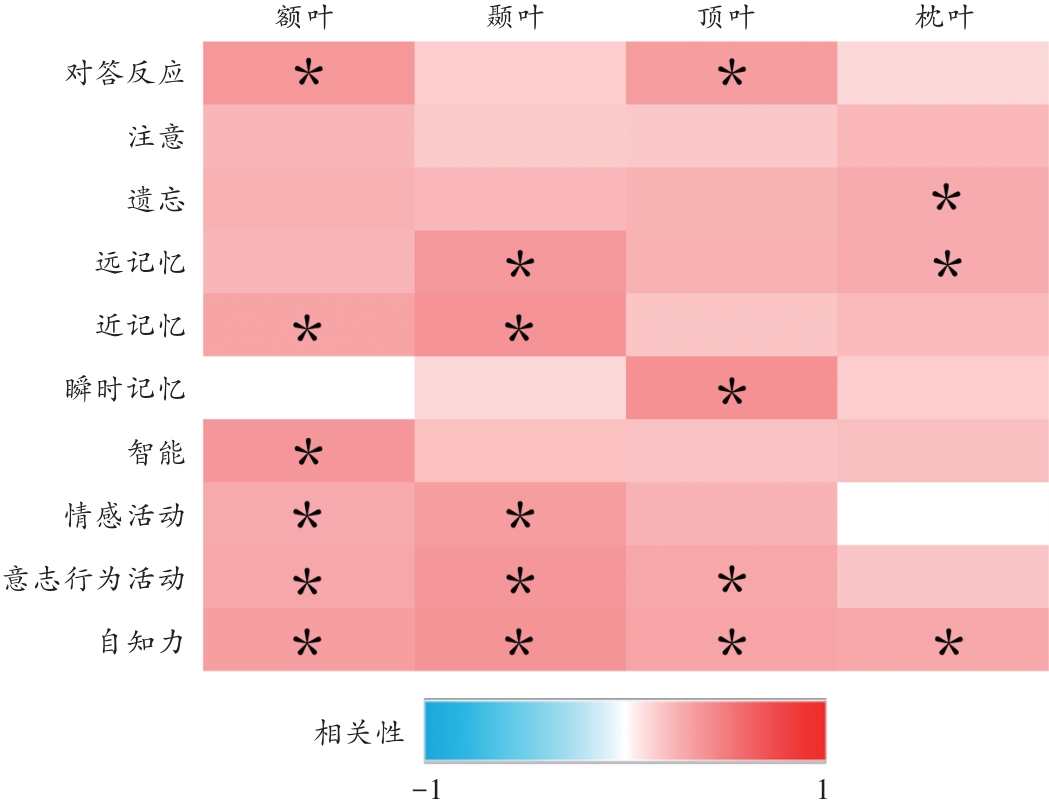
Fig. 1 Correlation between the location of cerebral malacia foci and the psychiatric symptoms during re-assessment
| 鉴定时精神症状 | 初次鉴定案例数(%) | 重新鉴定案例数(%) | Wald卡方值 | P值 |
|---|---|---|---|---|
| 一般情况 | ||||
| 意识状态 | - | - | ||
| 无受损 | 50(100.0) | 50(100.0) | ||
| 受损 | 0(0) | 0(0) | ||
| 反应力 | 8.913 | 0.003 | ||
| 无受损 | 26(52.0) | 14(28.0) | ||
| 受损 | 22(44.0) | 36(72.0) | ||
| 不详 | 2(4.0) | 0(0) | ||
| 对答反应 | 0.141 | 0.707 | ||
| 无受损 | 27(54.0) | 32(64.0) | ||
| 受损 | 21(42.0) | 18(36.0) | ||
| 不详 | 2(4.0) | 0(0) | ||
| 合作程度 | 11.123 | 0.001 | ||
| 合作 | 34(68.0) | 19(38.0) | ||
| 欠合作或不合作 | 11(22.0) | 31(62.0) | ||
| 不详 | 5(10.0) | 0(0) | ||
| 认知活动 | ||||
| 幻觉 | - | - | ||
| 无受损 | 50(100.0) | 50(100.0) | ||
| 受损 | 0(0) | 0(0) | ||
| 思维 | - | - | ||
| 无受损 | 50(100.0) | 50(100.0) | ||
| 受损 | 0(0) | 0(0) | ||
| 注意 | 0.145 | 0.704 | ||
| 无受损 | 29(58.0) | 29(58.0) | ||
| 受损 | 15(30.0) | 21(42.0) | ||
| 不详 | 6(12.0) | 0(0) | ||
| 遗忘 | 3.023 | 0.082 | ||
| 无受损 | 17(34.0) | 20(40.0) | ||
| 受损 | 22(44.0) | 26(52.0) | ||
| 不详 | 11(22.0) | 4(8.0) | ||
| 远记忆 | 2.523 | 0.112 | ||
| 无受损 | 19(38.0) | 25(50.0) | ||
| 受损 | 26(52.0) | 25(50.0) | ||
| 不详 | 5(10.0) | 0(0) | ||
| 近记忆 | 14.738 | <0.001 | ||
| 无受损 | 7(14.0) | 21(42.0) | ||
| 受损 | 39(78.0) | 29(58.0) | ||
| 不详 | 4(8.0) | 0(0) | ||
| 瞬时记忆 | 3.679 | 0.055 | ||
| 无受损 | 5(10.0) | 27(54.0) | ||
| 受损 | 38(76.0) | 13(26.0) | ||
| 不详 | 7(14.0) | 10(20.0) | ||
| 智能 | 19.348 | <0.001 | ||
| 无受损 | 11(22.0) | 28(56.0) | ||
| 受损 | 38(76.0) | 21(42.0) | ||
| 不详 | 1(2.0) | 1(2.0) | ||
| 情感活动 | 15.658 | <0.001 | ||
| 无受损 | 22(44.0) | 35(70.0) | ||
| 受损 | 11(22.0) | 15(30.0) | ||
| 不详 | 17(34.0) | 0(0) | ||
| 意志行为活动 | 38.268 | <0.001 | ||
| 无受损 | 5(10.0) | 32(64.0) | ||
| 受损 | 32(64.0) | 18(36.0) | ||
| 不详 | 13(26.0) | 0(0) | ||
| 自知力 | 40.254 | <0.001 | ||
| 无受损 | 12(24.0) | 36(72.0) | ||
| 受损 | 11(22.0) | 14(28.0) | ||
| 不详 | 27(54.0) | 0(0) |
Tab. 5 Discrepancies in mental state examination between initial assessment and re-assessmentContinued Tab. 5
| 鉴定时精神症状 | 初次鉴定案例数(%) | 重新鉴定案例数(%) | Wald卡方值 | P值 |
|---|---|---|---|---|
| 一般情况 | ||||
| 意识状态 | - | - | ||
| 无受损 | 50(100.0) | 50(100.0) | ||
| 受损 | 0(0) | 0(0) | ||
| 反应力 | 8.913 | 0.003 | ||
| 无受损 | 26(52.0) | 14(28.0) | ||
| 受损 | 22(44.0) | 36(72.0) | ||
| 不详 | 2(4.0) | 0(0) | ||
| 对答反应 | 0.141 | 0.707 | ||
| 无受损 | 27(54.0) | 32(64.0) | ||
| 受损 | 21(42.0) | 18(36.0) | ||
| 不详 | 2(4.0) | 0(0) | ||
| 合作程度 | 11.123 | 0.001 | ||
| 合作 | 34(68.0) | 19(38.0) | ||
| 欠合作或不合作 | 11(22.0) | 31(62.0) | ||
| 不详 | 5(10.0) | 0(0) | ||
| 认知活动 | ||||
| 幻觉 | - | - | ||
| 无受损 | 50(100.0) | 50(100.0) | ||
| 受损 | 0(0) | 0(0) | ||
| 思维 | - | - | ||
| 无受损 | 50(100.0) | 50(100.0) | ||
| 受损 | 0(0) | 0(0) | ||
| 注意 | 0.145 | 0.704 | ||
| 无受损 | 29(58.0) | 29(58.0) | ||
| 受损 | 15(30.0) | 21(42.0) | ||
| 不详 | 6(12.0) | 0(0) | ||
| 遗忘 | 3.023 | 0.082 | ||
| 无受损 | 17(34.0) | 20(40.0) | ||
| 受损 | 22(44.0) | 26(52.0) | ||
| 不详 | 11(22.0) | 4(8.0) | ||
| 远记忆 | 2.523 | 0.112 | ||
| 无受损 | 19(38.0) | 25(50.0) | ||
| 受损 | 26(52.0) | 25(50.0) | ||
| 不详 | 5(10.0) | 0(0) | ||
| 近记忆 | 14.738 | <0.001 | ||
| 无受损 | 7(14.0) | 21(42.0) | ||
| 受损 | 39(78.0) | 29(58.0) | ||
| 不详 | 4(8.0) | 0(0) | ||
| 瞬时记忆 | 3.679 | 0.055 | ||
| 无受损 | 5(10.0) | 27(54.0) | ||
| 受损 | 38(76.0) | 13(26.0) | ||
| 不详 | 7(14.0) | 10(20.0) | ||
| 智能 | 19.348 | <0.001 | ||
| 无受损 | 11(22.0) | 28(56.0) | ||
| 受损 | 38(76.0) | 21(42.0) | ||
| 不详 | 1(2.0) | 1(2.0) | ||
| 情感活动 | 15.658 | <0.001 | ||
| 无受损 | 22(44.0) | 35(70.0) | ||
| 受损 | 11(22.0) | 15(30.0) | ||
| 不详 | 17(34.0) | 0(0) | ||
| 意志行为活动 | 38.268 | <0.001 | ||
| 无受损 | 5(10.0) | 32(64.0) | ||
| 受损 | 32(64.0) | 18(36.0) | ||
| 不详 | 13(26.0) | 0(0) | ||
| 自知力 | 40.254 | <0.001 | ||
| 无受损 | 12(24.0) | 36(72.0) | ||
| 受损 | 11(22.0) | 14(28.0) | ||
| 不详 | 27(54.0) | 0(0) |
| 日常生活能力评定 | 初次鉴定案例数(%) | 重新鉴定案例数(%) | Wald卡方值 | Padjust值 |
|---|---|---|---|---|
| 日常生活能力 | 4.247 | 0.039 | ||
| 无受损 | 12(24.0) | 27(54.0) | ||
| 部分受损 | 26(52.0) | 21(42.0) | ||
| 完全受损 | 2(4.0) | 2(4.0) | ||
| 不详 | 10(20.0) | 0(0) | ||
| 日常生活有关的活动能力 | 5.132 | 0.023 | ||
| 无受损 | 1(2.0) | 13(26.0) | ||
| 部分受损 | 16(32.0) | 19(38.0) | ||
| 完全受损 | 15(30.0) | 18(36.0) | ||
| 不详 | 18(36.0) | 0(0) |
Tab. 6 Discrepancies in functional impairment assessment of living ability between initial assessment and re-assessment
| 日常生活能力评定 | 初次鉴定案例数(%) | 重新鉴定案例数(%) | Wald卡方值 | Padjust值 |
|---|---|---|---|---|
| 日常生活能力 | 4.247 | 0.039 | ||
| 无受损 | 12(24.0) | 27(54.0) | ||
| 部分受损 | 26(52.0) | 21(42.0) | ||
| 完全受损 | 2(4.0) | 2(4.0) | ||
| 不详 | 10(20.0) | 0(0) | ||
| 日常生活有关的活动能力 | 5.132 | 0.023 | ||
| 无受损 | 1(2.0) | 13(26.0) | ||
| 部分受损 | 16(32.0) | 19(38.0) | ||
| 完全受损 | 15(30.0) | 18(36.0) | ||
| 不详 | 18(36.0) | 0(0) |
| [1] | MAAS A I R, MENON D K, MANLEY G T, et al. Traumatic brain injury: Progress and challenges in prevention, clinical care, and research[J]. Lancet Neurol,2022,21(11):1004-1060. doi:10.1016/ s1474-4422(22)00309-x . |
| [2] | BRETT B L, KRAMER M D, WHYTE J, et al. Latent profile analysis of neuropsychiatric symptoms and cognitive function of adults 2 weeks after traumatic brain injury: Findings from the TRACK-TBI study[J]. JAMA Netw Open,2021,4(3):e213467. doi:10.1001/jamanetworkopen.2021.3467 . |
| [3] | RAMANATHAN D M, WARDECKER B M, SLOCOMB J E, et al. Dispositional optimism and outcome following traumatic brain injury[J]. Brain Inj,2011,25(4):328-337. doi:10.3109/02699052.2011.554336 . |
| [4] | RIGGIO S, WONG M. Neurobehavioral sequelae of traumatic brain injury[J]. Mt Sinai J Med,2009,76(2):163-172. doi:10.1002/msj.20097 . |
| [5] | KATZ D I, COHEN S I, ALEXANDER M P. Mild traumatic brain injury[J]. Handb Clin Neurol,2015,127:131-156. doi:10.1016/B978-0-444-52892-6.00009-X . |
| [6] | BERGERSEN K, HALVORSEN J Ø, TRYTI E A, et al. A systematic literature review of psychotherapeutic treatment of prolonged symptoms after mild traumatic brain injury[J]. Brain Inj,2017,31(3):279-289. doi:10.1080/02699052.2016.1255779 . |
| [7] | 郭文,马龙,于湘友. 创伤性脑损伤预后评估的争议与进展[J].中华重症医学电子杂志(网络版),2020,6(3):252-259. doi:10.3877/cma.j.issn.2096-1537.2020.03.004 . |
| GUO W, MA L, YU X Y. Controversy and progress of prognostic evaluation of patients with traumatic brain injury[J]. Zhonghua Zhongzheng Yixue Dianzi Zazhi (Electronic edition),2020,6(3):252-259. | |
| [8] | 张盛宇,李豪喆,陈琛,等. 脑震荡后综合征伤残重新鉴定分析[J].法医学杂志,2021,37(5):661-665. doi:10.12116/j.issn.1004-5619.2020.101101 . |
| ZHANG S Y, LI H Z, CHEN C, et al. Analysis of post-concussion syndrome disability re-appraisal[J]. Fayixue Zazhi,2021,37(5):661-665. | |
| [9] | 季宇龙. 40例交通事故精神伤残程度重新鉴定分析[J].中国法医学杂志,2016,31(S2):292-293. doi:10.13618/j.issn.1001-5728.2016.S2.099 . |
| JI Y L. Analysis of reappraisal of psychiatric impairment degree in 40 traffic accident cases[J]. Zhongguo Fayixue Zazhi,2016,31(S2):292-293. | |
| [10] | 于恩彦,叶秀红,王英. 影响司法精神病学鉴定结论一致性因素的分析[J].浙江医学,2004,26(7):509-512. doi:10.3969/j.issn.1006-2785.2004.07.011 . |
| YU E Y, YE X H, WANG Y. Analysis of factors influencing the consistency of forensic psychiatric assessment conclusions[J]. Zhejiang Yixue,2004,26(7):509-512. | |
| [11] | 中华人民共和国司法部司法鉴定管理局. 精神障碍者司法鉴定精神检查规范: [S].2011. |
| Judical Expertise Administration, Ministry of Justice of the People’s Republic of China. Mental status examination standard in forensic assessment of individuals with mental disorders: [S]. 2011. | |
| [12] | LAWTON M P, BRODY E M. Assessment of older people: Self-maintaining and instrumental activities of daily living[J]. Gerontologist,1969,9(3):179-186. |
| [13] | SMITH L G F, MILLIRON E, HO M L, et al. Advanced neuroimaging in traumatic brain injury: An overview[J]. Neurosurg Focus,2019,47(6):E17. doi:10.3171/2019.9.FOCUS19652 . |
| [14] | 王美娟,邵宝富,王超,等. 磁敏感加权成像在脑外伤所致精神障碍原因分析中的应用[J].中国医学计算机成像杂志,2018,24(4):292-295. doi:10.3969/j.issn.1006-5741.2018.04.004 . |
| WANG M J, SHAO B F, WANG C, et al. Value of SWI in analyzing the causes of mental disorders caused by traumatic brain injury[J]. Zhongguo Yixue Jisuanji Chengxiang Zazhi,2018,24(4):292-295. | |
| [15] | BERNIER R A, HILLARY F G. Traumatic brain injury and frontal lobe plasticity[J]. Handb Clin Neurol,2019,163:411-431. doi:10.1016/B978-0-12-804281-6.00022-7 . |
| [16] | WU Z M, BUCKLEY M J. Prefrontal and medial temporal lobe cortical contributions to visual short-term memory[J]. J Cogn Neurosci,2022,35(1):27-43. doi:10.1162/jocn_a_01937 . |
| [17] | SQUIRE L R, STARK C E L, CLARK R E. The medial temporal lobe[J]. Annu Rev Neurosci,2004,27:279-306. doi:10.1146/annurev.neuro.27.070203.144130 . |
| [18] | 刘媛. 轻度脑创伤的研究进展[J].中国临床神经科学,2019,27(2):182-185,215. |
| LIU Y. Research progress of mild traumatic brain injury[J]. Zhongguo Linchuang Shenjing Kexue,2019,27(2):182-185,215. | |
| [19] | 中华人民共和国国家质量监督检验检疫总局,中国国家标准化管理委员会. 人身损害护理依赖程度评定: [S].2014. |
| General Administration of Quality Supervision, Inspection and Quarantine of the People’s Republic of China, Standardization Administration of the People’s Republic of China. Assessment of the level of nursing dependency for the personal injury: [S]. 2014. |
| [1] | Jun-jiang CHEN, Lan-jiang LI, Pu-ping LEI, Shang-wen WANG, Xin-biao LIAO, Li-fang CHEN, Huan ZHANG. Forensic Identification of a Fatality from Confined Container Deflagration Complicated by Tertiary Blast Injury: A Case Report [J]. Journal of Forensic Medicine, 2026, 42(1): 79-83. |
| [2] | Hu ZHAO. Current Status and Challenges of Forensic Psychiatry Research [J]. Journal of Forensic Medicine, 2025, 41(6): 531-536. |
| [3] | Xia-can CHEN, Qin YANG, Qin-ting ZHANG, Ai-li OUYANG, Jia-jun XU, Rui YANG, Zi-ye WANG, Jin-hui ZHAI, Yan LI, Xiao-rong QIN, Jun-mei HU. Reliability and Validity of the Life History of Aggression-Chinese Version in Schizophrenia Patients Assessment [J]. Journal of Forensic Medicine, 2024, 40(4): 352-358. |
| [4] | Xin-di LING, Hao-zhe LI, Shu-jian WANG, Wen LI, Wei-xiong CAI. Application of Facial Expression Analysis Technology in Violence Risk Assessment of Individuals with Mental Disorders in Supervised Settings [J]. Journal of Forensic Medicine, 2024, 40(3): 261-268. |
| [5] | Wen LI, Hao-zhe LI, Chen CHEN, Wei-xiong CAI. Research Progress and Application Prospect of Facial Micro-Expression Analysis in Forensic Psychiatry [J]. Journal of Forensic Medicine, 2023, 39(5): 493-500. |
| [6] | Tian-yu NAN. Progress of Keystroke Dynamics in Deception Research [J]. Journal of Forensic Medicine, 2022, 38(6): 783-787. |
| [7] | Long-rui ZHAO, Jian-bo ZHANG, Wei HAN, Li ZHU, Teng CHEN, Fang-lin GUAN. Application Prospect of Integrative Omics in Forensic Identification of Methamphetamine-Associated Psychosis [J]. Journal of Forensic Medicine, 2022, 38(5): 650-656. |
| [8] | Hui-yu FAN, Hao-zhe LI, Qing-ting ZHANG. The Legal Correspondence of Sexual Self-Defense Capability Assessment [J]. Journal of Forensic Medicine, 2022, 38(5): 606-610. |
| [9] | Qi-fan YANG, Xue-yang SUN, Yan-bin WANG, Zhi-ling TIAN, He-wen DONG, Lei WAN, Dong-hua ZOU, Xiao-tian YU, Guang-zheng ZHANG, Ning-guo LIU. Automatic Identification of Brain Injury Mechanism Based on Deep Learning [J]. Journal of Forensic Medicine, 2022, 38(2): 223-230. |
| [10] | Xue-yang SUN, Qi-fan YANG, Yun-liang ZHU, Yan-bin WANG, He-wen DONG, Ming-zhen YANG, Zhi-ling TIAN, Lei WAN, Dong-hua ZOU, Xiao-tian YU, Ning-guo LIU. Logistic Regression Analysis of the Mechanism of Blunt Brain Injury Inference Based on CT Images [J]. Journal of Forensic Medicine, 2022, 38(2): 217-222. |
| [11] | Ruo-chen CAO, Xia-can CHEN, Lu YIN, Hao-lan HUANG, Wei-zhi WAN, Yan LI, Jun-mei HU. An Epidemiologic Survey and Violent Behavior Analysis of Antisocial Personality Disorder in Young Men in Chengdu [J]. Journal of Forensic Medicine, 2022, 38(2): 239-245. |
| [12] | Sheng-yu ZHANG, Hao-zhe LI, Chen CHEN, Qin-ting ZHANG. Analysis of Post-Concussion Syndrome Disability Re-appraisal [J]. Journal of Forensic Medicine, 2021, 37(5): 661-665. |
| [13] | GAO Yong, LI Zheng-dong, ZOU Dong-hua, et al.. Parameterized Analysis of Craniocerebral Injury Caused by Fist [J]. Journal of Forensic Medicine, 2021, 37(3): 344-350. |
| [14] | DU Yu, JIA Qiong, YAO Lei, et al.. Forensic Analysis of 105 Autopsy Cases of Psychiatric Patients [J]. Journal of Forensic Medicine, 2021, 37(1): 54-57. |
| [15] | WANG Shu-jian, ZHENG Yu-zi, HE Yong, et al.. Analysis of 123 Cases of Forensic Psychiatry Testimony of Individuals Suspected of Road Traffic Offences [J]. Journal of Forensic Medicine, 2020, 36(6): 784-790,796. |
| Viewed | ||||||
|
Full text |
|
|||||
|
Abstract |
|
|||||
