
Journal of Forensic Medicine ›› 2026, Vol. 42 ›› Issue (4): 295-301.DOI: 10.12116/j.issn.1004-5619.2024.440903
• Original Articles • Next Articles
Juan Jia1,2( ), Jun Zhang1,2, Wen Zhang1,2, Fenglin Zhang3, Keming Yun1,2(), Jiangwei Yan1,2()
Received:2024-09-05
Online:2026-10-28
Published:2026-08-25
Contact:
Keming Yun, Jiangwei Yan
CLC Number:
Juan Jia, Jun Zhang, Wen Zhang, Fenglin Zhang, Keming Yun, Jiangwei Yan. Microbiomics‑Based Prediction of Postmortem Interval in Rats with Ethanol Exposure Combined with CO Poisoning[J]. Journal of Forensic Medicine, 2026, 42(4): 295-301.
Add to citation manager EndNote|Ris|BibTeX
URL: http://www.fyxzz.cn/EN/10.12116/j.issn.1004-5619.2024.440903
| PMI | CO组 | J+CO组 | J组 | Blank组 |
|---|---|---|---|---|
| 0 d | 5.85±0.22 | 4.39±0.741)2)3) | 5.54±0.30 | 5.59±0.70 |
| 1 d | 5.27±0.60 | 4.83±0.74 | 5.43±0.32 | 5.72±0.51 |
| 3 d | 4.79±1.30 | 4.47±1.25 | 5.48±0.39 | 5.75±0.65 |
| 7 d | 4.07±1.94 | 2.69±0.942) | 4.80±1.06 | 3.35±1.42 |
| 14 d | 2.09±0.84 | 1.61±0.362)3) | 2.32±0.21 | 2.65±1.42 |
Tab. 1 Shannon index of bacterial communitiesin samples from each group (n=6,x¯±s)
| PMI | CO组 | J+CO组 | J组 | Blank组 |
|---|---|---|---|---|
| 0 d | 5.85±0.22 | 4.39±0.741)2)3) | 5.54±0.30 | 5.59±0.70 |
| 1 d | 5.27±0.60 | 4.83±0.74 | 5.43±0.32 | 5.72±0.51 |
| 3 d | 4.79±1.30 | 4.47±1.25 | 5.48±0.39 | 5.75±0.65 |
| 7 d | 4.07±1.94 | 2.69±0.942) | 4.80±1.06 | 3.35±1.42 |
| 14 d | 2.09±0.84 | 1.61±0.362)3) | 2.32±0.21 | 2.65±1.42 |

Fig. 1 The relative abundance of bacterial communities at the phylum level in each group

Fig. 2 The relative abundance of bacterial communities at the genus level in each group
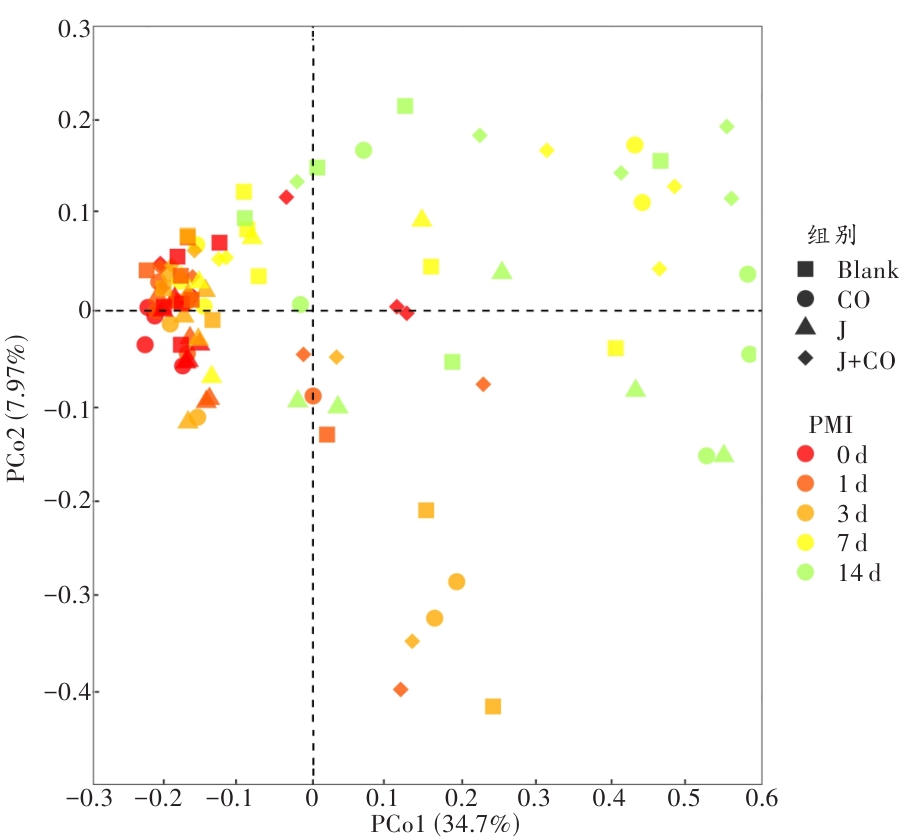
Fig. 3 PCoA results of bacterial communitiesin samples from each group
| 影响因素 | 自由度 | 平方和 | F统计量 | R2 | P值 |
|---|---|---|---|---|---|
| 合计 | 99 | 27.964 | - | 1.000 | - |
| PMI | 4 | 6.592 | 7.454 | 0.236 | 0.001 |
| 处理方式 | 3 | 1.952 | 2.942 | 0.070 | 0.001 |
| PMI与处理方式的交互作用 | 18 | 1.732 | 0.653 | 0.062 | 0.099 |
| 残差 | 88 | 17.688 | - | 0.633 | - |
Tab. 2 Results of PERMANOVA
| 影响因素 | 自由度 | 平方和 | F统计量 | R2 | P值 |
|---|---|---|---|---|---|
| 合计 | 99 | 27.964 | - | 1.000 | - |
| PMI | 4 | 6.592 | 7.454 | 0.236 | 0.001 |
| 处理方式 | 3 | 1.952 | 2.942 | 0.070 | 0.001 |
| PMI与处理方式的交互作用 | 18 | 1.732 | 0.653 | 0.062 | 0.099 |
| 残差 | 88 | 17.688 | - | 0.633 | - |

Fig. 4 The relationship between species similarity andPMI in samples from each group
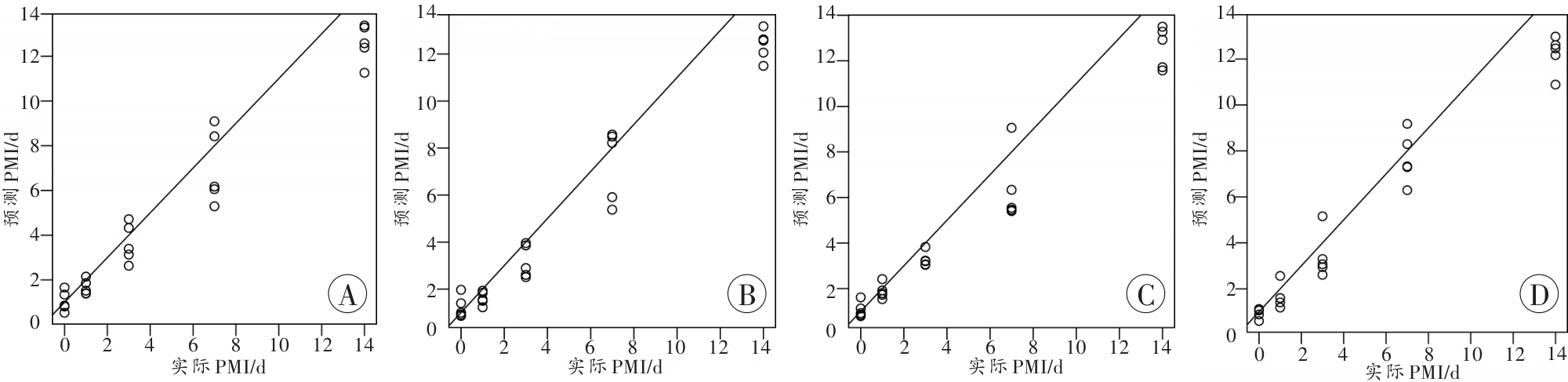
Fig. 5 Goodness-of-fit of the random forest prediction model for PMI of samples in each group
| PMI | CO组 | J+CO组 | J组 | Blank组 |
|---|---|---|---|---|
| 0 d | 1.05±0.45 | 1.23±0.47 | 1.06±0.33 | 0.95±0.21 |
| 1 d | 0.67±0.33 | 0.61±0.28 | 0.88±0.33 | 0.67±0.52 |
| 3 d | 0.79±0.69 | 0.56±0.35 | 0.27±0.32 | 0.60±0.89 |
| 7 d | 1.40±0.53 | 1.40±0.23 | 1.46±0.50 | 0.96±0.79 |
| 14 d | 1.42±0.85 | 1.61±0.64 | 1.40±0.89 | 1.78±0.80 |
Tab. 3 MAE of PMI-stratified statistics basedon the random forest prediction model
| PMI | CO组 | J+CO组 | J组 | Blank组 |
|---|---|---|---|---|
| 0 d | 1.05±0.45 | 1.23±0.47 | 1.06±0.33 | 0.95±0.21 |
| 1 d | 0.67±0.33 | 0.61±0.28 | 0.88±0.33 | 0.67±0.52 |
| 3 d | 0.79±0.69 | 0.56±0.35 | 0.27±0.32 | 0.60±0.89 |
| 7 d | 1.40±0.53 | 1.40±0.23 | 1.46±0.50 | 0.96±0.79 |
| 14 d | 1.42±0.85 | 1.61±0.64 | 1.40±0.89 | 1.78±0.80 |
| [1] | 邢浩伟,韦特驹,陈玉川,等. 尸僵的法医学研究综 述[J].广西警官高等专科学校学报,2008,21():4-6. |
| Xing H W, Wei T J, Chen Y C, et al. A review of forensic research on rigor mortis[J]. Guangxi Jingguan Gaodeng Zhuanke Xuexiao Xuebao,2008,21(S1):4-6. | |
| [2] | 田洁,张孟余,何斌,等. 盐酸吗啡对大头金蝇生长发育的影响及其对死者死亡时间推断的意义[J].昆虫学报,2004,47(6):715-718. |
| doi:10.3321/j.issn:0454-6296.2004.06.004.Tian J, Zhang M Y, He B, et al. Effect of morphine in rabbit tissues on growth of Chrysomya megacephala (Diptera: Calliphoridae) and its implication for estimation of postmortem intervals[J]. Kunchong Xuebao,2004,47(6):715-718. | |
| [3] | George K A, Archer M S, Green L M, et al. Effect of morphine on the growth rate of Calliphora stygia (Fabricius) (Diptera: Calliphoridae) and possible implications for forensic entomology[J]. Forensic Sci Int,2009,193(1/2/3):21-25. doi:10.1016/j.forsciint.2009.08.013 . |
| [4] | Wood T, Pyper K, Casali F. Effects of cocaine and heroin, and their combination, on the development rate of Calliphora vomitoria (Diptera: Calliphoridae)[J]. Sci Justice,2022,62(4):471-475. doi:10.1016/j.scijus.2022.07.001 . |
| [5] | Annasaheb Bansode S, Ramrao More V. Effect of lorazepam on the development of the hairy maggot blow fly, Chrysomya rufifacies (Macquart): Implication for forensic entomology[J]. J Toxicol,2023:1051736. doi:10.1155/2023/1051736 . |
| [6] | GBD 2021 Carbon Monoxide Poisoning Collaborators. Global, regional, and national mortality due to unintentional carbon monoxide poisoning, 2000—2021: Results from the Global Burden of Disease Study 2021[J]. Lancet Public Health,2023,8(11):e839-e849. doi:10.1016/S2468-2667(23)00185-8 . |
| [7] | Shield K, Manthey J, Rylett M, et al. National, regional, and global burdens of disease from 2000 to 2016 attributable to alcohol use: A comparative risk assessment study[J]. Lancet Public Health,2020,5(1):e51-e61. doi:10.1016/S2468-2667(19)30231-2 . |
| [8] | Janík M, Ublová M, Kučerová Š, et al. Carbon monoxide-related fatalities: A 60-year single institution experience[J]. J Forensic Leg Med,2017,48:23-29. doi:10.1016/j.jflm.2017.04.002 . |
| [9] | 向青青,陈立方,苏秦,等. 微生物群落演替在死亡时间推断中的研究进展[J].法医学杂志,2023,39(4):399-405. |
| doi:10.12116/j.issn.1004-5619.2022.420606.Xiang Q Q, Chen L F, Su Q, et al. Research progress on microbial community succession in the postmortem interval estimation[J]. Fayixue Zazhi,2023,39(4):399-405. | |
| [10] | 向青青. 利用微生物推断机械性窒息和失血性休克两种死因腐败尸体的死亡时间[D].昆明:昆明医科大学,2023. |
| Xiang Q Q. Using microorganisms to estimate the postmortem interval in the decomposing cadavers caused by mechanical asphyxia and hemorrhagic shock[D]. Kunming: Kunming Medical University,2023. | |
| [11] | Dietert R R, Silbergeld E K. Biomarkers for the 21st century: Listening to the microbiome[J]. Toxicol Sci,2015,144(2):208-216. doi:10.1093/toxsci/kfv013 . |
| [12] | Li Y Y, Wang Y C, Shi F, et al. Phospholipid metabolites of the gut microbiota promote hypoxia-induced intestinal injury via CD1d-dependent γδ T cells[J]. Gut Microbes,2022,14(1):2096994. doi:10.1080/19490976.2022.2096994 . |
| [13] | Engen P A, Green S J, Voigt R M, et al. The gastrointestinal microbiome: Alcohol effects on the composition of intestinal microbiota[J]. Alcohol Res,2015,37(2):223-236. doi:10.35946/arcr.v37.2.07 . |
| [14] | Richardson J B, Dancy B C R, Horton C L, et al. Exposure to toxic metals triggers unique responses from the rat gut microbiota[J]. Sci Rep,2018,8(1):6578. doi:10.1038/s41598-018-24931-w . |
| [15] | 严宝飞,袁鹏,刘圣金,等. 黄芩汤对非酒精性脂肪肝大鼠肠道菌群的影响[J].中草药,2022,53(1):162-175. |
| doi:10.7501/j.issn.0253-2670.2022.01.020.Yan B F, Yuan P, Liu S J, et al. Effects of Huangqin Decoction on gut microbiota in rats with nonalcoholic fatty liver disease[J]. Zhongcaoyao,2022,53(1):162-175. | |
| [16] | Liu Y, Chen L J, Li X W, et al. Gut microbiota contribute to methamphetamine-induced cardiotoxicity in mouse model[J]. Chem Biol Interact,2023,379:110512. doi:10.1016/j.cbi.2023.110512 . |
| [17] | Metcalf J L, Xu Z Z, Weiss S, et al. Microbial community assembly and metabolic function during mammalian corpse decomposition[J]. Science,2016,351(6269):158-162. doi:10.1126/science.aad2646 . |
| [18] | Zhang J, Wang M C, Qi X Q, et al. Predicting the postmortem interval of burial cadavers based on microbial community succession[J]. Forensic Sci Int Genet,2021,52:102488. doi:10.1016/j.fsigen.2021.102488 . |
| [19] | 曹洁,李文晋,王一飞,等. 基于16S rRNA高通量测序技术的肠道菌群多样性推断死亡时间[J].法医学杂志,2021,37(5):621-626. |
| doi:10.12116/j.issn.1004-5619.2020.400708.Cao J, Li W J, Wang Y F, et al. Estimating postmortem interval using intestinal microbiota diversity based on 16S rRNA high-throughput sequencing technology[J]. Fayixue Zazhi,2021,37(5):621-626. | |
| [20] | Chen T H, Hsu C C, Lin H J, et al. Carbon monoxide poisoning triggers intestinal injury, inflammation, and microbiota dysbiosis that drive metabolic perturbations[J]. Life Sci,2025,378:123839. doi:10.1016/j.lfs.2025.123839 . |
| [21] | Pachhain S, Halverstadt B, Anekwe E C, et al. Data on ethanol drinking and microbiome in alcohol preferring and non-preferring rats after a fecal microbiota transplant[J]. Data Brief,2025,62:111901. doi:10.1016/j.dib.2025.111901 . |
| [22] | Li N, Liang X R, Zhou S D, et al. Exploring postmortem succession of rat intestinal microbiome for PMI based on machine learning algorithms and potential use for humans[J]. Forensic Sci Int Genet,2023,66:102904. doi:10.1016/j.fsigen.2023.102904 . |
| [1] | Jianghuan LU, Yixin MA, Zhiao DUAN, Xiaoshi QIN, Yunchao ZHOU, Jianhua CHEN, Jianqiang DENG. Application of Multi-Organ Synchronous Continuous Temperature Monitoring in the Analysis of Postmortem Temperature Changes [J]. Journal of Forensic Medicine, 2026, 42(3): 247-253. |
| [2] | Xinyang LIU, Yazhen CHEN, Yumeng SUN, Ze WU, Jiayi XU, Rubo LI, Xu WU, Libala HU, Pengfei WANG, Minghui ZHAO, Rui ZHAO. Heat Stroke Caused by Folk Remedy of “Tiaochoufan”: A Case Report [J]. Journal of Forensic Medicine, 2026, 42(3): 285-287. |
| [3] | Xiangtao MA, Yi WU, Wendong MAO, Congda SHEN, Zewei YAO, Lijie YE, Rui ZHU, Yiwu ZHOU. Fatal Adhesive Tape Wrapping Around the Mouth and Nose: Two Case Reports [J]. Journal of Forensic Medicine, 2026, 42(3): 288-291. |
| [4] | Shichao WU, Wei CHEN, Renjie DING, Huiyang ZHANG. Forensic Identification of a Pulverized Dismembered Case: A Case Report [J]. Journal of Forensic Medicine, 2026, 42(3): 281-284. |
| [5] | Xinxin GAO, Hanchao YANG, Jing MA, Jiayu CUI, Kaixuan SUN, Baogang ZHANG. Cardiac Tamponade Death Due to Rupture of Coronary Artery Aneurysm Caused by Incomplete Kawasaki Disease: A Case Report [J]. Journal of Forensic Medicine, 2026, 42(2): 173-176. |
| [6] | Ming PEI, Fei CHEN, Yonghong KANG, Hua XIE, Junhua YANG, Zhengdong LI. column:Indoor Cadaver Damaged by Domestic Dog and Mistakenly Identified as Human Assault: A Case Report [J]. Journal of Forensic Medicine, 2026, 42(2): 171-173. |
| [7] | Xi ZHAO, Xinli SHI, Guipeng WANG, Xin WANG, Junbo ZHAO, Min CHEN, Jianhua ZHANG. Homicide Followed by Suicide Due to the Abuse of New Psychoactive Substance 3-MeO-PCPy: A Case Report [J]. Journal of Forensic Medicine, 2026, 42(2): 177-179. |
| [8] | Zhiheng LI, Fan CHEN, Yang LI. Homicidal Strangulation by Jujitsu “Blood Choke” Disguised as Sudden Death: A Case Report [J]. Journal of Forensic Medicine, 2026, 42(2): 168-170. |
| [9] | Haojie QIN, Enhao FU, Yongchao YANG, Yawen LIU, Mingzhu JIA, Zhiling TIAN, Zhe ZHENG, Siyun GUO, Ningguo LIU. Construction of a Multimodal Forensic Pathology Database and Implementation of Model-Augmented Retrieval [J]. Journal of Forensic Medicine, 2026, 42(2): 102-111. |
| [10] | Xiangyan ZHANG, Fan YANG, Sheng HU, Qiong JIA, Hao NIE, Xingchun ZHAO, Yadong GUO. Construction of a Segmented PMI Estimation Model Integrating Intestinal Microbial Signatures and Machine Learning in Nude Mice [J]. Journal of Forensic Medicine, 2026, 42(2): 87-93. |
| [11] | Bowen LIU, Zhong ZHANG, Feng ZHANG, Yanyan FAN, Peilong LAI. Bioinformatics-Based Screening and Validation of Biomarkers for Sudden Death in Leukemia [J]. Journal of Forensic Medicine, 2026, 42(2): 94-101. |
| [12] | Jie YANG, Yi-lei HU, Jin-ming WANG, Zheng-dong LI. Analysis of the Injury Mechanism of Traumatic Craniocerebral Injury from Falls Based on Finite Element Simulation [J]. Journal of Forensic Medicine, 2026, 42(1): 1-7. |
| [13] | Qiong JIA, Kai-jun JIN, Shi-qi LIU, Yi-meng ZHANG, Yun-le MENG, Hao NIE, Sheng HU, Fan YANG, Xing-chun ZHAO, Jian YE. Research Progress on the Methodological System for Decomposition Stage Classification in Forensic Medicine [J]. Journal of Forensic Medicine, 2026, 42(1): 34-42. |
| [14] | Xin NIU, Zhe CAO. Forensic Significance of Mesenteric Injury in Child Abuse Cases [J]. Journal of Forensic Medicine, 2026, 42(1): 43-48. |
| [15] | Zhen WANG, Tai-qi ZANG. Comprehensive Identification of the Vulnerant by Examining Marks on Clothing and Bodies Combining with Trace Comparison: A Case Report [J]. Journal of Forensic Medicine, 2026, 42(1): 69-72. |
| Viewed | ||||||
|
Full text |
|
|||||
|
Abstract |
|
|||||
