
Journal of Forensic Medicine ›› 2026, Vol. 42 ›› Issue (2): 102-111.DOI: 10.12116/j.issn.1004-5619.2025.451106
• Original Articles • Previous Articles Next Articles
Haojie QIN1( ), Enhao FU1,2, Yongchao YANG1,2, Yawen LIU2,3, Mingzhu JIA2,4, Zhiling TIAN2, Zhe ZHENG1, Siyun GUO5(), Ningguo LIU2()
Received:2025-11-16
Online:2026-07-08
Published:2026-04-25
Contact:
Siyun GUO, Ningguo LIU
CLC Number:
Haojie QIN, Enhao FU, Yongchao YANG, Yawen LIU, Mingzhu JIA, Zhiling TIAN, Zhe ZHENG, Siyun GUO, Ningguo LIU. Construction of a Multimodal Forensic Pathology Database and Implementation of Model-Augmented Retrieval[J]. Journal of Forensic Medicine, 2026, 42(2): 102-111.
Add to citation manager EndNote|Ris|BibTeX
URL: http://www.fyxzz.cn/EN/10.12116/j.issn.1004-5619.2025.451106
| 案件类型 | 数据内容 | |||
|---|---|---|---|---|
| 鉴定文书/份 | 大体照片/张 | 器官取材(检验)照片/张 | 组织病理学图像/张 | |
| 合计 | 2 641 | 11 095 | 4 975 | 3 203 |
| 尸表检查 | 1 707 | 6 533 | 0 | 0 |
| 尸体解剖 | 636 | 4 562 | 4 674 | 3 203 |
| 医疗纠纷 | 254 | 0 | 0 | 0 |
| 检验1) | 44 | 0 | 301 | 0 |
Tab. 1 Data overview
| 案件类型 | 数据内容 | |||
|---|---|---|---|---|
| 鉴定文书/份 | 大体照片/张 | 器官取材(检验)照片/张 | 组织病理学图像/张 | |
| 合计 | 2 641 | 11 095 | 4 975 | 3 203 |
| 尸表检查 | 1 707 | 6 533 | 0 | 0 |
| 尸体解剖 | 636 | 4 562 | 4 674 | 3 203 |
| 医疗纠纷 | 254 | 0 | 0 | 0 |
| 检验1) | 44 | 0 | 301 | 0 |

Fig. 1 Database architecture
| 权限层级 | 系统角色 | 权限和职责 | 数据可见范围 | 代表人群1) |
|---|---|---|---|---|
| L1 | 超级管理员 | 系统运维、全局配置、所有角色管理 | 全局数据(操作日志,系统底层数据) | 数据库负责人或信息科 |
| L2 | 管理员 | 业务管理、审核、数据纠错、子管理员管理 | 机构或业务数据(除系统配置外的所有数据) | 机构负责人或科室主任 |
| L3 | 子管理员 | 部门管理、任务分配、初审 | 部门数据(管辖范围内的数据) | 部门负责人 |
| L4 | 操作员 | 数据录入、日常业务处理 | 个人数据(仅自己创建或被指派的数据) | 鉴定人或法医助理 |
| L5 | 游客 | 公开信息浏览、查询 | 公开数据(脱敏后的非机密数据或统计结果) | 委托方或其他 |
Tab. 2 User privilege hierarchical system
| 权限层级 | 系统角色 | 权限和职责 | 数据可见范围 | 代表人群1) |
|---|---|---|---|---|
| L1 | 超级管理员 | 系统运维、全局配置、所有角色管理 | 全局数据(操作日志,系统底层数据) | 数据库负责人或信息科 |
| L2 | 管理员 | 业务管理、审核、数据纠错、子管理员管理 | 机构或业务数据(除系统配置外的所有数据) | 机构负责人或科室主任 |
| L3 | 子管理员 | 部门管理、任务分配、初审 | 部门数据(管辖范围内的数据) | 部门负责人 |
| L4 | 操作员 | 数据录入、日常业务处理 | 个人数据(仅自己创建或被指派的数据) | 鉴定人或法医助理 |
| L5 | 游客 | 公开信息浏览、查询 | 公开数据(脱敏后的非机密数据或统计结果) | 委托方或其他 |
| 参数 | 设定值 |
|---|---|
| 最大序列长度 | 1 024 token |
| 批次大小 | 2 |
| 梯度累积步数 | 2 |
| 有效批次大小 | 4 |
| 优化器(AdamW)学习率 | 5×10⁻⁵ |
| 训练精度 | float16 |
| LoRA秩 | 16 |
| LoRA缩放系数(α) | 32 |
| 随机失活率 | 0.05 |
Tab. 3 Parameter configuration
| 参数 | 设定值 |
|---|---|
| 最大序列长度 | 1 024 token |
| 批次大小 | 2 |
| 梯度累积步数 | 2 |
| 有效批次大小 | 4 |
| 优化器(AdamW)学习率 | 5×10⁻⁵ |
| 训练精度 | float16 |
| LoRA秩 | 16 |
| LoRA缩放系数(α) | 32 |
| 随机失活率 | 0.05 |
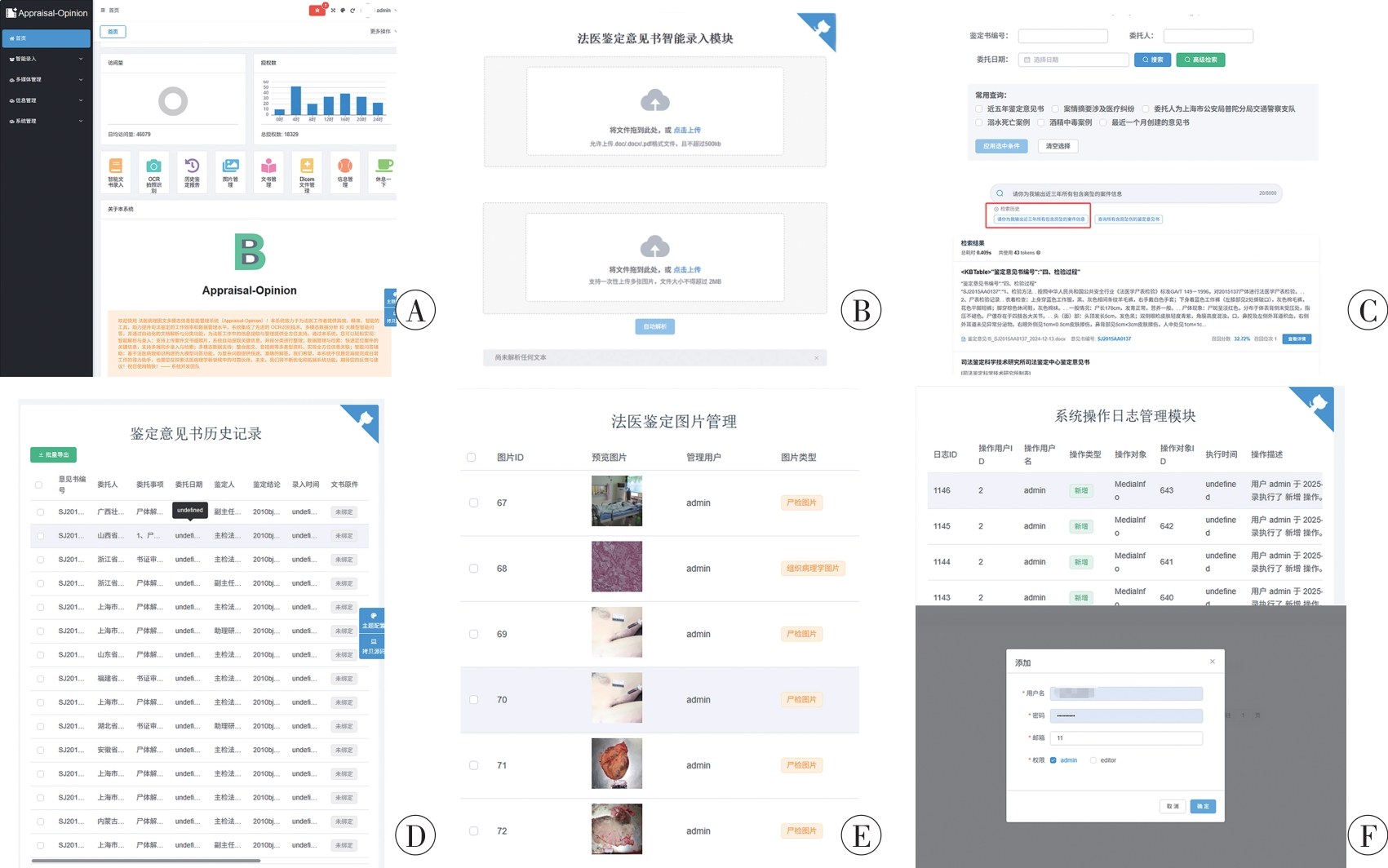
Fig. 2 Database functional modules
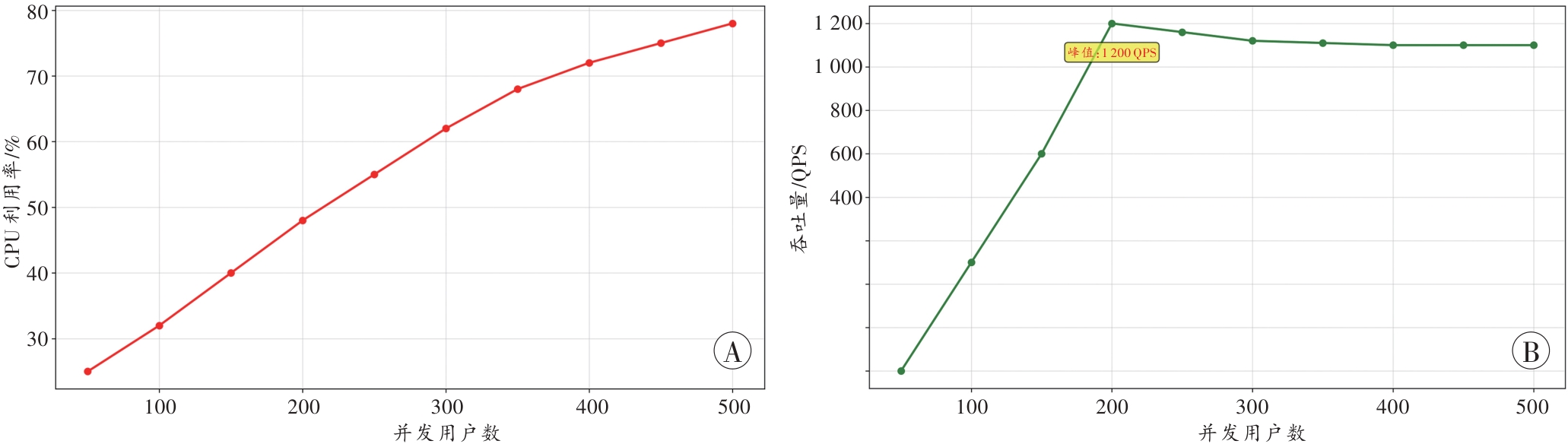
Fig. 3 Results of concurrency performance tests
| 类型 | 余弦距离 | CER/% | WER/% |
|---|---|---|---|
| Ⅰ | 0.02 | 1.5 | 3.2 |
| Ⅱ | 0.05 | 3.8 | 8.5 |
| Ⅲ | 0.15 | 12.4 | 22.0 |
Tab. 4 OCR performance on different types of documents
| 类型 | 余弦距离 | CER/% | WER/% |
|---|---|---|---|
| Ⅰ | 0.02 | 1.5 | 3.2 |
| Ⅱ | 0.05 | 3.8 | 8.5 |
| Ⅲ | 0.15 | 12.4 | 22.0 |
| 查询问题 | K | Precision@K | Recall@K | DCG | NDCG |
|---|---|---|---|---|---|
| Q1 | 10 | 1.00 | 0.136 9 | 8.771 6 | 0.965 2 |
| 20 | 1.00 | 0.273 9 | 13.765 0 | 0.977 5 | |
| 50 | 0.94 | 0.643 8 | 23.148 3 | 0.950 3 | |
| 100 | 0.69 | 0.945 2 | 27.110 2 | 0.983 4 | |
| Q2 | 10 | 1.00 | 0.131 5 | 8.087 1 | 0.889 9 |
| 20 | 1.00 | 0.263 1 | 12.276 8 | 0.879 0 | |
| 50 | 0.94 | 0.618 4 | 20.098 8 | 0.902 9 | |
| 100 | 0.71 | 0.934 2 | 24.570 8 | 0.952 6 | |
| Q3 | 10 | 1.00 | 0.068 4 | 8.656 4 | 0.952 6 |
| 20 | 1.00 | 0.136 9 | 13.405 2 | 0.952 0 | |
| 50 | 1.00 | 0.342 4 | 23.729 2 | 0.919 9 | |
| 100 | 0.95 | 0.650 6 | 36.133 7 | 0.978 2 |
Tab. 5 Performance of the intelligent retrieval model
| 查询问题 | K | Precision@K | Recall@K | DCG | NDCG |
|---|---|---|---|---|---|
| Q1 | 10 | 1.00 | 0.136 9 | 8.771 6 | 0.965 2 |
| 20 | 1.00 | 0.273 9 | 13.765 0 | 0.977 5 | |
| 50 | 0.94 | 0.643 8 | 23.148 3 | 0.950 3 | |
| 100 | 0.69 | 0.945 2 | 27.110 2 | 0.983 4 | |
| Q2 | 10 | 1.00 | 0.131 5 | 8.087 1 | 0.889 9 |
| 20 | 1.00 | 0.263 1 | 12.276 8 | 0.879 0 | |
| 50 | 0.94 | 0.618 4 | 20.098 8 | 0.902 9 | |
| 100 | 0.71 | 0.934 2 | 24.570 8 | 0.952 6 | |
| Q3 | 10 | 1.00 | 0.068 4 | 8.656 4 | 0.952 6 |
| 20 | 1.00 | 0.136 9 | 13.405 2 | 0.952 0 | |
| 50 | 1.00 | 0.342 4 | 23.729 2 | 0.919 9 | |
| 100 | 0.95 | 0.650 6 | 36.133 7 | 0.978 2 |
| [1] | COLVILLE-EBELING B, FRISCH M, LYNNERUP N, et al. HOMED — Homicides Eastern Denmark: An introduction to a forensic medical homicide database[J]. Scand J Public Health,2014,42(7):683-686. doi:10.1177/1403494814544402 . |
| [2] | DUONG V A, PARK J M, LIM H J, et al. Proteomics in forensic analysis: Applications for human samples[J]. Appl Sci,2021,11(8):3393. doi:10.3390/app11083393 . |
| [3] | BORNIK A, URSCHLER M, SCHMALSTIEG D, et al. Integrated computer-aided forensic case analysis, presentation, and documentation based on multimodal 3D data[J]. Forensic Sci Int,2018,287:12-24. doi:10.1016/j.forsciint.2018.03.031 . |
| [4] | 黄平. 多模态法医病理学智能化鉴定的应用展望[J].中国司法鉴定,2024(6):36-43. doi:10.3969/j.issn.1671-2072.2024.06.004 . |
| HUANG P. The prospects of multimodal artificial intelligence identification in forensic pathology[J]. Zhongguo Sifa Jianding,2024(6):36-43. | |
| [5] | AGHAYEV E, STAUB L, DIRNHOFER R, et al. Virtopsy — The concept of a centralized database in forensic medicine for analysis and comparison of radiological and autopsy data[J]. J Forensic Leg Med,2008,15(3):135-140. doi:10.1016/j.jflm.2007.07.005 . |
| [6] | WISKOTT K, GILARDI F, MICHAUD K, et al. Creation of a Forensic Pathology Biobank in Switzerland: Which issues and research opportunities?[J]. Int J Legal Med,2022,136(3):919-922. doi:10.1007/s00414-021-02747-0 . |
| [7] | LU M Y, CHEN B W, WILLIAMSON D F K, et al. A multimodal generative AI copilot for human pathology[J]. Nature,2024,634(8033):466-473. doi:10.1038/s41586-024-07618-3 . |
| [8] | 方雅婷,兰琼,解通,等. 人工智能技术时代法医学科面临的新机遇与挑战[J].法医学杂志,2020,36(1):77-85. doi:10.12116/j.issn.1004-5619.2020.01.016 . |
| FANG Y T, LAN Q, XIE T, et al. New opportunities and challenges for forensic medicine in the era of artificial intelligence technology[J]. Fayixue Zazhi,2020,36(1):77-85. | |
| [9] | 李明杰,林李顺,潘红波. 法医病理学教学切片图片数据库的建立与思考[J].广东公安科技,2021,29(4):62-63. |
| LI M J, LIN L S, PAN H B. Establishment and reflection on an image database of forensic patho-logy teaching slides[J]. Guangdong Gongan Keji,2021,29(4):62-63. | |
| [10] | 幸宇,邢扬,王体春,等. 构建辅助命案现场重建的法医学专家系统[J].重庆医科大学学报,2014,39(10):1471-1473. doi:10.13406/j.cnki.cyxb.000430 . |
| XING Y, XING Y, WANG T C, et al. Construction of forensic medical expert system assisting reconstruction of murder scene[J]. Chongqing Yike Da-xue Xuebao,2014,39(10):1471-1473. | |
| [11] | STEENKAMP M, FRAZIER L, LIPSKIY N, et al. The National Violent Death Reporting System: An exciting new tool for public health surveillance[J]. Inj Prev,2006,12(S2):ii3-ii5. doi:10.1136/ip.2006. 012518 . |
| [12] | The National Coroners Information System as an information tool for injury surveillance[EB/OL]. (2004-03-01)[2025-05-12]. . |
| [13] | Canadian Coroner and Medical Examiner Database (CCMED)[EB/OL]. (2025-03-03)[2025-05-12]. . |
| [14] | BLAIR J M, FOWLER K A, JACK S P D, et al. The National Violent Death Reporting System: Overview and future directions[J]. Inj Prev,2016,22(S1):i6-i11. doi:10.1136/injuryprev-2015-041819 . |
| [15] | NADKARNI P M, OHNO-MACHADO L, CHAPMAN W W. Natural language processing: An introduction[J]. J Am Med Inform Assoc,2011,18(5):544-551. doi:10.1136/amiajnl-2011-000464 . |
| [16] | BALAS M, HERMAN J E, BHAMBRA N, et al. OCTess: An optical character recognition algorithm for automated data extraction of spectral domain optical coherence tomography reports[J]. Retina,2024,44(4):558-564. doi:10.1097/IAE.0000000000003990 . |
| [17] | CASCELLA M, MONTOMOLI J, BELLINI V, et al. Evaluating the feasibility of ChatGPT in healthcare: An analysis of multiple clinical and research scenarios[J]. J Med Syst,2023,47:33. doi:10.1007/s10916-023-01925-4 . |
| [18] | JIANG F, JIANG Y, ZHI H, et al. Artificial intelligence in healthcare: Past, present and future[J]. Stroke Vasc Neurol,2017,2(4):e000101. doi:10.1136/svn-2017-000101 . |
| [19] | AROWOSEGBE A, OYELADE T. Application of natural language processing (NLP) in detecting and preventing suicide ideation: A systematic review[J]. Int J Env Res Pub He,2023,20(2):1514. doi:10.3390/ijerph20021514 . |
| [20] | PETRONI G, ALAIMO S, MANDARELLI G, et al. A case study of forensic psychiatry experts’ reports analysis through large language models[J]. Int J Law Psychiat,2025,102:102122. doi:10.1016/j.ijlp.2025.102122 . |
| [21] | SHEN C, LIAN C F, ZHANG W Q, et al. Large-vocabulary forensic pathological analyses via prototypical cross-modal contrastive learning[J]. Nat Commun,2025,16:6773. doi:10.1038/s41467-025-62060-x . |
| [22] | LAURENÇON H, TRONCHON L, CORD M, et al. What matters when building vision-language models?[C/OL]//38th Conference on Neural Information Processing Systems (NeurIPS 2024. doi:10 . |
| 52202/079017 -2789. (2024-09-26)[2025-05-16]. . | |
| [23] | MEMON J, SAMI M, KHAN R A, et al. Handwritten optical character recognition (OCR): A comprehensive systematic literature review (SLR)[J]. IEEE Access,2020,8:142642-142668. doi:10.1109/ACCESS.2020.3012542 . |
| [24] | ZENG A H, XU B, WANG B W, et al. ChatGLM: A family of large language models from GLM-130B to GLM-4 all tools[J/OL]. arXiv:2406.12793. doi:10.48550/arXiv.2406.12793 . (2024-07-30)[2025-05-16]. . |
| [25] | 于笑天,刘宁国,武胜男,等. 法医学常用术语检索系统的构建[J].法医学杂志,2021,37(6):873-876. doi:10.12116/j.issn.1004-5619.2021.411110 . |
| YU X T, LIU N G, WU S N, et al. Construction of Indexing System of Common Terms in Forensic Medicine[J]. Fayixue Zazhi,2021,37(6):873-876. | |
| [26] | SALUNKE S V, OUDA A. A performance benchmark for the PostgreSQL and MySQL databases[J]. Future Internet,2024,16(10):382. doi:10.3390/fi16100382 . |
| [27] | YU H Y, LI J S, CHEN H, et al. Performance evaluation of post-relational database in hospital information systems[C]// 2010 Second International Workshop on Education Technology and Computer Science,Wuhan,2010:247-251. doi:10.1109/ETCS. 2010.134 . |
| [28] | MIRANSKYY A V, AL-ZANBOURI Z, GODWIN D, et al. Database engines: Evolution of greenness[J]. J Softw Evol Proc,2018,30(4):e1915. doi:10.1002/smr.1915 . |
| [29] | ZHAO J Q, LI M. Large-scale concurrency for MySQL database performance analysis[C]// 2025 8th International Conference on Advanced Algorithms and Control Engineering (ICAACE), Shanghai,2025:2098-2102. doi:10.1109/ICAACE65325.2025.11020302 . |
| [30] | BOUH M M, HOSSAIN F, PAUL P, et al. Enhancing medical records digitization through a post-OCR processing technique[C]// 2024 IEEE-EMBS Conference on Biomedical Engineering and Sciences (IECBES), Penang, Malaysia,2024:311-316. doi:10.1109/IECBES61011.2024.10991279 . |
| [31] | HARMAN D. Information retrieval evaluation[M]. San Rafael, California: Morgan & Claypool Publishers,2011:77-85. |
| [32] | JÄRVELIN K, KEKÄLÄINEN J. Cumulated gain-based evaluation of IR techniques[J]. ACM Trans Inf Syst,2002,20(4):422-446. doi:10.1145/582415.582418 . |
| [33] | MUWANEI S, RAVANA S D, HOO W L, et al. Prediction of the high-cost normalised discounted cumulative gain (nDCG) measure in information retrieval evaluation[J/OL]. Inform Res,2022,27(2). doi:10.47989/irpaper928 . [2025-05-16]. . |
| [34] | MEILIA P D I, FREEMAN M D, HERKUTANTO, et al. A review of causal inference in forensic medicine[J]. Forensic Sci Med Pathol,2020,16(2):313-320. doi:10.1007/s12024-020-00220-9 . |
| [35] | MADEA B, PRANGENBERG J, DOBERENTZ E. Feststellung der todesursache[J]. Rechtsmedizin,2022,32:221-236. doi:10.1007/s00194-021-00548-8 . |
| [36] | STAHLSCHMIDT S R, ULFENBORG B, SYNNERGREN J. Multimodal deep learning for biomedical data fusion: A review[J]. Brief Bioinform,2022,23(2):bbab569. doi:10.1093/bib/bbab569 . |
| [37] | WEISS H B, GUTIERREZ M I, HARRISON J, et al. The US National Violent Death Reporting System: Domestic and international lessons for violence injury surveillance[J]. Inj Prev,2006,12(S2):ii58-ii62. doi:10.1136/ip.2006.013961 . |
| [38] | KIUCHI T, YOSHIDA K, KOTANI H, et al. Legal Medicine Information System using CDISC ODM[J]. Leg Med (Tokyo),2013,15(6):332-334. doi:10 . |
| 1016/j.legalmed.2013.08.003. | |
| [39] | LIU G S, NGUYEN B L, LYONS B H, et al. Surveillance for violent deaths — National Violent Death Reporting System, 48 States, the District of Columbia, and Puerto Rico, 2020[J]. MMWR Surveill Summ,2023,72(5):1-38. doi:10.15585/mmwr.ss7205a1 . |
| [40] | BHARDWAJ R, KUMARI S, JACOB J J, et al. Enhancing OCR for historical documents using CNNs and GenAI[M]// MAHAPATRA R P, SINGH R, MISHRA S, et al. Micro-electronics and telecommunication engineering: Proceedings of 8th ICMETE 2024. Singapore: Springer Nature Singapore,2025:257-275. doi:10.1007/978-981-96-6515-0_19 . |
| [41] | PONCELAS A, ABOOMAR M, BUTS J, et al. A tool for facilitating OCR postediting in historical documents[J/OL]. arXiv:2004.11471. doi:10.48550/arXiv.2004.11471 . (2020-04-23)[2025-05-18]. . |
| [42] | BAI J, SONG D W, BRUZA P, et al. Query expansion using term relationships in language models for information retrieval[C]// Proceedings of the 14th ACM International Conference on Information and Knowledge Management. New York,2005:688-695. doi:10.1145/1099554.1099725 . |
| [43] | MOURÃO A, MARTINS F, MAGALHÃES J. Multimodal medical information retrieval with unsupervised rank fusion[J]. Comput Med Imag Grap,2015,39:35-45. doi:10.1016/j.compmedimag.2014.05.006 . |
| [44] | TIAN Z Q, HAN L F, XI Z Y, et al. Legal similar case retrieval model based on concept tree and optimal transport[C]// ZHANG Q H, HENRY C, JENSEN R, et al. Rough sets: International Joint Conference, IJCRS 2025, Chongqing, China, May 11-13, 2025. Cham: Springer Nature Switzerland,2025:301-315. doi:10.1007/978-3-031-92744-7_21 . |
| [45] | HEFETZ I. Evaluating bias in forensic evidence: From expert analysis to AI-based decision tools[J]. Forensic Sci Int Synerg,2025,11:100645. doi:10. 1016/j.fsisyn.2025.100645 . |
| [1] | Jianghuan LU, Yixin MA, Zhiao DUAN, Xiaoshi QIN, Yunchao ZHOU, Jianhua CHEN, Jianqiang DENG. Application of Multi-Organ Synchronous Continuous Temperature Monitoring in the Analysis of Postmortem Temperature Changes [J]. Journal of Forensic Medicine, 2026, 42(3): 247-253. |
| [2] | Xinyang LIU, Yazhen CHEN, Yumeng SUN, Ze WU, Jiayi XU, Rubo LI, Xu WU, Libala HU, Pengfei WANG, Minghui ZHAO, Rui ZHAO. Heat Stroke Caused by Folk Remedy of “Tiaochoufan”: A Case Report [J]. Journal of Forensic Medicine, 2026, 42(3): 285-287. |
| [3] | Xiangtao MA, Yi WU, Wendong MAO, Congda SHEN, Zewei YAO, Lijie YE, Rui ZHU, Yiwu ZHOU. Fatal Adhesive Tape Wrapping Around the Mouth and Nose: Two Case Reports [J]. Journal of Forensic Medicine, 2026, 42(3): 288-291. |
| [4] | Shichao WU, Wei CHEN, Renjie DING, Huiyang ZHANG. Forensic Identification of a Pulverized Dismembered Case: A Case Report [J]. Journal of Forensic Medicine, 2026, 42(3): 281-284. |
| [5] | Xinxin GAO, Hanchao YANG, Jing MA, Jiayu CUI, Kaixuan SUN, Baogang ZHANG. Cardiac Tamponade Death Due to Rupture of Coronary Artery Aneurysm Caused by Incomplete Kawasaki Disease: A Case Report [J]. Journal of Forensic Medicine, 2026, 42(2): 173-176. |
| [6] | Ming PEI, Fei CHEN, Yonghong KANG, Hua XIE, Junhua YANG, Zhengdong LI. column:Indoor Cadaver Damaged by Domestic Dog and Mistakenly Identified as Human Assault: A Case Report [J]. Journal of Forensic Medicine, 2026, 42(2): 171-173. |
| [7] | Xi ZHAO, Xinli SHI, Guipeng WANG, Xin WANG, Junbo ZHAO, Min CHEN, Jianhua ZHANG. Homicide Followed by Suicide Due to the Abuse of New Psychoactive Substance 3-MeO-PCPy: A Case Report [J]. Journal of Forensic Medicine, 2026, 42(2): 177-179. |
| [8] | Zhiheng LI, Fan CHEN, Yang LI. Homicidal Strangulation by Jujitsu “Blood Choke” Disguised as Sudden Death: A Case Report [J]. Journal of Forensic Medicine, 2026, 42(2): 168-170. |
| [9] | Xiangyan ZHANG, Fan YANG, Sheng HU, Qiong JIA, Hao NIE, Xingchun ZHAO, Yadong GUO. Construction of a Segmented PMI Estimation Model Integrating Intestinal Microbial Signatures and Machine Learning in Nude Mice [J]. Journal of Forensic Medicine, 2026, 42(2): 87-93. |
| [10] | Bowen LIU, Zhong ZHANG, Feng ZHANG, Yanyan FAN, Peilong LAI. Bioinformatics-Based Screening and Validation of Biomarkers for Sudden Death in Leukemia [J]. Journal of Forensic Medicine, 2026, 42(2): 94-101. |
| [11] | Jie YANG, Yi-lei HU, Jin-ming WANG, Zheng-dong LI. Analysis of the Injury Mechanism of Traumatic Craniocerebral Injury from Falls Based on Finite Element Simulation [J]. Journal of Forensic Medicine, 2026, 42(1): 1-7. |
| [12] | Qiong JIA, Kai-jun JIN, Shi-qi LIU, Yi-meng ZHANG, Yun-le MENG, Hao NIE, Sheng HU, Fan YANG, Xing-chun ZHAO, Jian YE. Research Progress on the Methodological System for Decomposition Stage Classification in Forensic Medicine [J]. Journal of Forensic Medicine, 2026, 42(1): 34-42. |
| [13] | Xin NIU, Zhe CAO. Forensic Significance of Mesenteric Injury in Child Abuse Cases [J]. Journal of Forensic Medicine, 2026, 42(1): 43-48. |
| [14] | Zhen WANG, Tai-qi ZANG. Comprehensive Identification of the Vulnerant by Examining Marks on Clothing and Bodies Combining with Trace Comparison: A Case Report [J]. Journal of Forensic Medicine, 2026, 42(1): 69-72. |
| [15] | Jia MENG, Ling-yu LI, Wu-lin HUANG, Tong ZHOU, Meng-qin ZOU, Jian-wei PENG, Bo LI, Xin HUANG, Qing-bo ZHANG. Multidisciplinary Identification in a Hit-and-Run Traffic Accident: A Case Report [J]. Journal of Forensic Medicine, 2026, 42(1): 73-76. |
| Viewed | ||||||
|
Full text |
|
|||||
|
Abstract |
|
|||||
