
Journal of Forensic Medicine ›› 2026, Vol. 42 ›› Issue (3): 261-268.DOI: 10.12116/j.issn.1004-5619.2025.350801
• Original Articles • Previous Articles Next Articles
Mingjin YANG1( ), Meiyun HE2, Weian DU3, Pengfei MEI1, Xuelian CHENG2, Xin LIU1, Yuesen SHI1, Hao JIN1, Yiling HU1, Meixin HE1, Ling CHEN2, Chao LIU1,4()
Received:2025-08-04
Online:2026-09-09
Published:2026-06-25
Contact:
Chao LIU
CLC Number:
Mingjin YANG, Meiyun HE, Weian DU, Pengfei MEI, Xuelian CHENG, Xin LIU, Yuesen SHI, Hao JIN, Yiling HU, Meixin HE, Ling CHEN, Chao LIU. Enzyme Digestion LC-MS/MS Detection of Etomidate, Ketamine, Methamphe‑ tamine and Codeine in Hair[J]. Journal of Forensic Medicine, 2026, 42(3): 261-268.
Add to citation manager EndNote|Ris|BibTeX
URL: http://www.fyxzz.cn/EN/10.12116/j.issn.1004-5619.2025.350801
| 毒品 | 保留时间/min | 定量离子对 | 定性离子对 | 锥孔电压/V | 碰撞能量/eV |
|---|---|---|---|---|---|
| 依托咪酯 | 5.34 | 245.1/141.1 | 245.1/141.1 245.1/95.1 | 22 | 8,22 |
| 氯胺酮 | 3.43 | 238.1/207.1 | 238.1/207.1 238.1/125.1 | 30 | 25,10 |
| 甲基苯丙胺 | 2.97 | 150.1/119.1 | 150.1/119.1 150.1/91.1 | 30 | 15,8 |
| 可待因 | 2.37 | 300.1/215.1 | 300.1/215.1 300.1/165.1 | 24 | 20,50 |
Tab. 1 Mass spectrum parameters of the target compounds
| 毒品 | 保留时间/min | 定量离子对 | 定性离子对 | 锥孔电压/V | 碰撞能量/eV |
|---|---|---|---|---|---|
| 依托咪酯 | 5.34 | 245.1/141.1 | 245.1/141.1 245.1/95.1 | 22 | 8,22 |
| 氯胺酮 | 3.43 | 238.1/207.1 | 238.1/207.1 238.1/125.1 | 30 | 25,10 |
| 甲基苯丙胺 | 2.97 | 150.1/119.1 | 150.1/119.1 150.1/91.1 | 30 | 15,8 |
| 可待因 | 2.37 | 300.1/215.1 | 300.1/215.1 300.1/165.1 | 24 | 20,50 |
| DTT/(mg∙mL-1) | 依托咪酯 | 氯胺酮 | 甲基苯丙胺 | 可待因 |
|---|---|---|---|---|
| 0 | 2.374±0.008 | 1.208±0.068 | 2.521±0.089 | 2.708±0.232 |
| 3 | 5.542±0.0821) | 3.648±0.4601) | 4.517±0.2781) | 8.601±0.4711) |
| 6 | 5.500±0.1251) | 4.011±0.4351) | 4.023±0.4871) | 8.321±0.1661) |
| 12 | 5.783±0.1521) | 3.589±0.9501) | 4.152±0.5851) | 7.865±0.6891) |
Tab. 2 Effect of DTT concentration on the extraction efficiency of the four target drugs
| DTT/(mg∙mL-1) | 依托咪酯 | 氯胺酮 | 甲基苯丙胺 | 可待因 |
|---|---|---|---|---|
| 0 | 2.374±0.008 | 1.208±0.068 | 2.521±0.089 | 2.708±0.232 |
| 3 | 5.542±0.0821) | 3.648±0.4601) | 4.517±0.2781) | 8.601±0.4711) |
| 6 | 5.500±0.1251) | 4.011±0.4351) | 4.023±0.4871) | 8.321±0.1661) |
| 12 | 5.783±0.1521) | 3.589±0.9501) | 4.152±0.5851) | 7.865±0.6891) |
| 蛋白酶K/U∙mL-1 | 依托咪酯 | 氯胺酮 | 甲基苯丙胺 | 可待因 |
|---|---|---|---|---|
| 0 | 2.439±0.157 | 2.381±0.110 | 0.400±0.002 | 0.584±0.027 |
| 2.5 | 2.705±0.124 | 2.701±0.0301) | 0.492±0.0461) | 0.719±0.070 |
| 5 | 3.139±0.2651) | 3.383±0.0521)2) | 0.600±0.0351)2) | 0.800±0.0351) |
| 10 | 3.025±0.2321) | 3.400±0.0721) | 0.581±0.0261) | 0.797±0.0811) |
Tab. 3 Effect of proteinase K concentration on the extraction efficiency of the four target drugs
| 蛋白酶K/U∙mL-1 | 依托咪酯 | 氯胺酮 | 甲基苯丙胺 | 可待因 |
|---|---|---|---|---|
| 0 | 2.439±0.157 | 2.381±0.110 | 0.400±0.002 | 0.584±0.027 |
| 2.5 | 2.705±0.124 | 2.701±0.0301) | 0.492±0.0461) | 0.719±0.070 |
| 5 | 3.139±0.2651) | 3.383±0.0521)2) | 0.600±0.0351)2) | 0.800±0.0351) |
| 10 | 3.025±0.2321) | 3.400±0.0721) | 0.581±0.0261) | 0.797±0.0811) |
| 温度/℃ | 依托咪酯 | 氯胺酮 | 甲基苯丙胺 | 可待因 |
|---|---|---|---|---|
| 室温 | 1.793±0.331 | 1.038±0.056 | 0.466±0.021 | 0.247±0.010 |
| 37 | 2.449±0.2591) | 1.328±0.0381) | 1.372±0.0551) | 0.673±0.1791) |
| 48 | 3.486±0.2711)2) | 1.334±0.0401) | 1.360±0.0191) | 0.975±0.1371)2) |
| 58 | 3.657±0.4901)2) | 1.465±0.0161) | 1.812±0.1211)2) | 0.975±0.0731)2) |
| 68 | 3.497±0.2101)2) | 1.345±0.1281) | 1.624±0.1721)2)3) | 0.758±0.0221) |
Tab. 4 Effect of temperature on the extraction efficiency of the four target drugs
| 温度/℃ | 依托咪酯 | 氯胺酮 | 甲基苯丙胺 | 可待因 |
|---|---|---|---|---|
| 室温 | 1.793±0.331 | 1.038±0.056 | 0.466±0.021 | 0.247±0.010 |
| 37 | 2.449±0.2591) | 1.328±0.0381) | 1.372±0.0551) | 0.673±0.1791) |
| 48 | 3.486±0.2711)2) | 1.334±0.0401) | 1.360±0.0191) | 0.975±0.1371)2) |
| 58 | 3.657±0.4901)2) | 1.465±0.0161) | 1.812±0.1211)2) | 0.975±0.0731)2) |
| 68 | 3.497±0.2101)2) | 1.345±0.1281) | 1.624±0.1721)2)3) | 0.758±0.0221) |
| 酶解时间/min | 依托咪酯 | 氯胺酮 | 甲基苯丙胺 | 可待因 |
|---|---|---|---|---|
| 5 | 1.485±0.074 | 1.009±0.078 | 2.038±0.132 | 0.597±0.050 |
| 15 | 2.925±0.2361) | 2.395±0.3481) | 4.106±0.5641) | 1.216±0.2791) |
| 30 | 5.922±0.4691)2) | 3.208±0.1541)2) | 5.977±0.4711)2) | 2.124±0.2301)2) |
| 45 | 6.313±0.2211)2) | 3.555±0.1831)2) | 6.132±0.3481)2) | 2.555±0.0991)2) |
| 60 | 6.334±0.1081)2) | 3.593±0.2861)2) | 6.313±0.3421)2) | 2.843±0.2121)2)3) |
| 120 | 6.584±0.1291)2) | 3.610±0.2571)2) | 6.271±0.4031)2) | 2.915±0.2141)2)3) |
Tab. 5 Effect of enzymatic hydrolysis time on the extraction efficiency of the four target drugs
| 酶解时间/min | 依托咪酯 | 氯胺酮 | 甲基苯丙胺 | 可待因 |
|---|---|---|---|---|
| 5 | 1.485±0.074 | 1.009±0.078 | 2.038±0.132 | 0.597±0.050 |
| 15 | 2.925±0.2361) | 2.395±0.3481) | 4.106±0.5641) | 1.216±0.2791) |
| 30 | 5.922±0.4691)2) | 3.208±0.1541)2) | 5.977±0.4711)2) | 2.124±0.2301)2) |
| 45 | 6.313±0.2211)2) | 3.555±0.1831)2) | 6.132±0.3481)2) | 2.555±0.0991)2) |
| 60 | 6.334±0.1081)2) | 3.593±0.2861)2) | 6.313±0.3421)2) | 2.843±0.2121)2)3) |
| 120 | 6.584±0.1291)2) | 3.610±0.2571)2) | 6.271±0.4031)2) | 2.915±0.2141)2)3) |
| 毒品 | 线性范围 | 线性方程 | R2 | LOD | LOQ |
|---|---|---|---|---|---|
| 依托咪酯 | 0.02~4.00 | y=324 691x-53 316.9 | 0.998 0 | 0.005 | 0.02 |
| 甲基苯丙胺 | 0.02~4.00 | y=711 422x-21 020.8 | 0.999 5 | 0.005 | 0.02 |
| 氯胺酮 | 0.02~4.00 | y=459 057x+85 405.8 | 0.998 0 | 0.005 | 0.02 |
| 可待因 | 0.04~4.00 | y=32 690x-2 631.6 | 0.999 8 | 0.010 | 0.04 |
Tab. 6 Linear ranges, regression equations, LOD and LOQ for the four target drugs
| 毒品 | 线性范围 | 线性方程 | R2 | LOD | LOQ |
|---|---|---|---|---|---|
| 依托咪酯 | 0.02~4.00 | y=324 691x-53 316.9 | 0.998 0 | 0.005 | 0.02 |
| 甲基苯丙胺 | 0.02~4.00 | y=711 422x-21 020.8 | 0.999 5 | 0.005 | 0.02 |
| 氯胺酮 | 0.02~4.00 | y=459 057x+85 405.8 | 0.998 0 | 0.005 | 0.02 |
| 可待因 | 0.04~4.00 | y=32 690x-2 631.6 | 0.999 8 | 0.010 | 0.04 |
| 毒品 | 质量浓度/(ng∙mL-1) | 基质效应 | RSD | 平均回收率 | 日内RSD | 日间RSD |
|---|---|---|---|---|---|---|
| 依托咪酯 | 0.5 | -12.09 | 5.76 | 92.26 | 3.66 | 6.13 |
| 5 | -9.09 | 9.57 | 99.59 | 10.37 | 10.95 | |
| 50 | -1.03 | 5.33 | 91.38 | 6.77 | 7.90 | |
| 甲基苯丙胺 | 0.5 | -1.80 | 12.58 | 96.76 | 7.44 | 10.89 |
| 5 | -10.79 | 8.61 | 99.96 | 4.49 | 12.14 | |
| 50 | 2.69 | 9.30 | 100.32 | 3.55 | 9.53 | |
| 氯胺酮 | 0.5 | -2.88 | 9.15 | 100.40 | 9.05 | 11.29 |
| 5 | -7.44 | 8.07 | 95.20 | 5.32 | 5.50 | |
| 50 | 2.83 | 7.16 | 88.97 | 2.56 | 7.22 | |
| 可待因 | 0.5 | 4.62 | 8.19 | 104.05 | 7.29 | 15.11 |
| 5 | 5.36 | 11.28 | 100.24 | 8.44 | 10.36 | |
| 50 | 8.23 | 7.30 | 95.45 | 8.58 | 8.54 |
Tab. 7 Matrix effect, recoveries and precision data for the four target drugs
| 毒品 | 质量浓度/(ng∙mL-1) | 基质效应 | RSD | 平均回收率 | 日内RSD | 日间RSD |
|---|---|---|---|---|---|---|
| 依托咪酯 | 0.5 | -12.09 | 5.76 | 92.26 | 3.66 | 6.13 |
| 5 | -9.09 | 9.57 | 99.59 | 10.37 | 10.95 | |
| 50 | -1.03 | 5.33 | 91.38 | 6.77 | 7.90 | |
| 甲基苯丙胺 | 0.5 | -1.80 | 12.58 | 96.76 | 7.44 | 10.89 |
| 5 | -10.79 | 8.61 | 99.96 | 4.49 | 12.14 | |
| 50 | 2.69 | 9.30 | 100.32 | 3.55 | 9.53 | |
| 氯胺酮 | 0.5 | -2.88 | 9.15 | 100.40 | 9.05 | 11.29 |
| 5 | -7.44 | 8.07 | 95.20 | 5.32 | 5.50 | |
| 50 | 2.83 | 7.16 | 88.97 | 2.56 | 7.22 | |
| 可待因 | 0.5 | 4.62 | 8.19 | 104.05 | 7.29 | 15.11 |
| 5 | 5.36 | 11.28 | 100.24 | 8.44 | 10.36 | |
| 50 | 8.23 | 7.30 | 95.45 | 8.58 | 8.54 |
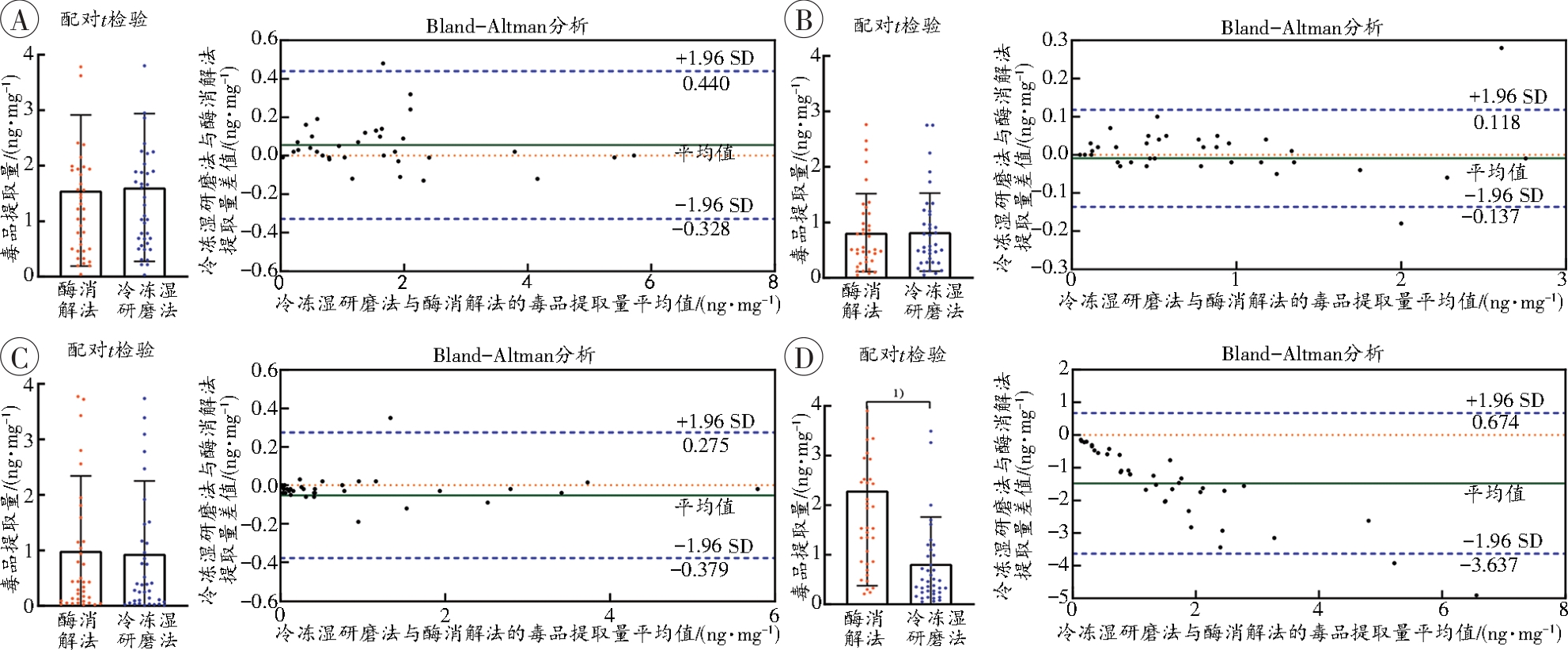
Fig. 1 Comparison of drug concentrations in positive hair samples by enzyme digestion versus cryogenic grinding
| [1] | 国家禁毒委员会办公室. 2024年中国毒情形势报告[N/OL].中国禁毒报, 2025-06-27(3). |
| Office of China National Narcotics Control Commission. 2024 China drug situation report[N/OL]. Zhongguo Jindu Bao, 2025-06-27(3). | |
| [2] | 陈蕾,李晟,刘昱池,等. 毒品检测中适用的生物检 材[J].中国药物依赖性杂志,2025,34(2):105-110. doi:10.13936/j.cnki.cjdd1992.2025.02.006 . |
| CHEN L, LI S, LIU Y C, et al. Biological test material for drug detection[J]. Zhongguo Yaowu Yilaixing Zazhi,2025,34(2):105-110. | |
| [3] | YAN H, XIANG P, SHEN M. Current status of hair analysis in forensic toxicology in China[J]. Forensic Sci Res,2021,6(3):240-249. doi:10.1080/20961790.2021.1921945 . |
| [4] | SHIMA N, KATAGI M, SATO T. Hair testing for investigating intake and use history of hypnotics in the forensic field[J]. Forensic Toxicol,2026,44(1):1-18. doi:10.1007/s11419-025-00730-7 . |
| [5] | BARROSO M, GALLARDO E, VIEIRA D N, et al. Hair: A complementary source of bioanalytical information in forensic toxicology[J]. Bioanalysis,2011,3(1):67-79. doi:10.4155/bio.10.171 . |
| [6] | FERREIRA C, PAULINO C, QUINTAS A. Extraction procedures for hair forensic toxicological analysis: A mini-review[J]. Chem Res Toxicol,2019,32(12):2367-2381. doi: 10.1021/acs.chemrestox.9b00301 . |
| [7] | MADRY M M, KRAEMER T, BAUMGARTNER M R. Systematic assessment of different solvents for the extraction of drugs of abuse and pharmaceuticals from an authentic hair pool[J]. Forensic Sci Int, 2018,282:137-143. doi:10.1016/j.forsciint. 2017. 11.027 . |
| [8] | VOGLIARDI S, TUCCI M, STOCCHERO G, et al. Sample preparation methods for determination of drugs of abuse in hair samples: A review[J]. Anal Chim Acta,2015,857:1-27. doi:10.1016/j.aca.2014.06.053 . |
| [9] | YAO Y, XIE G, HOU Y Q, et al. Noisy-power dissipation and efficiency in NiO/Fe2O3 wet grinding by planetary ball mill[J]. Trans Nonferrous Met Soc China,2014,24(8):2695-2703. doi:10.1016/S1003-6326(14)63400-2 . |
| [10] | HU J, CHEN H, LIU W, et al. Pulverization is a crucial step — A comparative study of different pretreatments in hair drug testing[J]. J Anal Toxicol,2023,47(4):346-352. doi:10.1093/jat/bkad001 . |
| [11] | OFFIDANI C, CARNEVALE A, CHIAROTTI M. Drugs in hair: A new extraction procedure[J]. Forensic Sci Int,1989,41(1/2):35-39. doi:10.1016/0379-0738(89)90233-8 . |
| [12] | BAPTISTA M J, MONSANTO P V, PINHO MARQUES E G, et al. Hair analysis for Δ9-THC, Δ9-THC-COOH, CBN and CBD, by GC/MS-EI:Comparison with GC/MS-NCI for Δ9-THC-COOH[J]. Forensic Sci Int,2002,128(1/2):66-78. doi:10.1016/S0379-0738(02)00154-8 . |
| [13] | BREIDI S E, BARKER J, PETRÓCZI A, et al. Enzymatic digestion and selective quantification of underivatised delta-9-tetrahydrocannabinol and cocaine in human hair using gas chromatography-mass spectrometry[J]. J Anal Methods Chem,2012,2012:907893. doi:10.1155/2012/907893 . |
| [14] | OFFIDANI C, STRANO ROSSI S, CHIAROTTI M. Improved enzymatic hydrolysis of hair[J]. Forensic Sci Int,1993,63(1/2/3):171-174. doi:10.1016/0379-0738(93)90271-B . |
| [15] | 李超,王继芬,王燕燕. 毛发样本的前处理技术研究进展[J].药物分析杂志,2020,40(3):401-412. doi:10.16155/j.0254-1793.2020.03.02 . |
| LI C, WANG J F, WANG Y Y. Advances in pretreatment techniques for hair samples[J]. Yaowu Fenxi Zazhi,2020,40(3):401-412. | |
| [16] | MÍGUEZ-FRAMIL M, CABARCOS P, TABERNERO M J, et al. Matrix solid phase dispersion assisted enzymatic hydrolysis as a novel approach for cocaine and opiates isolation from human hair[J]. J Chromatogr A,2013,1316:15-22. doi:10.1016/j.chroma.2013.09.063 . |
| [17] | MÍGUEZ-FRAMIL M, MOREDA-PIÑEIRO A, BERMEJO-BARRERA P, et al. Improvements on enzymatic hydrolysis of human hair for illicit drug determination by gas chromatography/mass spectrometry[J]. Anal Chem,2007,79(22):8564-8570. doi: 10.1021/ac071337n . |
| [18] | PETERS F T, DRUMMER O H, MUSSHOFF F. Validation of new methods[J]. Forensic Sci Int,2007,165(2/3):216-224. doi:10.1016/j.forsciint.20 06.05.021 . |
| [19] | LI K, LI Z R, ZHANG J Q, et al. Eco-friendly shrink-resist finishing of wool through synergistic effect of disulfide bond reducing agent and papain[J]. Int J Biol Macromol,2024,273(2):133156. doi:10.1016/j.ijbiomac.2024.133156 . |
| [20] | NAVONE L, SPEIGHT R. Understanding the dynamics of keratin weakening and hydrolysis by proteases[J]. PLoS One,2018,13(8):e0202608. doi:10.1371/journal.pone.0202608 . |
| [21] | SUN J, MONREAL S G, YAN F, et al. Bioinspired processing of keratin into upcycled fibers through pH-induced coacervation[J]. ACS Sustain Chem Eng, 2023,11(5):1985-1994. doi:10.1021/acssuschemeng.2c06865 . |
| [22] | 张奇兵,那馨竹,尹宗宁. 光谱法表征蛋白酶K的热变性过程[J].光谱学与光谱分析,2013,33(7):1749-1753. doi:10.3964/j.issn.1000-0593(2013)07-1749-05 . |
| ZHANG Q B, NA X Z, YIN Z N. Characterization of thermal denaturation process of proteinase K by spectrometry[J]. Guangpuxue Yu Guangpu Fenxi,2013,33(7):1749-1753. | |
| [23] | UTIU L, DEMCO D E, FECHETE R, et al. Morphology and molecular dynamics of hard α-keratin based micro-tubes by 1H and 13C solid-state NMR[J]. Chem Phys Lett,2011,517(1/2/3):86-91. doi:10.1016/j.cplett.2011.10.036 . |
| [24] | ISTRATE D, RAFIK M ER, POPESCU C, et al. Keratin made micro-tubes: The paradoxical thermal behavior of cortex and cuticle[J]. Int J Biol Macromol,2016,89:592-598. doi:10.1016/j.ijbiomac.201 6.05.035 . |
| [25] | 张腾飞,范追追,蔡再生. 基于蛋白酶K的羊毛防毡缩工艺研究[J].针织工业,2025(5):34-38. doi:10.3969/j.issn.1000-4033.2025.05.008 . |
| ZHANG T F, FAN Z Z, CAI Z S. Study of anti-felting process of wool based on proteinase K[J]. Zhenzhi Gongye,2025(5):34-38. | |
| [26] | 林霖,李淅,潘兰芳,等. 蛋白酶K活性检测方法建 立[J].食品科技,2013,38(2):266-271. doi:10.13684/j.cnki.spkj.2013.02.001 . |
| LIN L, LI X, PAN L F, et al. Method for proteinase K activity detection[J]. Shipin Keji,2013, 38(2):266-271. | |
| [27] | 中华人民共和国司法部. 法医毒物分析方法验证通则: [S].北京:中国标准出版社,2020. |
| Ministry of Justice of the People’s Republic of China. General rules for method validation in forensic toxicology: [S]. Beijing: China Quality and Standards Publishing,2020. | |
| [28] | ROLLINS D E, WILKINS D G, KRUEGER G G, et al. The effect of hair color on the incorporation of codeine into human hair[J]. J Anal Toxicol,2003,27(8):545-551. doi:10.1093/jat/27.8.545 . |
| [29] | 张建新,孟品佳,张大明,等. LC-MS/MS法分析海洛因吸食者毛发中的阿片类化合物[J].卫生研究,2010,39(5):593-596. doi:10.19813/j.cnki.weishengyanjiu. 2010.05.020 . |
| ZHANG J X, MENG P J, ZHANG D M, et al. Analysis on opioid compounds in the hair of heroin addicts with LC-MS/MS[J]. Weisheng Yanjiu,2010,39(5):593-596. |
| [1] | Guohua SHU. Practice and Prospect of Forensic Medicine Technology Transfer Under Policy Empowerment [J]. Journal of Forensic Medicine, 2026, 42(3): 191-195. |
| [2] | Xiaodan HE. Current Status Analysis and Pathway Exploration of the Technology Transfer in Forensic Medicine [J]. Journal of Forensic Medicine, 2026, 42(3): 196-206. |
| [3] | Qunyan LIU, Jinming YANG, Xiaoyu GUO. Strategies for Constructing a Technology Transfer System in Forensic Medicine Based on National Policies and Disciplinary Characteristics [J]. Journal of Forensic Medicine, 2026, 42(3): 207-214. |
| [4] | Jichao XU, Xiaohui CHEN, Qin SU, Dang’en GU, Tianchun LIN, Jianmiao ZHANG, Liang HAN, Ming CAI, Jian ZHAO, Quyi XU. Rapid Detection of Planktonic Microorganism DNA in Drowning: Technology Transfer and Application Implications [J]. Journal of Forensic Medicine, 2026, 42(3): 215-219. |
| [5] | Yunfeng ZHANG, Xinwei LIU, Linpei DONG, Xiaojun WU, Peng ZHAO, Jing RAN. Application of Portable Mass Spectrometry System in On-site Rapid Detection [J]. Journal of Forensic Medicine, 2026, 42(3): 224-231. |
| [6] | Lei TANG, Weihong XIE, Chengfei ZHUO, Chen XU, Huanhuan YAO, Xiaofei LI, Jianwei ZHANG, Yang LI, Jianbo YING. Development of a Fully Automated Blood Alcohol Analyzer and Its Application in Forensic Science [J]. Journal of Forensic Medicine, 2026, 42(3): 232-239. |
| [7] | Yawen XIAO, Yaoran YANG, Chongjun YANG, Yan SUN, Yue CHEN, Naihan HAN, Yuan MENG, Wenjun WANG, Qingshui REN, Jing ZHU, Tongshu ZHANG, Bing WANG, Liyan ZHANG. Application of Automatic Magnetic Solid-Phase Extraction Instrument in Toxic Substances and Illegal Drugs [J]. Journal of Forensic Medicine, 2026, 42(3): 240-246. |
| [8] | Zheng QIAO, Hui YAN, Hang CHEN. Illegal Drug: Metonitazene [J]. Journal of Forensic Medicine, 2026, 42(3): 269-272. |
| [9] | Xiaotian YU. Common Problems and Recommendations for Manuscripts Submitted to Fayixue Zazhi [J]. Journal of Forensic Medicine, 2026, 42(3): 273-280. |
| [10] | Jianghong XIONG, Lifeng XU, Chaopeng YANG, Chengren ZHU, Dongbing PENG. Homicide Induced by Barium Chloride Poisoning: A Case Report [J]. Journal of Forensic Medicine, 2026, 42(3): 292-294. |
| [11] | Xi ZHAO, Xinli SHI, Guipeng WANG, Xin WANG, Junbo ZHAO, Min CHEN, Jianhua ZHANG. Homicide Followed by Suicide Due to the Abuse of New Psychoactive Substance 3-MeO-PCPy: A Case Report [J]. Journal of Forensic Medicine, 2026, 42(2): 177-179. |
| [12] | Ruidi SHEN, Zhenhua QIAN. Research Progress on Mescaline and Its Analogues [J]. Journal of Forensic Medicine, 2026, 42(2): 151-158. |
| [13] | Yue LIU, Weiwei LIANG, Huanhui ZHU, Tianfu HE, Yuanyuan TIAN, Cong PENG, Songcai WANG. Detection of Chlormezanone in Blood Using HPLC-MS/MS Method [J]. Journal of Forensic Medicine, 2026, 42(2): 130-134. |
| [14] | Qingxia LIU, Di WEN, Shujin LI, Chunling MA, Bin CONG. Construction and Practice of the “Leading Goose Navigation and Four-Dimensional Synergy” Model for Cultivating Top Innovative Talents in Forensic Medicine [J]. Journal of Forensic Medicine, 2026, 42(2): 159-163. |
| [15] | Fangyu ZHAO, Dong GAO. Forensic Clinical Identification of Aortic Dissection Complicated with Delayed Intestinal Rupture: A Case Report [J]. Journal of Forensic Medicine, 2026, 42(2): 180-183. |
| Viewed | ||||||
|
Full text |
|
|||||
|
Abstract |
|
|||||
