
• Original Article •
Zhenchuan MA1,2( ), Tao LI1, Xueyan LIU2, Yu DU3, Wei JIA1, Zhendong HUA1, Cuimei LIU1()
Received:2024-05-10
Online:2026-10-03
Published:2026-08-25
Contact:
Cuimei LIU
CLC Number:
Zhenchuan MA, Tao LI, Xueyan LIU, Yu DU, Wei JIA, Zhendong HUA, Cuimei LIU. Qualitative Analysis of the Novel Synthetic Cannabinoid AFUBIATA[J]. Journal of Forensic Medicine, DOI: 10.12116/j.issn.1004-5619.2024.340501.
Add to citation manager EndNote|Ris|BibTeX
URL: http://www.fyxzz.cn/EN/10.12116/j.issn.1004-5619.2024.340501
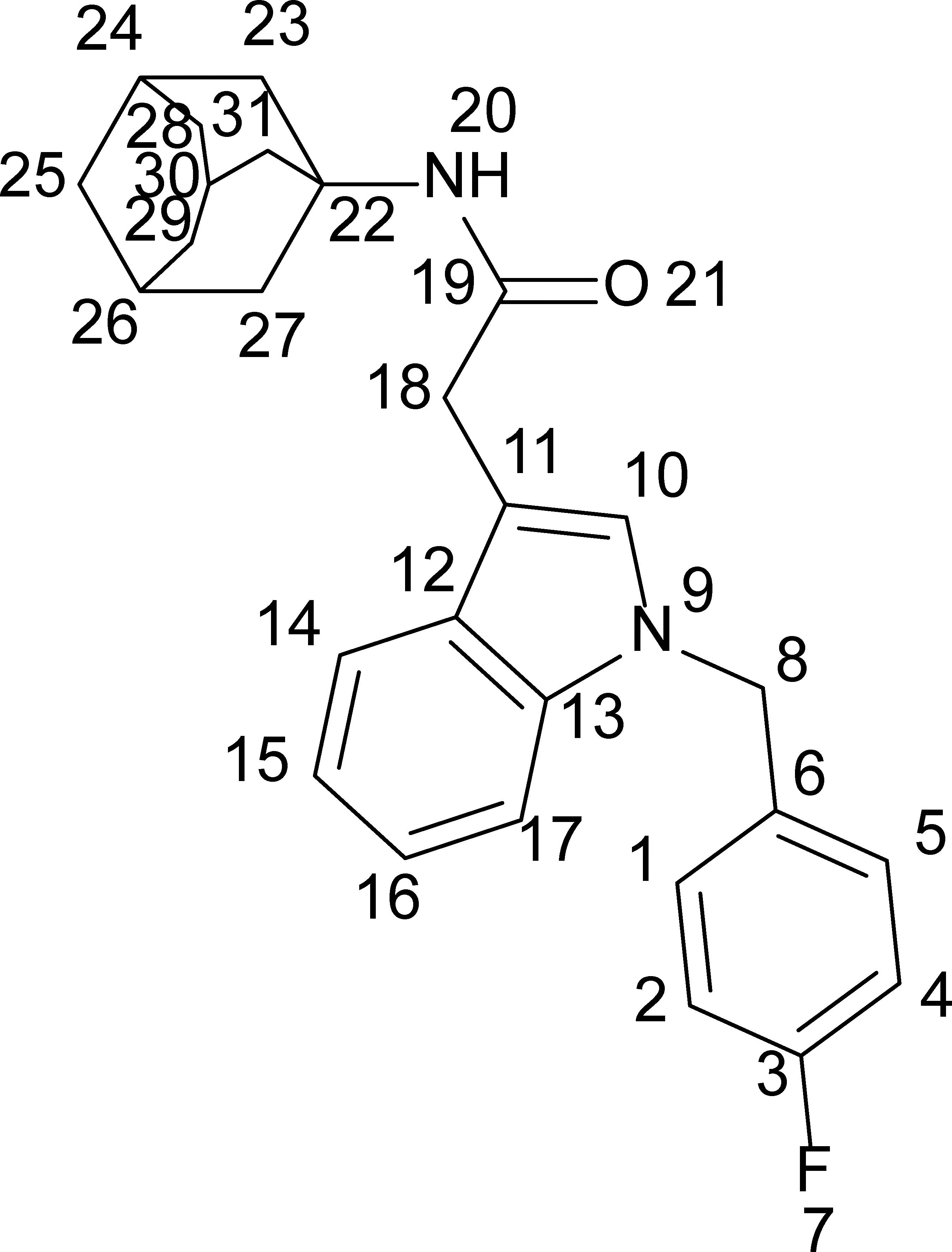
Fig. 1 Chemical structural formula of AFUBIATA

Fig. 2 Total ion chromatograms of the suspected sample before and after purification

Fig. 3 Mass spectrum of the target analyteunder EI ionization mode

Fig. 4 Proposed fragmentation pathways ofthe target analyte under EI ionization mode

Fig. 5 The primary and secondary mass spectra of the target analyte under ESI-CID and ESI-EAD modes

Fig. 6 Proposed fragmentation pathways of the target analyte under ESI-CID mode
| 离子 | 化学式 | 精确质荷比 | ||
|---|---|---|---|---|
| 理论值(m/z) | 实测值(m/z) | 误差/×10-6 | ||
| [M+H]+ | C27H30FN2O+ | 417.233 7 | 417.234 2 | 1.20 |
| A’ | C17H15FN2O•+ | 282.116 3 | 282.117 2 | 3.19 |
| B’ | C16H13FN+ | 238.102 7 | 238.102 6 | -0.42 |
| C’ | C15H12FN•+ | 225.094 8 | 225.095 5 | 3.11 |
| D’ | C10H15+ | 135.116 8 | 135.117 3 | 3.70 |
| E’ | C7H6F+ | 109.044 8 | 109.046 0 | 11.00 |
Tab. 1 The main ions of the target analyte under ESI-EAD mode
| 离子 | 化学式 | 精确质荷比 | ||
|---|---|---|---|---|
| 理论值(m/z) | 实测值(m/z) | 误差/×10-6 | ||
| [M+H]+ | C27H30FN2O+ | 417.233 7 | 417.234 2 | 1.20 |
| A’ | C17H15FN2O•+ | 282.116 3 | 282.117 2 | 3.19 |
| B’ | C16H13FN+ | 238.102 7 | 238.102 6 | -0.42 |
| C’ | C15H12FN•+ | 225.094 8 | 225.095 5 | 3.11 |
| D’ | C10H15+ | 135.116 8 | 135.117 3 | 3.70 |
| E’ | C7H6F+ | 109.044 8 | 109.046 0 | 11.00 |

Fig. 7 Proposed fragmentation pathways of the target analyte under ESI-EAD mode
| 位置 | δC/×10-6 | 氢谱 | ||
|---|---|---|---|---|
| δH/×10-6 | 质子数 | 峰型 | ||
| 1,5 | 128.44 | 7.07 | 2 | 多重峰 |
| 2,4 | 115.74 | 6.97 | 2 | 多重峰 |
| 3 | 161.07 | - | - | - |
| 6 | 133.12 | - | - | - |
| 8 | 49.35 | 5.27 | 2 | 单峰 |
| 10 | 127.20 | 7.03 | 1 | 单峰 |
| 11 | 109.39 | - | - | - |
| 12 | 127.82 | - | - | - |
| 13 | 136.70 | - | - | - |
| 14 | 119.18 | 7.58 | 1 | 双峰 |
| 15 | 119.84 | 7.15 | 1 | 三重峰 |
| 16 | 122.40 | 7.21 | 1 | 三重峰 |
| 17 | 109.79 | 7.27 | 1 | 双峰 |
| 18 | 34.66 | 3.62 | 2 | 双峰 |
| 19 | 170.31 | - | - | - |
| 20 | - | 5.35 | 1 | 单峰 |
| 22 | 51.66 | - | - | - |
| 23,27,31 | 41.45 | 1.86 | 3 | 单峰 |
| 24,26,30 | 29.39 | 2.00 | 3 | 单峰 |
| 25,28,29 | 36.31 | 1.62 | 6 | 多重峰 |
Tab. 2 1H-NMR and 13C-NMR data of the target analyte
| 位置 | δC/×10-6 | 氢谱 | ||
|---|---|---|---|---|
| δH/×10-6 | 质子数 | 峰型 | ||
| 1,5 | 128.44 | 7.07 | 2 | 多重峰 |
| 2,4 | 115.74 | 6.97 | 2 | 多重峰 |
| 3 | 161.07 | - | - | - |
| 6 | 133.12 | - | - | - |
| 8 | 49.35 | 5.27 | 2 | 单峰 |
| 10 | 127.20 | 7.03 | 1 | 单峰 |
| 11 | 109.39 | - | - | - |
| 12 | 127.82 | - | - | - |
| 13 | 136.70 | - | - | - |
| 14 | 119.18 | 7.58 | 1 | 双峰 |
| 15 | 119.84 | 7.15 | 1 | 三重峰 |
| 16 | 122.40 | 7.21 | 1 | 三重峰 |
| 17 | 109.79 | 7.27 | 1 | 双峰 |
| 18 | 34.66 | 3.62 | 2 | 双峰 |
| 19 | 170.31 | - | - | - |
| 20 | - | 5.35 | 1 | 单峰 |
| 22 | 51.66 | - | - | - |
| 23,27,31 | 41.45 | 1.86 | 3 | 单峰 |
| 24,26,30 | 29.39 | 2.00 | 3 | 单峰 |
| 25,28,29 | 36.31 | 1.62 | 6 | 多重峰 |

Fig. 8 HSQC and HMBC spectra of the target analyte
| [1] | Wiley J L, Marusich J A, Huffman J W. Moving around the molecule: Relationship between chemical structure and in vivo activity of synthetic cannabinoids[J]. Life Sci,2014,97(1):55-63. doi:10.1016/j.lfs.2013.09.011 . |
| [2] | 杜宇,王优美,狄斌,等. 合成大麻素结构特征分类及其命名问题分析[J].刑事技术,2022,47(3):310-316. |
| doi:10.16467/j.1008-3650.2022.03.003.Du Y, Wang Y M, Di B, et al. Confusion and inadequacy with nomenclature of synthetic cannabinoids[J]. Xingshi Jishu,2022,47(3):310-316. | |
| [3] | United Nations Office on Drugs and Crime (UNODC). World Drug Report 2023[EB/OL]. [2024-03-25]. . |
| [4] | 钱振华,李彭,郑珲,等. 芬太尼类新精神活性物质的质谱特征研究[J].质谱学报,2018,39(5):583-592. |
| doi:10.7538/zpxb.2017.0165.Qian Z H, Li P, Zheng H, et al. Mass fragmentation characteristics of fentanyl analogues[J]. Zhipu Xuebao,2018,39(5):583-592. | |
| [5] | 刘翠梅,花镇东,黄钰,等. 氯胺酮结构类似物的质谱特征研究[J].质谱学报,2023,44(4):508-518. |
| doi:10.7538/zpxb.2022.0162.Liu C M, Hua Z D, Huang Y, et al. Mass fragmentation characteristics of ketamine analogues[J]. Zhipu Xuebao,2023,44(4):508-518. | |
| [6] | Baba T, Zhang Z, Liu S Y, et al. Localization of multiple O-linked glycans exhibited in isomeric glycopeptides by hot electron capture dissociation[J]. J Proteome Res,2022,21(10):2462-2471. doi:10. 1021/acs.jproteome.2c00378 . |
| [7] | Khatri K, Pu Y, Klein J A, et al. Comparison of collisional and electron-based dissociation modes for middle-down analysis of multiply glycosylated peptides[J]. J Am Soc Mass Spectrom,2018,29(6):1075-1085. doi:10.1007/s13361-018-1909-y . |
| [8] | Che P, Davidson J T, Kool J, et al. Electron activated dissociation — A complementary fragmentation technique to collision-induced dissociation for metabolite identification of synthetic cathinone positional isomers[J]. Anal Chim Acta,2023,1283:341962. doi:10.1016/j.aca.2023.341962 . |
| [9] | Zhang C Y, Xu X H, Zhang S, et al. Detection and analysis of triacylglycerol regioisomers via electron activated dissociation (EAD) tandem mass spectrometry[J]. Talanta,2024,270:125552. doi:10.1016/j.talanta.2023.125552 . |
| [10] | Kong F Z, Keshet U, Shen T, et al. LibGen: Generating high quality spectral libraries of natural products for EAD-, UVPD-, and HCD-high resolution mass spectrometers[J]. Anal Chem,2023,95(46):16810-16818. doi:10.1021/acs.analchem.3c02263 . |
| [11] | 刘翠梅,贾薇,宋春辉,等. 缴获电子烟油样品中75种合成大麻素的1H qNMR定量分析研究[J].分析测试学报,2023,42(5):605-613. |
| doi:10.19969/j.fxcsxb.23010403.Liu C M, Jia W, Song C H, et al. Quantification of 75 synthetic cannabinoids in seized e-liquid samples by 1H qNMR[J]. Fenxi Ceshi Xuebao,2023,42(5):605-613. | |
| [12] | 花镇东. 新精神活性物质分析手册:质谱分册[M]. 2版.北京:中国人民公安大学出版社,2019:139-178. |
| Hua Z D. Handbook of analysis of new psychoactive substances: Mass spectrometry volume [M]. 2nd ed. Beijng: Publishing House of the People’s Public Security University of China,2019:139-178. | |
| [13] | 贾薇. 新精神活性物质分析手册:核磁共振波谱分册[M].2版.北京:中国人民公安大学出版社,2019:43-178. |
| Jia W. Handbook of analysis of new psychoactive substances: Nuclear magnetic resonance spectroscopy volume[M]. 2nd ed. Beijng: Publishing House of the People’s Public Security University of China,2019:43-178. | |
| [14] | Watanabe S, Yamane H, Iwai T, et al. In vitro metabolic profiling of new synthetic cannabinoids, ADB-FUBIATA, AFUBIATA, CH-FUBIATA, and CH-PIATA[J]. Arch Toxicol,2023,97(12):3085-3094. doi:10.1007/s00204-023-03605-1 . |
| [15] | Richeval C, Gish A, Cottereau V, et al. A current overview of the pharmacological composition of “La Chimique” consumed in Mayotte: Preliminary results of the CHASSE-MAREE protocol[J]. Drug Test Anal,2024,16(6):558-569. doi:10.1002/dta.3585 . |
| [1] | Guohua SHU. Practice and Prospect of Forensic Medicine Technology Transfer Under Policy Empowerment [J]. Journal of Forensic Medicine, 2026, 42(3): 191-195. |
| [2] | Xiaodan HE. Current Status Analysis and Pathway Exploration of the Technology Transfer in Forensic Medicine [J]. Journal of Forensic Medicine, 2026, 42(3): 196-206. |
| [3] | Qunyan LIU, Jinming YANG, Xiaoyu GUO. Strategies for Constructing a Technology Transfer System in Forensic Medicine Based on National Policies and Disciplinary Characteristics [J]. Journal of Forensic Medicine, 2026, 42(3): 207-214. |
| [4] | Jichao XU, Xiaohui CHEN, Qin SU, Dang’en GU, Tianchun LIN, Jianmiao ZHANG, Liang HAN, Ming CAI, Jian ZHAO, Quyi XU. Rapid Detection of Planktonic Microorganism DNA in Drowning: Technology Transfer and Application Implications [J]. Journal of Forensic Medicine, 2026, 42(3): 215-219. |
| [5] | Yunfeng ZHANG, Xinwei LIU, Linpei DONG, Xiaojun WU, Peng ZHAO, Jing RAN. Application of Portable Mass Spectrometry System in On-site Rapid Detection [J]. Journal of Forensic Medicine, 2026, 42(3): 224-231. |
| [6] | Lei TANG, Weihong XIE, Chengfei ZHUO, Chen XU, Huanhuan YAO, Xiaofei LI, Jianwei ZHANG, Yang LI, Jianbo YING. Development of a Fully Automated Blood Alcohol Analyzer and Its Application in Forensic Science [J]. Journal of Forensic Medicine, 2026, 42(3): 232-239. |
| [7] | Yawen XIAO, Yaoran YANG, Chongjun YANG, Yan SUN, Yue CHEN, Naihan HAN, Yuan MENG, Wenjun WANG, Qingshui REN, Jing ZHU, Tongshu ZHANG, Bing WANG, Liyan ZHANG. Application of Automatic Magnetic Solid-Phase Extraction Instrument in Toxic Substances and Illegal Drugs [J]. Journal of Forensic Medicine, 2026, 42(3): 240-246. |
| [8] | Mingjin YANG, Meiyun HE, Weian DU, Pengfei MEI, Xuelian CHENG, Xin LIU, Yuesen SHI, Hao JIN, Yiling HU, Meixin HE, Ling CHEN, Chao LIU. Enzyme Digestion LC-MS/MS Detection of Etomidate, Ketamine, Methamphe‑ tamine and Codeine in Hair [J]. Journal of Forensic Medicine, 2026, 42(3): 261-268. |
| [9] | Zheng QIAO, Hui YAN, Hang CHEN. Illegal Drug: Metonitazene [J]. Journal of Forensic Medicine, 2026, 42(3): 269-272. |
| [10] | Xiaotian YU. Common Problems and Recommendations for Manuscripts Submitted to Fayixue Zazhi [J]. Journal of Forensic Medicine, 2026, 42(3): 273-280. |
| [11] | Jianghong XIONG, Lifeng XU, Chaopeng YANG, Chengren ZHU, Dongbing PENG. Homicide Induced by Barium Chloride Poisoning: A Case Report [J]. Journal of Forensic Medicine, 2026, 42(3): 292-294. |
| [12] | Xi ZHAO, Xinli SHI, Guipeng WANG, Xin WANG, Junbo ZHAO, Min CHEN, Jianhua ZHANG. Homicide Followed by Suicide Due to the Abuse of New Psychoactive Substance 3-MeO-PCPy: A Case Report [J]. Journal of Forensic Medicine, 2026, 42(2): 177-179. |
| [13] | Ruidi SHEN, Zhenhua QIAN. Research Progress on Mescaline and Its Analogues [J]. Journal of Forensic Medicine, 2026, 42(2): 151-158. |
| [14] | Yue LIU, Weiwei LIANG, Huanhui ZHU, Tianfu HE, Yuanyuan TIAN, Cong PENG, Songcai WANG. Detection of Chlormezanone in Blood Using HPLC-MS/MS Method [J]. Journal of Forensic Medicine, 2026, 42(2): 130-134. |
| [15] | Qingxia LIU, Di WEN, Shujin LI, Chunling MA, Bin CONG. Construction and Practice of the “Leading Goose Navigation and Four-Dimensional Synergy” Model for Cultivating Top Innovative Talents in Forensic Medicine [J]. Journal of Forensic Medicine, 2026, 42(2): 159-163. |
| Viewed | ||||||
|
Full text |
|
|||||
|
Abstract |
|
|||||
