法医学杂志 ›› 2025, Vol. 41 ›› Issue (6): 585-592.DOI: 10.12116/j.issn.1004-5619.2024.141001

• 论著 • 上一篇    下一篇

精神伤残等级鉴定意见不一致的原因分析

朱陈淮玉1(), 王婕妤1, 刘迎1, 王碧玉2, 黄志军2, 于洋1, 曾燕妮1,3,4(), 时燕薇1,2,3,4()   

  1. 1.中山大学中山医学院法医学系,广东 广州 510080
    2.中山大学法医鉴定中心,广东 广州 510080
    3.广东省法医学转化医学工程技术研究中心,广东 广州 510080
    4.广东省脑功能与脑疾病重点实验室,广东 广州 510080
  • 收稿日期:2024-10-21 发布日期:2026-02-27 出版日期:2025-12-25
  • 通讯作者: 曾燕妮,时燕薇
  • 作者简介:朱陈淮玉(2000—),女,硕士研究生,主要从事法医精神病学研究;E-mail:zhuchhy@mail2.sysu.edu.cn
  • 基金资助:
    国家自然科学基金资助项目(81772032);科技创新2030资助项目(2021ZD0202000)

Analysis of the Reasons for the Inconsistent Opinions on the Mental Disability Assessments

Chen-huai-yu ZHU1(), Jie-yu WANG1, Ying LIU1, Bi-yu WANG2, Zhi-jun HUANG2, Yang YU1, Yan-ni ZENG1,3,4(), Yan-wei SHI1,2,3,4()   

  1. 1.Department of Forensic Medicine, Zhongshan School of Medicine, Sun Yat-sen University, Guangzhou 510080, China
    2.Forensic Medicine Center, Sun Yat-sen University, Guangzhou 510080, China
    3.Guangdong Province Translational Forensic Medicine Engineering Technology Research Center, Guangzhou 510080, China
    4.Guangdong Province Key Laboratory of Brain Function and Disease, Guangzhou 510080, China
  • Received:2024-10-21 Online:2026-02-27 Published:2025-12-25
  • Contact: Yan-ni ZENG, Yan-wei SHI

摘要:

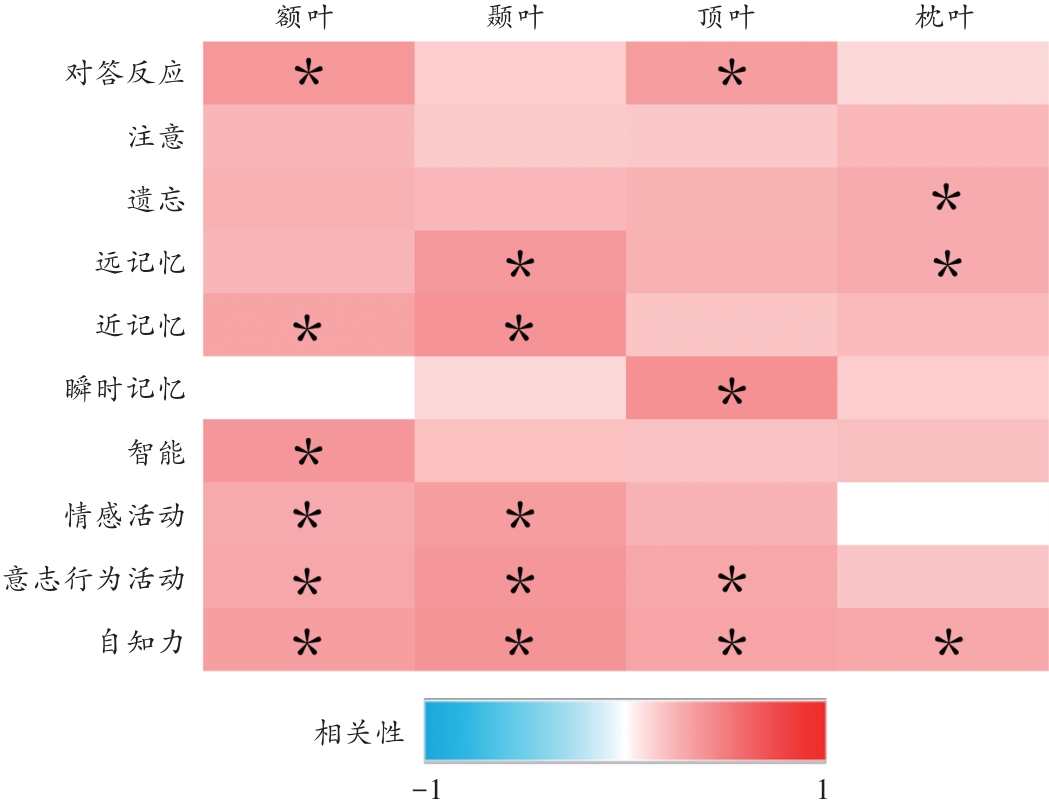
目的 通过对脑外伤所致精神伤残等级鉴定案例的回顾性分析,探讨此类案件鉴定意见不一致的原因。 方法 回顾性分析中山大学法医鉴定中心2018—2019年50例脑外伤所致精神伤残重新鉴定的案例,收集被鉴定人的一般人口学信息、脑损伤情况、初次鉴定与重新鉴定意见等信息。采用描述性统计、Spearman相关性分析和广义估计方程分析两次鉴定精神障碍诊断与伤残等级的差异,剖析鉴定意见不一致的原因。 结果 两次鉴定意见不一致率为70.0%(包括精神障碍诊断不一致、精神伤残等级不一致和两者均不一致)。鉴定时对答反应、记忆、智能、情感活动、意志行为活动、自知力与脑外伤后遗留的脑软化灶部位具有相关性。两次鉴定在部分精神症状受损程度和生活能力的评定上有明显的差异。 结论 两次鉴定意见不一致的原因可能是:(1)依据的头颅影像学信息不同(包括近3个月头颅影像学信息的改变、遗留脑软化灶的部位);(2)鉴定人对精神障碍受损程度的把握不同;(3)鉴定人对生活能力受损程度的鉴别不同。

关键词: 法医精神病学, 脑损伤, 精神伤残, 重新鉴定, 影像学检查, 日常生活能力评定

Abstract:

Objective To analyze the factors contributing to inconsistent opinions on assessments of mental disability degrees caused by traumatic brain injury (TBI). Methods A retrospective analysis was conducted on 50 cases of re-assessment of mental disability caused by TBI at Forensic Medicine Center of Sun Yat-sen University from 2018 to 2019. General demographic information of the assessed individuals, TBI conditions, and initial and re-assessment opinions were collected. Descriptive statistics, Spearman correlation analysis and generalized estimating equations were used to analyze the differences in mental disorder diagnosis and disability degrees between initial and re-assessment. The reasons for inconsistent opinions were analyzed. Results The inconsistency rate for two mental disability assessment opinions was 70.0% (including only mental disorder diagnosis were inconsistent, only disability degrees were inconsistent and both inconsistent). The responses to questioning, memory, intelligence, emotional activities, volitional behavior activities, and self-awareness during the assessment were correlated with the location of the cerebral malacia foci caused by TBI. There were significant differences between the two assessments in the degree of impairment to some mental symptoms and the living ability. Conclusion The reasons for the inconsistent opinions on the two assessments may be: (1) depending on different brain imaging information (including changes in brain imaging information in the recent three months, and the location of cerebral malacia foci); (2) examiners have different understandings of the degree of damage caused by mental disorders; (3) examiner’s assessment of the degree of impairment in living ability varies.

Key words: forensic psychiatry, brain injury, mental disability, re-assessment, imaging examination, evaluation of activities of daily living

中图分类号: