
Journal of Forensic Medicine ›› 2026, Vol. 42 ›› Issue (1): 17-25.DOI: 10.12116/j.issn.1004-5619.2023.531207
• Original Articles • Previous Articles Next Articles
Tian WANG( ), Li-wei ZHANG, Dai-jing YU, Jun ZHANG(), Jiang-wei YAN()
Received:2023-12-24
Online:2026-04-28
Published:2026-02-25
Contact:
Jun ZHANG, Jiang-wei YAN
About author:First author contact:WANG T, ZHANG L W, YU D J, et al. Visual analysis of the current status and trends in forensic microbiology research based on bibliometrics[J].
CLC Number:
Tian WANG, Li-wei ZHANG, Dai-jing YU, Jun ZHANG, Jiang-wei YAN. Visual Analysis of the Current Status and Trends in Forensic Microbiology Research Based on Bibliometrics[J]. Journal of Forensic Medicine, 2026, 42(1): 17-25.
Add to citation manager EndNote|Ris|BibTeX
URL: http://www.fyxzz.cn/EN/10.12116/j.issn.1004-5619.2023.531207
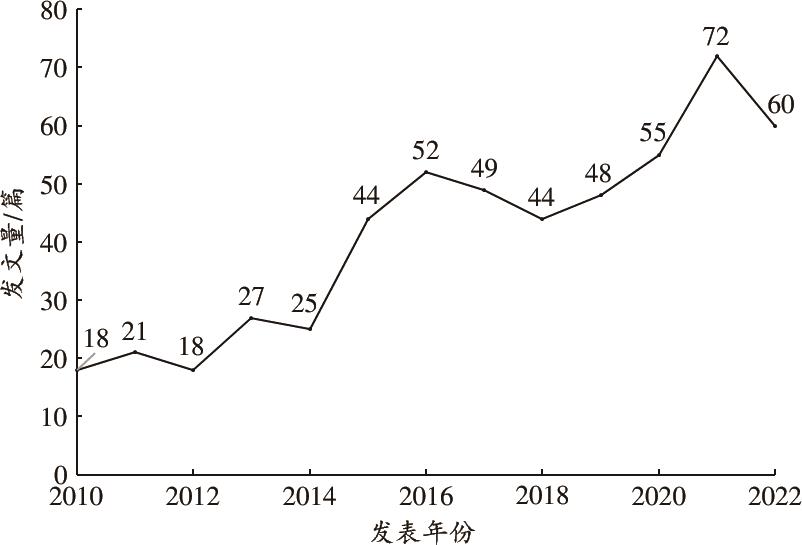
Fig. 1 Annual publications on forensic microbiology research from 2010 to 2022
| 期刊 | 发文量/篇 | 影响因子 | 大类分区 | 小类分区 | 国家(地区) | 被引频次 |
|---|---|---|---|---|---|---|
| Forensic Sci Int | 50 | 2.2 | 医学3区 | 法医学2区 | 爱尔兰 | 1 276 |
| J Forensic Sci | 50 | 1.6 | 医学4区 | 法医学3区 | 美国 | 1 306 |
| Forensic Sci Int Genet | 38 | 3.1 | 医学2区 | 法医学1区 | 爱尔兰 | 775 |
| Front Microbiol | 25 | 5.2 | 生物学2区Top | 微生物学3区 | 瑞士 | 311 |
| Int J Legal Med | 25 | 2.1 | 医学3区 | 法医学2区 | 德国 | 605 |
| J Forensic Leg Med | 20 | 1.5 | 医学4区 | 法医学4区 | 英格兰 | 83 |
| PLoS One | 18 | 3.7 | 综合性期刊3区 | 综合性期刊3区 | 美国 | 1 019 |
| Sci Rep | 14 | 4.6 | 综合性期刊2区 | 综合性期刊2区 | 英格兰 | 344 |
| Microbiol Spectr | 10 | 3.7 | 生物学2区 | 微生物学3区 | 美国 | 6 |
| Appl Environ Microbiol | 9 | 4.4 | 生物学2区 | 微生物学3区 | 美国 | 857 |
Tab. 1 Top 10 journals publishing articles in forensic microbiology research
| 期刊 | 发文量/篇 | 影响因子 | 大类分区 | 小类分区 | 国家(地区) | 被引频次 |
|---|---|---|---|---|---|---|
| Forensic Sci Int | 50 | 2.2 | 医学3区 | 法医学2区 | 爱尔兰 | 1 276 |
| J Forensic Sci | 50 | 1.6 | 医学4区 | 法医学3区 | 美国 | 1 306 |
| Forensic Sci Int Genet | 38 | 3.1 | 医学2区 | 法医学1区 | 爱尔兰 | 775 |
| Front Microbiol | 25 | 5.2 | 生物学2区Top | 微生物学3区 | 瑞士 | 311 |
| Int J Legal Med | 25 | 2.1 | 医学3区 | 法医学2区 | 德国 | 605 |
| J Forensic Leg Med | 20 | 1.5 | 医学4区 | 法医学4区 | 英格兰 | 83 |
| PLoS One | 18 | 3.7 | 综合性期刊3区 | 综合性期刊3区 | 美国 | 1 019 |
| Sci Rep | 14 | 4.6 | 综合性期刊2区 | 综合性期刊2区 | 英格兰 | 344 |
| Microbiol Spectr | 10 | 3.7 | 生物学2区 | 微生物学3区 | 美国 | 6 |
| Appl Environ Microbiol | 9 | 4.4 | 生物学2区 | 微生物学3区 | 美国 | 857 |
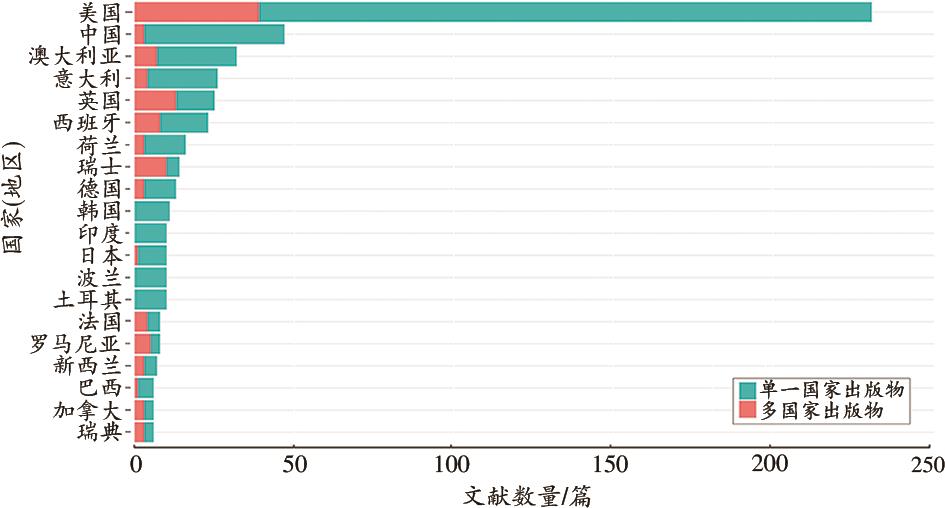
Fig. 2 Top 20 high-producing countries (regions) in the field of forensic microbiology
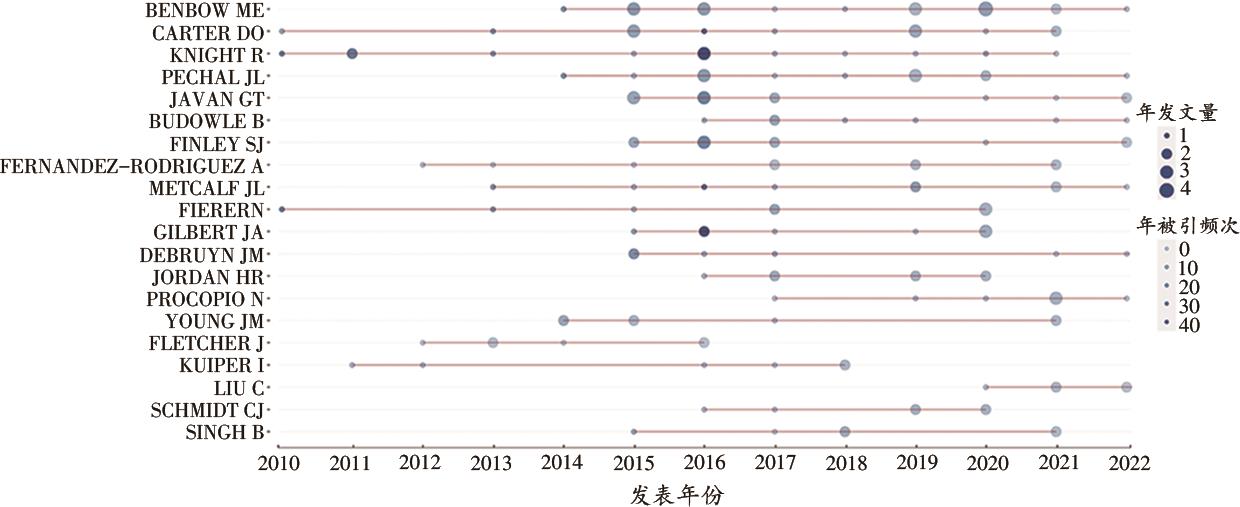
Fig. 3 Publication distribution of the top 20 authors in forensic microbiology
| 通信作者 | 期刊 | 文献 | 发表年份 | LC | GC | LC/GC |
|---|---|---|---|---|---|---|
| FIERER N | P Natl Acad Sci U S A | Forensic identification using skin bacterial communities[ | 2010 | 93 | 381 | 24.41% |
| METCALF J L | Science | Microbial community assembly and metabolic function during mammalian corpse decomposition[ | 2016 | 81 | 281 | 28.83% |
| METCALF J L | eLife | A microbial clock provides an accurate estimate of the postmortem interval in a mouse model system[ | 2013 | 85 | 198 | 42.93% |
| PECHAL J L | Int J Legal Med | The potential use of bacterial community succession in forensics as described by high throughput metagenomic sequen-cing[ | 2014 | 90 | 179 | 50.28% |
| HYDE E R | PLoS One | The living dead: Bacterial community structure of a cadaver at the onset and end of the bloat stage of decomposition[ | 2013 | 55 | 132 | 41.67% |
| LAX S | Microbiome | Forensic analysis of the microbiome of phones and shoes[ | 2015 | 58 | 97 | 59.79% |
| COBAUGH K L | PLoS One | Functional and structural succession of soil microbial communities below decomposing human cadavers[ | 2015 | 45 | 95 | 47.37% |
| JAVAN G T | Sci Rep | Human thanatomicrobiome succession and time since death[ | 2016 | 51 | 88 | 57.95% |
| HAUTHER K A | J Forensic Sci | Estimating time since death from postmortem human gut microbial communities[ | 2015 | 46 | 79 | 58.23% |
| DAMANN F E | J Forensic Sci | Potential use of bacterial community succession in decaying human bone for estimating postmortem interval[ | 2015 | 43 | 72 | 59.72% |
Tab. 2 Top 10 highly cited publications in the field of forensic microbiology
| 通信作者 | 期刊 | 文献 | 发表年份 | LC | GC | LC/GC |
|---|---|---|---|---|---|---|
| FIERER N | P Natl Acad Sci U S A | Forensic identification using skin bacterial communities[ | 2010 | 93 | 381 | 24.41% |
| METCALF J L | Science | Microbial community assembly and metabolic function during mammalian corpse decomposition[ | 2016 | 81 | 281 | 28.83% |
| METCALF J L | eLife | A microbial clock provides an accurate estimate of the postmortem interval in a mouse model system[ | 2013 | 85 | 198 | 42.93% |
| PECHAL J L | Int J Legal Med | The potential use of bacterial community succession in forensics as described by high throughput metagenomic sequen-cing[ | 2014 | 90 | 179 | 50.28% |
| HYDE E R | PLoS One | The living dead: Bacterial community structure of a cadaver at the onset and end of the bloat stage of decomposition[ | 2013 | 55 | 132 | 41.67% |
| LAX S | Microbiome | Forensic analysis of the microbiome of phones and shoes[ | 2015 | 58 | 97 | 59.79% |
| COBAUGH K L | PLoS One | Functional and structural succession of soil microbial communities below decomposing human cadavers[ | 2015 | 45 | 95 | 47.37% |
| JAVAN G T | Sci Rep | Human thanatomicrobiome succession and time since death[ | 2016 | 51 | 88 | 57.95% |
| HAUTHER K A | J Forensic Sci | Estimating time since death from postmortem human gut microbial communities[ | 2015 | 46 | 79 | 58.23% |
| DAMANN F E | J Forensic Sci | Potential use of bacterial community succession in decaying human bone for estimating postmortem interval[ | 2015 | 43 | 72 | 59.72% |
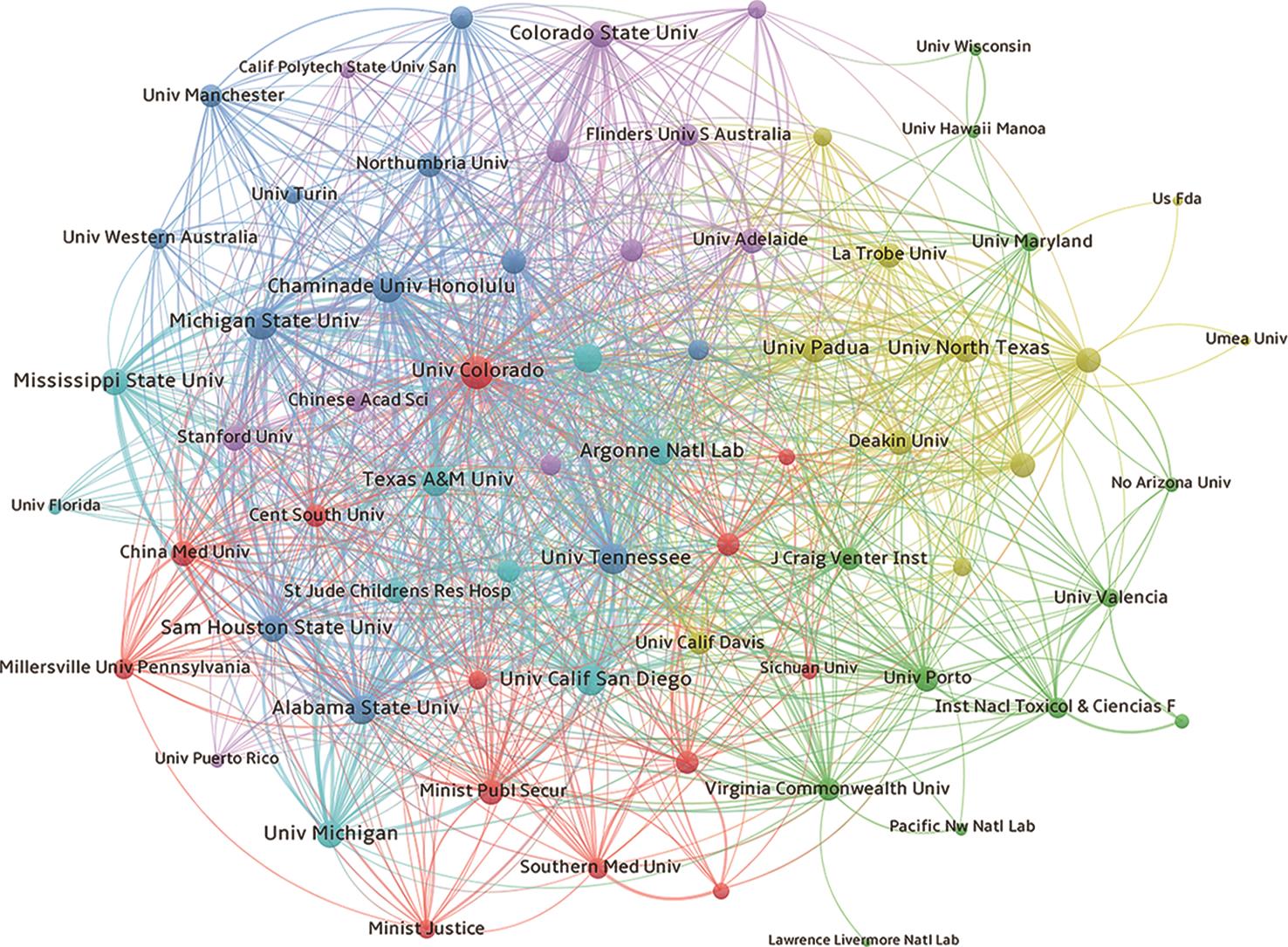
Fig. 4 Co-occurrence network map for institutional cooperation
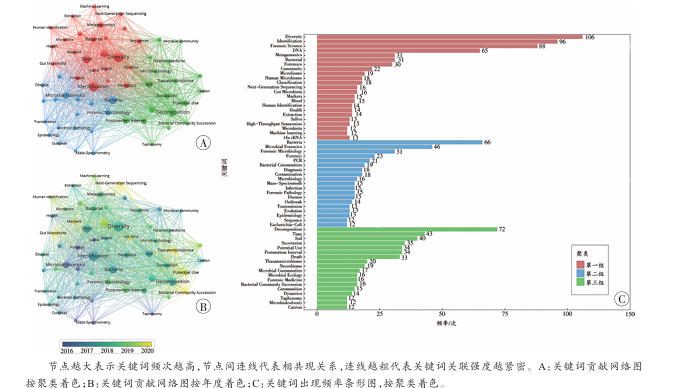
Fig. 5 Hot keywords co-occurrence network map
| [1] | ZHANG J, LIU W L, SIMAYIJIANG H, et al. Application of microbiome in forensics[J]. Genomics Proteomics Bioinformatics,2023,21(1):97-107. doi:10.1016/j.gpb.2022.07.007 . |
| [2] | COELHO L P, ALVES R, DEL RÍO Á R, et al. Towards the biogeography of prokaryotic genes[J]. Nature,2022,601(7892):252-256. doi:10.1038/s41 586-021-04233-4 . |
| [3] | DEBRAY R, HERBERT R A, JAFFE A L, et al. Priority effects in microbiome assembly[J]. Nat Rev Microbiol,2022,20(2):109-121. doi:10.1038/s 41579-021-00604-w . |
| [4] | MOITAS B, CALDAS I M, SAMPAIO-MAIA B. Forensic microbiology and geographical location: A systematic review[J]. Aust J Forensic Sci,2024, 56(4):416-431. doi:10.1080/00450618.2023.2191993 . |
| [5] | SCHMEDES S E, WOERNER A E, BUDOWLE B. Forensic human identification using skin micro- biomes[J]. Appl Environ Microbiol,2017,83(22):e01672-17. doi:10.1128/AEM.01672-17 . |
| [6] | SPERUDA M, PIECUCH A, BORZĘCKA J, et al. Microbial traces and their role in forensic science[J]. J Appl Microbiol,2022,132(4):2547-2557. doi:10. 1111/jam.15426 . |
| [7] | ROBINSON J M, PASTERNAK Z, MASON C E, et al. Forensic applications of microbiomics: A review[J]. Front Microbiol,2021,11:608101. doi:10.3389/fmicb.2020.608101 . |
| [8] | FINLEY S J, BENBOW M E, JAVAN G T. Microbial communities associated with human decomposition and their potential use as postmortem clocks[J]. Int J Legal Med,2015,129(3):623-632. doi:10.1007/s00414-014-1059-0 . |
| [9] | 符晓亮,郭娟娟,刘卓鹰,等. 高通量测序在尸体微生物及死亡时间推断中的应用[J].法医学杂志,2018,34(5):475-481. |
| doi:10.12116/j.issn.1004-5619.2018.05.004.FU X L, GUO J J, LIU Z Y, et al. Application of high-throughput sequencing in researches of cadaveric microorganisms and postmortem interval estimation[J]. Fayixue Zazhi,2018,34(5):475-481. | |
| [10] | PESSIN V Z, YAMANE L H, SIMAN R R. Smart bibliometrics: An integrated method of science mapping and bibliometric analysis[J]. Scientometrics,2022,127(6):3695-3718. doi:10.1007/s11192-022-04406-6 . |
| [11] | 杜杏叶,曹珂瑞,李苑,等. 把握科技期刊发展趋势,提升科技期刊学术影响——中国科学院文献情报中心首届“科技期刊学术论坛”综述[J].中国科技期刊研究,2023,34(5):547-557. doi:10.11946/cjstp.2023 04090258 . |
| DU X Y, CAO K R, LI Y, et al. Grasping the development trend of scientific journals, enhancing the academic influence of scientific journals: A review of the first “Scientific Journal Academic Forum” held by National Science Library of Chinese Academy of Sciences[J]. Zhongguo Keji Qikan Yanjiu,2023,34(5):547-557. | |
| [12] | BARRANTES B S L. Exploratory factor analysis of bibliometric indicators for the Sustainable Development Goals[J]. Scientometrics,2025,130:1701-1729. doi:10.1007/s11192-025-05256-8 . |
| [13] | 范庆炜,李凌,杨慧凌,等. 法医学混合斑研究现状及趋势的文献计量和可视化分析[J].法医学杂志,2024,40(1):20-29. doi:10.12116/j.issn.1004-5619.2022.521010 . |
| FAN Q W, LI L, YANG H L, et al. A bibliometric and visual analysis of the current status and trends of forensic mixed stain research[J]. Fayixue Zazhi,2024,40(1):20-29. | |
| [14] | FIERER N, LAUBER C L, ZHOU N, et al. Forensic identification using skin bacterial communities[J]. Proc Natl Acad Sci U S A,2010,107(14):6477-6481. doi:10.1073/pnas.1000162107 . |
| [15] | METCALF J L, XÜ Z J Z, WEISS S, et al. Microbial community assembly and metabolic function during mammalian corpse decomposition[J]. Science,2016,351(6269):158-162. doi:10.1126/science.aad 2646 . |
| [16] | METCALF J L, WEGENER PARFREY L, GONZALEZ A, et al. A microbial clock provides an accurate estimate of the postmortem interval in a mouse model system[J]. eLife,2013,2:e01104. doi:10.7554/eLife.01104 . |
| [17] | PECHAL J L, CRIPPEN T L, BENBOW M E, et al. The potential use of bacterial community succession in forensics as described by high throughput metagenomic sequencing[J]. Int J Legal Med,2014,128(1):193-205. doi:10.1007/s00414-013-0872-1 . |
| [18] | HYDE E R, HAARMANN D P, LYNNE A M, et al. The living dead: Bacterial community structure of a cadaver at the onset and end of the bloat stage of decomposition[J]. PLoS One,2013, 8(10):e77733. doi:10.1371/journal.pone.0077733 . |
| [19] | LAX S, HAMPTON-MARCELL J T, GIBBONS S M, et al. Forensic analysis of the microbiome of phones and shoes[J]. Microbiome,2015,3:21. doi:10.1186/s40168-015-0082-9 . |
| [20] | COBAUGH K L, SCHAEFFER S M, DEBRUYN J M. Functional and structural succession of soil microbial communities below decomposing human cadavers[J]. PLoS One,2015,10(6):e0130201. doi:10.1371/journal.pone.0130201 . |
| [21] | JAVAN G T, FINLEY S J, CAN I, et al. Human thanatomicrobiome succession and time since death[J]. Sci Rep,2016,6:29598. doi:10.1038/srep 29598 . |
| [22] | HAUTHER K A, COBAUGH K L, JANTZ L M, et al. Estimating time since death from postmortem human gut microbial communities[J]. J Forensic Sci,2015,60(5):1234-1240. doi:10.1111/1556-4029.12828 . |
| [23] | DAMANN F E, WILLIAMS D E, LAYTON A C. Potential use of bacterial community succession in decaying human bone for estimating postmortem interval[J]. J Forensic Sci,2015,60(4):844-850. doi:10.1111/1556-4029.12744 . |
| [24] | BOHMANN K, ELBRECHT V, CARØE C, et al. Strategies for sample labelling and library preparation in DNA metabarcoding studies[J]. Mol Ecol Resour,2022,22(4):1231-1246. doi:10.1111/1755-0998.13512 . |
| [25] | MIDHA M K, WU M C, CHIU K P. Long-read sequencing in deciphering human genetics to a greater depth[J]. Hum Genet,2019,138(11/12):1201-1215. doi:10.1007/s00439-019-02064-y . |
| [26] | FRASER J, ETHIER S D, MIURA H, et al. A Torrent of data: Mapping chromatin organization using 5C and high-throughput sequencing[J]. Methods Enzymol,2012,513:113-141. doi:10.1016/B978-0-12-391938-0.00005-7 . |
| [27] | JEON S A, PARK J L, PARK S J, et al. Comparison between MGI and Illumina sequencing platforms for whole genome sequencing[J]. Genes Genomics,2021,43(7):713-724. doi:10.1007/s13258-021-01096-x . |
| [28] | DANCE A. Ten years on from anthrax scare, analysis lags behind sequencing[J]. Nat Med,2011,17(10):1158-1159. doi:10.1038/nm1011-1158b . |
| [29] | VARLET V, JOYE C, FORBES S L, et al. Revolution in death sciences: body farms and taphono- mics blooming. A review investigating the advantages, ethical and legal aspects in a Swiss context[J]. Int J Legal Med,2020,134(5):1875-1895. doi:10. 1007/s00414-020-02272-6 . |
| [30] | VARLET V, JOYE C, FORBES S L, et al. Revolution in death sciences: Body farms and taphonomics blooming. A review investigating the advantages, ethical and legal aspects in a Swiss context[J]. Int J Legal Med,2020,134(5):1875-1895. doi:10. 1007/s00414-020-02272-6 . |
| [31] | 雷梵章,陈曼,梅书燕,等. 微生物组学的法医学应用新进展、挑战和机遇[J].法医学杂志,2022,38(5):625-639. doi:10.12116/j.issn.1004-5619.2022.520303 . |
| LEI F Z, CHEN M, MEI S Y, et al. New advances, challenges and opportunities in forensic applications of microbiomics[J]. Fayixue Zazhi,2022,38(5):625-639. | |
| [32] | MARCHIORI D M, POPADIUK S, MAINARDES E W, et al. Innovativeness: A bibliometric vision of the conceptual and intellectual structures and the past and future research directions[J]. Scientometrics,2021,126: 55-92. doi:10.1007/s11192-020-03753-6 . |
| [33] | KAWULOK J, KAWULOK M, DEOROWICZ S. Environmental metagenome classification for constructing a microbiome fingerprint[J]. Biol Direct,2019,14(1):20. doi:10.1186/s13062-019-0251-z . |
| [34] | CHO I, BLASER M J. The human microbiome: At the interface of health and disease[J]. Nat Rev Genet,2012,13(4):260-270. doi:10.1038/nrg3182 . |
| [35] | MESLIER V, QUINQUIS B, SILVA K DA, et al. Benchmarking second and third-generation sequencing platforms for microbial metagenomics[J]. Sci Data,2022,9(1):694. doi:10.1038/s41597-022-01762-z . |
| [36] | GHANNAM R B, TECHTMANN S M. Machine learning applications in microbial ecology, human microbiome studies, and environmental monitoring[J]. Comput Struct Biotechnol J,2021,19:1092-1107. doi:10.1016/j.csbj.2021.01.028 . |
| [1] | Xin-ying WANG, Jia-li ZHANG, Ping XIANG, Xin WANG. Research Progress on Hair Metabolomics and Its Application in Forensic Science [J]. Journal of Forensic Medicine, 2026, 42(1): 49-55. |
| [2] | Xiao-tian YU, Sheng-nan WU, Wen-ting WANG, Yuan-yuan LIU, Ning-guo LIU. Forty Years of Dedicated Development: Establishing a High-Quality Academic Platform for Forensic Medicine — A Review of the 40-Year History of Fayixue Zazhi [J]. Journal of Forensic Medicine, 2026, 42(1): 56-63. |
| [3] | Hang CHEN. Letter to the Editor: On Critical Toxicological Information of Newly Discovered Toxic Substances and Illegal Drugs [J]. Journal of Forensic Medicine, 2026, 42(1): 64-65. |
| [4] | Hang CHEN, Xin WANG, Hui YAN, Ping XIANG. Synthetic Drug: Pregabalin [J]. Journal of Forensic Medicine, 2026, 42(1): 66-68. |
| [5] | Ya-ning SUN, Dan-yang LI, Qing XIA, Yan GAO, Zong-shi XU, Wen-tao XIA, Hui-ming ZHOU, Xiao-meng HAN, Xiao-ying YU, Yan-liang SHENG. Frontiers and Perspectives of Artificial Intelligence in Forensic Research on CT Imaging Diagnosis of Rib Fractures [J]. Journal of Forensic Medicine, 2025, 41(6): 593-600. |
| [6] | Yan GAO, Xia LIU, Fang CHEN, Xiao-ping YANG, Ze-yu WANG, Ya-ning SUN, Yan-liang SHENG, Wen-tao XIA. Comparison of NB Chirp ABR and 40 Hz AERP in Normal Hearing Adults [J]. Journal of Forensic Medicine, 2025, 41(6): 559-565. |
| [7] | Qiong-ying ZHENG, Xue-yi FENG, Hong-xiao DENG, Jia-xin YU, Wen-jia DUAN, Zheng QIAO, Xin WANG, Wei LIU, Ke-ming YUN, Hang CHEN, Ping XIANG. Sources of Uncertainty and Influencing Factors in the Analysis of Volatile Components in Blood Using Headspace Gas Chromatography [J]. Journal of Forensic Medicine, 2025, 41(6): 574-584. |
| [8] | Xue-yan LIU, Wei JIA, Cui-mei LIU, Zhen-dong HUA, Zhen-chuan MA, Zhi-yu LI. Qualitative Analysis of Precursor Substances of Phenyl-2-Acetone and 3,4-Methylenedioxyphenyl-2-Acetone [J]. Journal of Forensic Medicine, 2025, 41(6): 566-573. |
| [9] | Ji CHEN, Yu-rong ZHAO, Xin HUANG, Yi-ling QU, Yan-fang LU, Yu XING, Han ZHANG, Jian-ye ZENG, Shi-lin LI, Su-hua ZHANG. Effect of Temperature on Microbial Succession in Different Tissues of Cadavers and Estimation of Postmortem Interval [J]. Journal of Forensic Medicine, 2025, 41(5): 456-467. |
| [10] | Hou-ying ZOU, Yin-lei LEI, Ruo-cheng XIA, Yan SHI, Cheng-tao LI. Exploring Microbial Detection of Psychoactive Substances in Wastewater Based on Micobiome Analysis [J]. Journal of Forensic Medicine, 2025, 41(5): 468-476. |
| [11] | Han ZHANG, Xin HUANG, An-qi CHEN, Ji CHEN, Yan-fang LU, Jian-ye ZENG, Xiang WANG. Skin Microbiome: Expanding Dimensions and Challenges in Forensic Evidence [J]. Journal of Forensic Medicine, 2025, 41(5): 443-455. |
| [12] | Zhi-yong LIU, Xing-chun ZHAO, Ling CHEN, Ri-ga WU, Mei-qing YUAN, Xiao-hui CHEN, Jian ZHAO, Qu-yi XU, Chang-hui LIU, Hong-yu SUN, Chao LIU. Recommendations for the Standardization of Forensic Microbiological Analysis [J]. Journal of Forensic Medicine, 2025, 41(5): 482-493. |
| [13] | Yan GAO, Fang CHEN, Wen-tao XIA, Xiao-ping YANG, Ze-yu WANG, Ze-ren YANG, Xia LIU, Yan-liang SHENG. Research Progress of Chirp ABR and Its Application in Forensic Auditory Identification [J]. Journal of Forensic Medicine, 2025, 41(4): 387-393. |
| [14] | Wen-yan LI, Jin-feng ZHAO, Wei-chen LIU, Shi-jing LÜ, Jia-xin ZHANG, Xu-dong ZHANG, Zhi-wen WEI, Ke-ming YUN, Chao ZHANG. Toxicokinetics of Chlorfenapyr and Its Metabolites in Rats [J]. Journal of Forensic Medicine, 2025, 41(4): 380-387. |
| [15] | Li-xia WEI, Bo LIU, Xiao-yuan YANG, Xi ZHANG, Yi-feng LAN, Chao ZHANG, Juan JIA, Dan ZHANG, Zhi-wen WEI, Ke-ming YUN, Zhe CHEN. Detection of Ketamine and Norketamine Using an Aptamer-Functionalized Graphene Oxide Fluorescent Sensor [J]. Journal of Forensic Medicine, 2025, 41(4): 326-339. |
| Viewed | ||||||
|
Full text |
|
|||||
|
Abstract |
|
|||||
