
Journal of Forensic Medicine ›› 2025, Vol. 41 ›› Issue (4): 326-339.DOI: 10.12116/j.issn.1004-5619.2025.350409
Special Issue: 快检技术赋能法医毒物学多场景应用专题
Previous Articles Next Articles
Li-xia WEI1,2,3( ), Bo LIU1,2,3, Xiao-yuan YANG1,2,3, Xi ZHANG1,2,3, Yi-feng LAN1,2,3, Chao ZHANG1,2,3, Juan JIA1,2,3, Dan ZHANG1,2,3, Zhi-wen WEI1,2,3, Ke-ming YUN1,2,3(), Zhe CHEN1,2,3()
Received:2025-04-23
Online:2025-11-25
Published:2025-08-25
Contact:
Ke-ming YUN, Zhe CHEN
CLC Number:
Li-xia WEI, Bo LIU, Xiao-yuan YANG, Xi ZHANG, Yi-feng LAN, Chao ZHANG, Juan JIA, Dan ZHANG, Zhi-wen WEI, Ke-ming YUN, Zhe CHEN. Detection of Ketamine and Norketamine Using an Aptamer-Functionalized Graphene Oxide Fluorescent Sensor[J]. Journal of Forensic Medicine, 2025, 41(4): 326-339.
Add to citation manager EndNote|Ris|BibTeX
URL: http://www.fyxzz.cn/EN/10.12116/j.issn.1004-5619.2025.350409
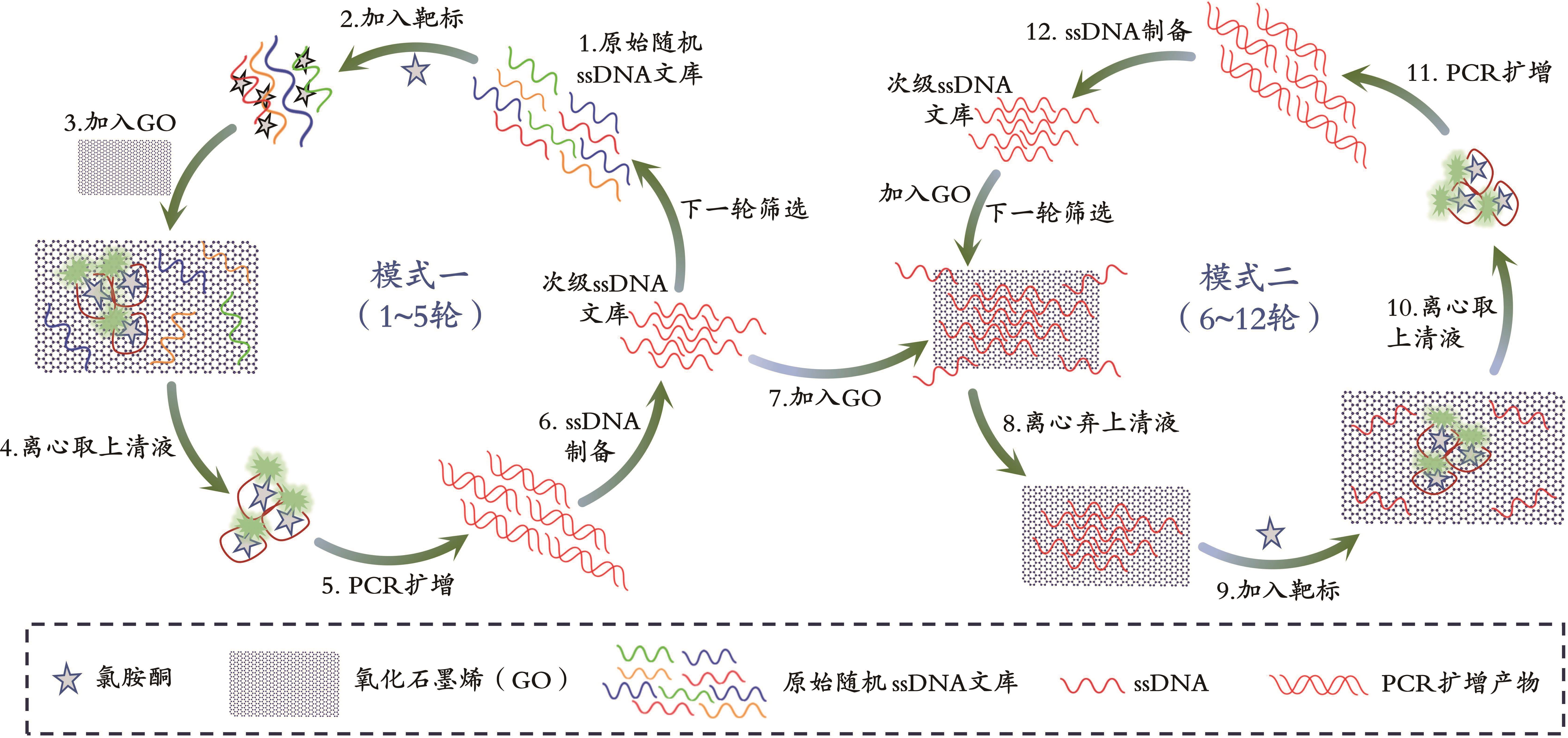
Fig. 1 The screening of ketamine-specific aptamers based on GO-SELEX
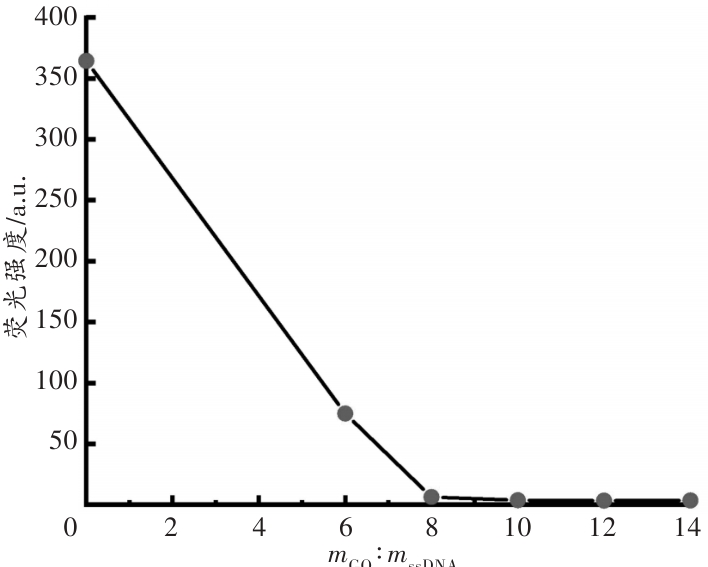
Fig. 2 Incubation results of GO and ssDNAat different mass ratios
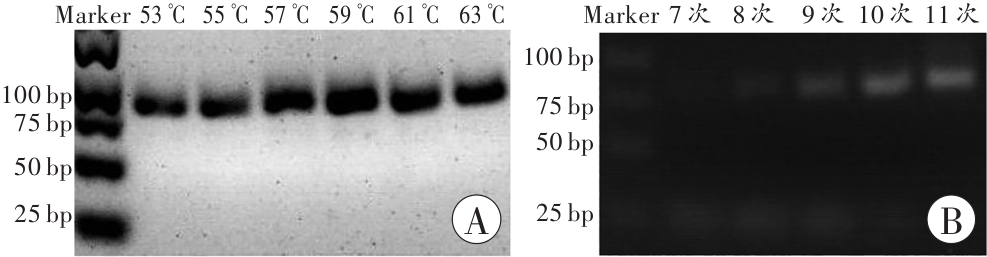
Fig. 3 Amplification results under different annealingtemperatures and cycle numbers
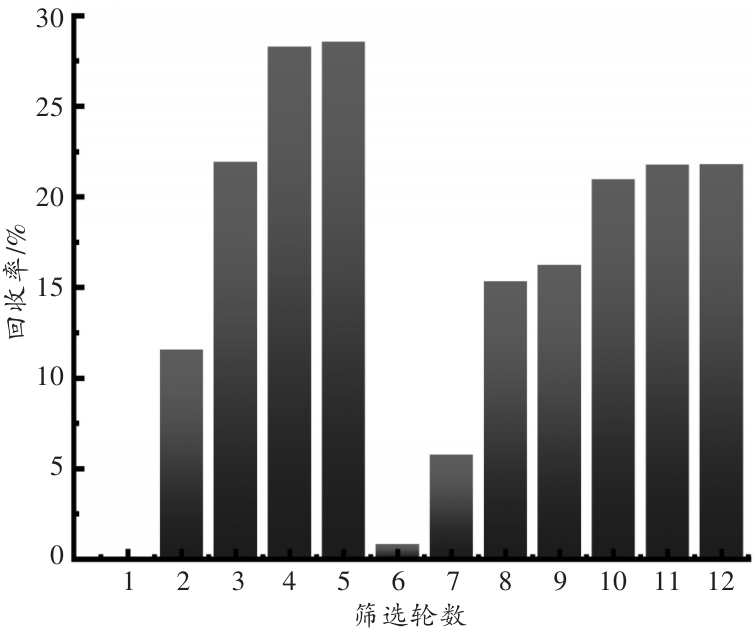
Fig. 4 Recovery rates of ketamine-binding ssDNAin the library after each round of screening
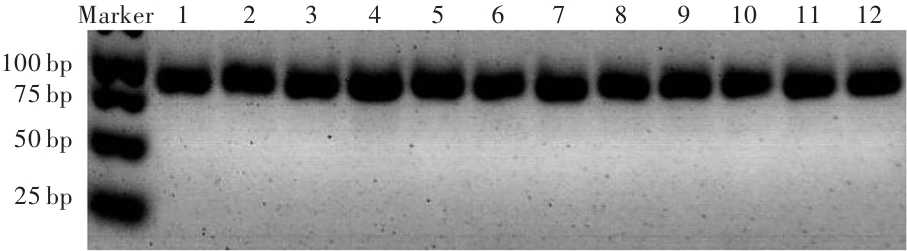
Fig. 5 Gel electrophoretogram of the PCR amplificationproducts after each round of screening
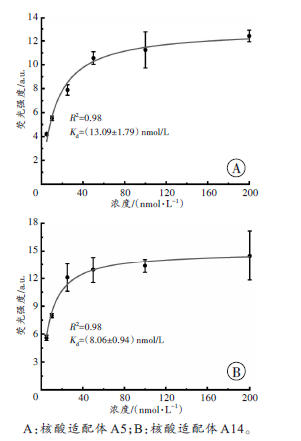
Fig. 6 Fitting curves for the binding of candidateaptamers (A5, A14) to ketamine
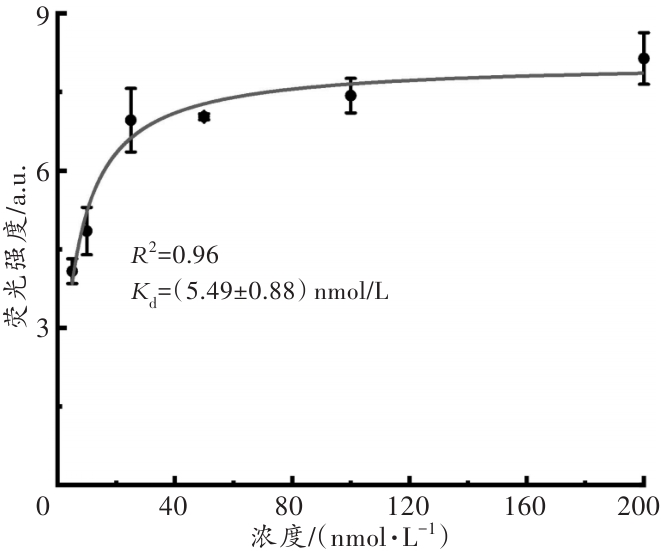
Fig. 7 Fitting curve for the binding ofcandidate aptamer A5 to norketamine
| 核酸适配体 | 引物序列剪切前(78 nt) | 引物序列剪切后(40 nt) | ||
|---|---|---|---|---|
| 解离常数(Kd) | R2 | 解离常数(Kd) | R2 | |
| A5 | 12.00±3.20 | 0.94 | 13.09±1.79 | 0.98 |
| A7 | 22.83±5.93 | 0.95 | 10.80±1.67 | 0.97 |
| A8 | 24.02±10.94 | 0.86 | 4.97±1.05 | 0.93 |
| A10 | 2.42±0.59 | 0.85 | 5.30±2.18 | 0.78 |
| A12 | 9.36±3.55 | 0.85 | 3.82±0.70 | 0.94 |
| A14 | 20.97±4.36 | 0.97 | 8.06±0.94 | 0.98 |
| A18 | 3.42±0.78 | 0.90 | 1.90±0.97 | 0.62 |
| A19 | 19.86±4.18 | 0.97 | 3.78±1.18 | 0.85 |
Tab. 1 Kd values of candidate aptamers toward ketamine before and after truncation of primer sequences
| 核酸适配体 | 引物序列剪切前(78 nt) | 引物序列剪切后(40 nt) | ||
|---|---|---|---|---|
| 解离常数(Kd) | R2 | 解离常数(Kd) | R2 | |
| A5 | 12.00±3.20 | 0.94 | 13.09±1.79 | 0.98 |
| A7 | 22.83±5.93 | 0.95 | 10.80±1.67 | 0.97 |
| A8 | 24.02±10.94 | 0.86 | 4.97±1.05 | 0.93 |
| A10 | 2.42±0.59 | 0.85 | 5.30±2.18 | 0.78 |
| A12 | 9.36±3.55 | 0.85 | 3.82±0.70 | 0.94 |
| A14 | 20.97±4.36 | 0.97 | 8.06±0.94 | 0.98 |
| A18 | 3.42±0.78 | 0.90 | 1.90±0.97 | 0.62 |
| A19 | 19.86±4.18 | 0.97 | 3.78±1.18 | 0.85 |
| 核酸适配体 | 引物序列剪切前(78 nt) | 引物序列剪切后(40 nt) | ||
|---|---|---|---|---|
| 解离常数(Kd) | R2 | 解离常数(Kd) | R2 | |
| A5 | 40.12±5.47 | 0.99 | 5.49±0.88 | 0.96 |
| A7 | 11.34±1.18 | 0.99 | 5.67±2.06 | 0.83 |
| A14 | 20.25±7.45 | 0.91 | 5.45±1.13 | 0.94 |
| A19 | 42.23±9.63 | 0.97 | 3.51±0.93 | 0.89 |
Tab. 2 Kd values of candidate aptamers toward norketamine before and after truncation of primer sequences
| 核酸适配体 | 引物序列剪切前(78 nt) | 引物序列剪切后(40 nt) | ||
|---|---|---|---|---|
| 解离常数(Kd) | R2 | 解离常数(Kd) | R2 | |
| A5 | 40.12±5.47 | 0.99 | 5.49±0.88 | 0.96 |
| A7 | 11.34±1.18 | 0.99 | 5.67±2.06 | 0.83 |
| A14 | 20.25±7.45 | 0.91 | 5.45±1.13 | 0.94 |
| A19 | 42.23±9.63 | 0.97 | 3.51±0.93 | 0.89 |

Fig. 8 Schematic diagram for the synthesis of aptamer-functionalized CGO fluorescent sensorand the detection principle diagram of ketamine and norketamine
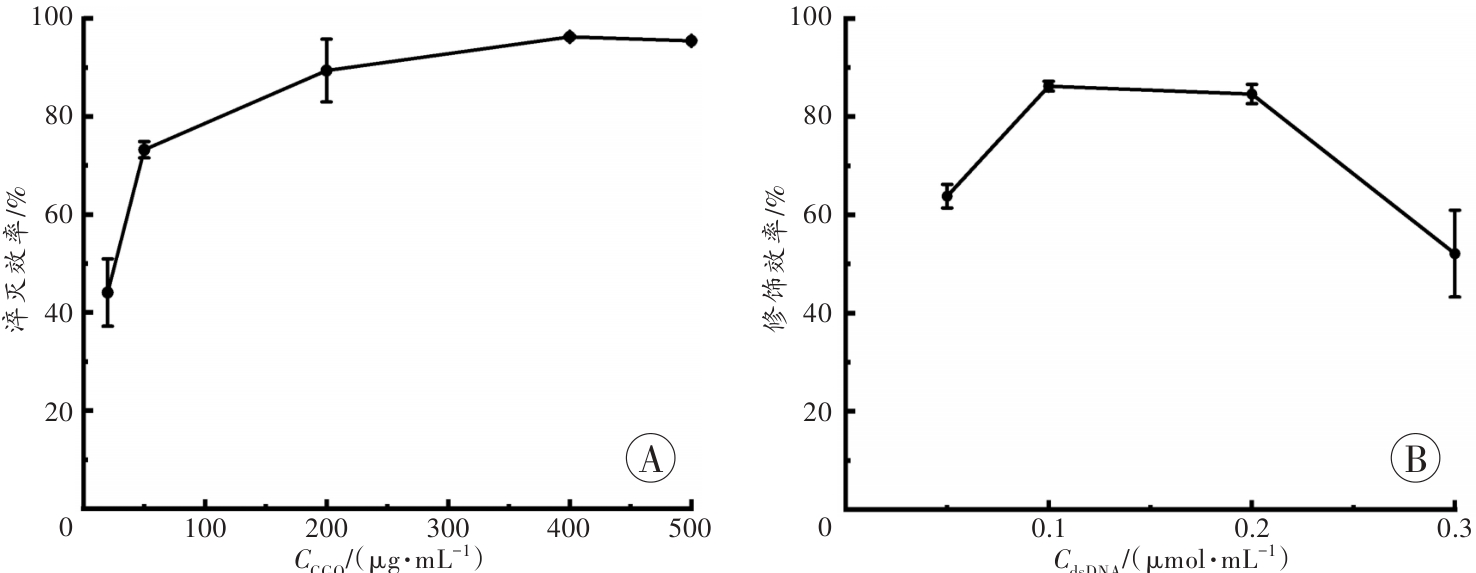
Fig. 9 Optimization of the CGO mass concentration and the concentration of double-stranded DNA containing aptamer A5
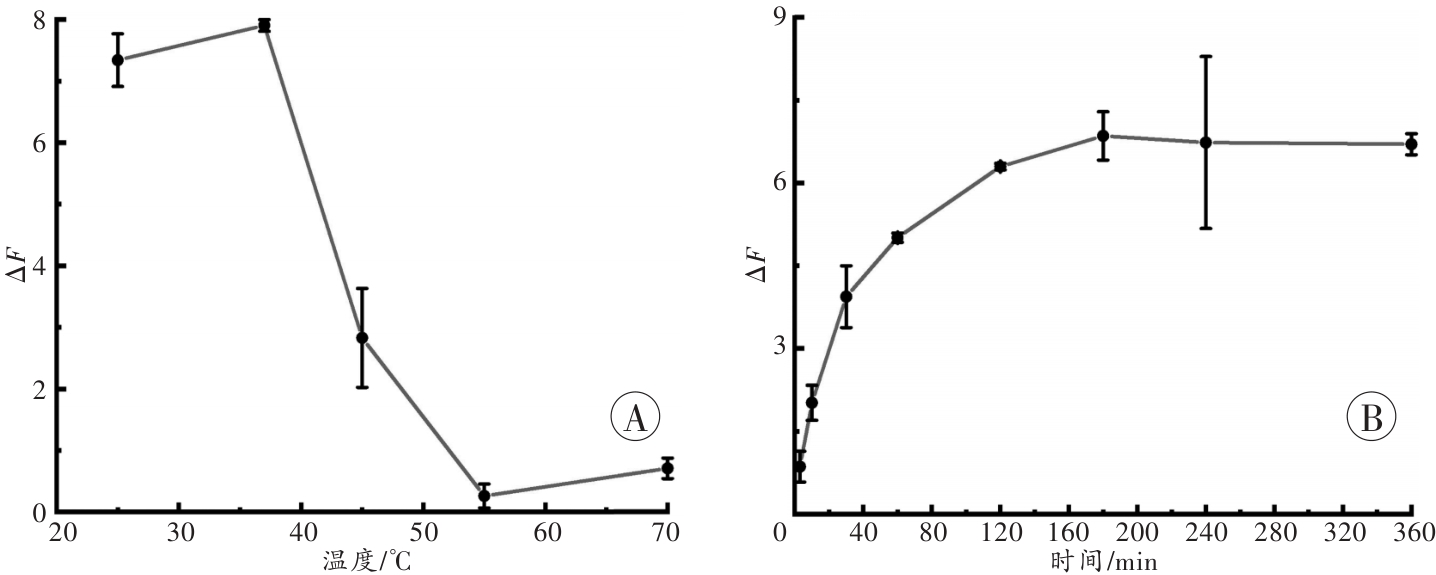
Fig. 10 Optimization of the reaction temperature and incubation time
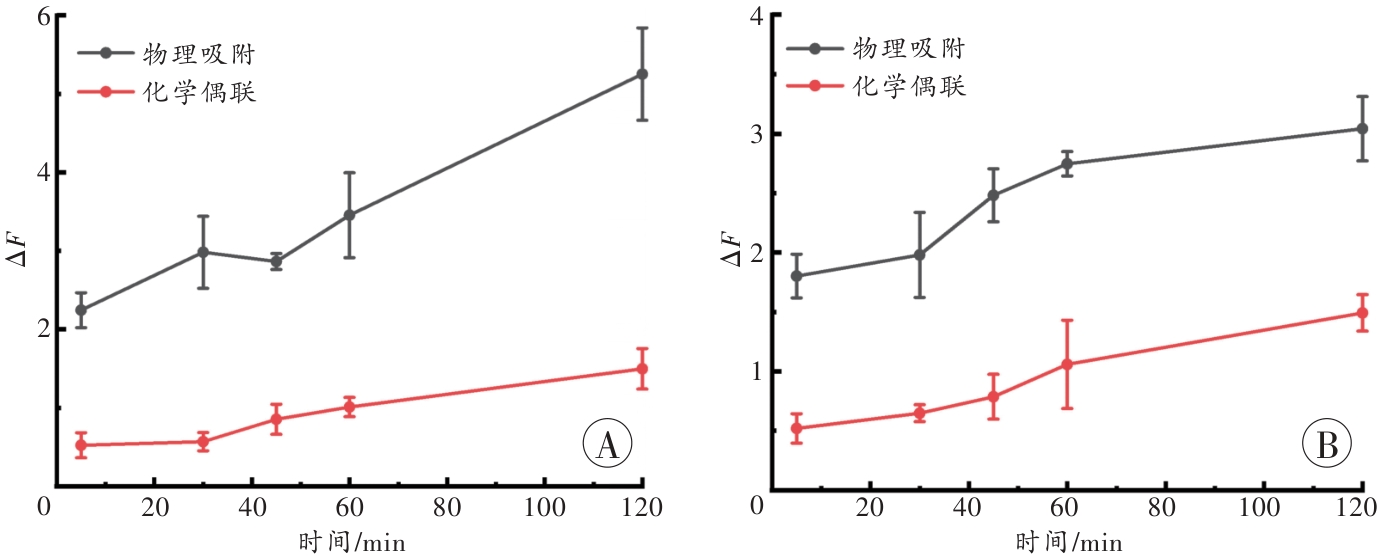
Fig. 11 Fluorescence response changes over incubation time for the aptamer-functionalized CGO fluorescent sensor basedon chemical conjugation and the CGO fluorescent sensor based on physical adsorption in blank blood and urine samples
| 样本 | 目标物 | 本研究检测方法 | HPLC-MS/MS | RSD/% | ||
|---|---|---|---|---|---|---|
| 测量值/( | 回收率/% | 测量值/( | 回收率/% | |||
| 血液 | 氯胺酮 | 0.82±0.07 | 81.50 | 0.87±0.03 | 87.34 | 9.39 |
| 去甲氯胺酮 | 1.04±0.05 | 104.09 | 1.12±0.02 | 112.00 | 5.34 | |
| 尿液 | 氯胺酮 | 0.87±0.04 | 86.97 | 0.91±0.04 | 91.25 | 4.03 |
| 去甲氯胺酮 | 1.10±0.02 | 110.03 | 1.20±0.05 | 120.00 | 6.87 | |
Tab. 3 Results of the spiked recovery experiments for ketamine and norketaminein blank blood and urine samples (added at a mass concentration of 1 ng/mL)
| 样本 | 目标物 | 本研究检测方法 | HPLC-MS/MS | RSD/% | ||
|---|---|---|---|---|---|---|
| 测量值/( | 回收率/% | 测量值/( | 回收率/% | |||
| 血液 | 氯胺酮 | 0.82±0.07 | 81.50 | 0.87±0.03 | 87.34 | 9.39 |
| 去甲氯胺酮 | 1.04±0.05 | 104.09 | 1.12±0.02 | 112.00 | 5.34 | |
| 尿液 | 氯胺酮 | 0.87±0.04 | 86.97 | 0.91±0.04 | 91.25 | 4.03 |
| 去甲氯胺酮 | 1.10±0.02 | 110.03 | 1.20±0.05 | 120.00 | 6.87 | |
| [1] | 李思颖,马栋栋,张金阁,等. 新精神活性物质氯胺酮对斑马鱼幼鱼的神经毒性[J].生态毒理学报,2023,18(1):246-260. doi:10.7524/AJE.1673-5897.20221130002 . |
| LI S Y, MA D D, ZHANG J G, et al. Neurotoxicity of a new psychoactive substance ketamine on zebrafish larvae[J]. Shengtai Duli Xuebao,2023,18(1):246-260. | |
| [2] | 游双银,马赛歌,王小怡,等. 生物检材中氯胺酮及其代谢物的分析研究进展[J].化工设计通讯,2022,48(7):89-91. doi:10.3969/j.issn.1003-6490.2022.07.032 . |
| YOU S Y, MA S G, WANG X Y, et al. Research progress in the analysis of ketamine and its metabolites in biological samples[J]. Huagong Sheji Tongxun,2022,48(7):89-91. | |
| [3] | 马晓娜,廖林川,陈礼莉,等. 氯胺酮及其代谢物去甲氯胺酮在大鼠体液及组织中的检测及分布[J].中国药物依赖性杂志,2009,18(1):28-33. |
| MA X N, LIAO L C, CHEN L L, et al. Determination and distribution of ketamine and its metabolite norketamine in biological fluids and tissues of rats[J]. Zhongguo Yaowu Yilaixing Zazhi,2009,18(1):28-33. | |
| [4] | 刘玲,尉志文,贾娟,等. 氯胺酮在家兔体内的毒物代谢动力学[J].法医学杂志,2010,26(5):357-360. doi:10.3969/j.issn.1004-5619.2010.05.010 . |
| LIU L, WEI Z W, JIA J, et al. Toxicokinetics of ketamine in rabbits[J]. Fayixue Zazhi,2010,26(5):357-360. | |
| [5] | 方雅莉,马骥,张磊. UPLC-MS/MS分析全血与尿液中氯胺酮、氟胺酮、溴胺酮残留[J].中国法医学杂志,2023,38(1):53-56,62. doi:10.13618/j.issn.1001-5728.2023.01.010 . |
| FANG Y L, MA J, ZHANG L. Determination of ketamine, F-ketamine and Br-ketamine in whole blood and urine samples by UPLC-MS/MS[J]. Zhongguo Fayixue Zazhi,2023,38(1):53-56,62. | |
| [6] | 陈百慧,辛国斌,闵涛,等. 血液中6种常见毒品的GC-MS/MS定性结果评价探究[J].中国法医学杂志,2024,39(3):328-334. doi:10.13618/j.issn.1001-5728.2024.03.015 . |
| CHEN B H, XIN G B, MIN T, et al. Research on GC-MS/MS qualitative result evaluation of six common drugs in blood[J]. Zhongguo Fayixue Zazhi,2024,39(3):328-334. | |
| [7] | 邱云亮,胡耀东,马楠,等. 毒品氯胺酮检测的研究进展[J].毒理学杂志,2022,36(5):448-455. doi:10.16421/j.cnki.1002-3127.2022.05.003 . |
| QIU Y L, HU Y D, MA N, et al. Research progress in the detection of the drug ketamine[J]. Dulixue Zazhi,2022,36(5):448-455. | |
| [8] | CHEN C A, WANG P W, YEN Y C, et al. Fast analysis of ketamine using a colorimetric immunosorbent assay on a paper-based analytical device[J]. Sens Actuators B Chem,2019,282:251-258. doi:10.1016/j.snb.2018.11.071 . |
| [9] | 周莉英,向平,陈航. 新精神活性物质快速检测技术研究进展[J].药物分析杂志,2022,42(4):547-556. doi:10.16155/j.0254-1793.2022.04.01 . |
| ZHOU L Y, XIANG P, CHEN H. Research progress on rapid detection techniques of new psychoactive substances[J]. Yaowu Fenxi Zazhi,2022,42(4):547-556. | |
| [10] | CHEN R, LI H, ZHANG H, et al. Development of a lateral flow fluorescent microsphere immunoassay for the determination of sulfamethazine in milk[J]. Anal Bioanal Chem,2013,405(21):6783-6789. doi:10.1007/s00216-013-7150-4 . |
| [11] | 孙美琪,曹芳琦,胡小龙,等. 适配体在毒品毒物分析中的应用[J].中国司法鉴定,2015(2):75-79. doi:10.3969/j.issn.1671-2072.2015.02.014 . |
| SUN M Q, CAO F Q, HU X L, et al. Application of aptamers in forensic toxicology[J]. Zhongguo Sifa Jianding,2015(2):75-79. | |
| [12] | 曾玲,蔡能斌, NATALIA P,等. 核酸适配体识别技术在法医毒物分析中的应用[J].刑事技术,2017,42(1):52-60. doi:10.16467/j.1008-3650.2017.01.012 . |
| ZENG L, CAI N B, NATALIA P, et al. Application of nucleic acid aptamers in forensic drug analysis[J]. Xingshi Jishu,2017,42(1):52-60. | |
| [13] | 卢静荷,谭淑珍,朱雨清,等. 荧光核酸适配体功能化氧化石墨烯生物传感器用于快速检测氯霉素[J].化学学报,2019,77(3):253-256. doi:10.6023/A18100433 . |
| LU J H, TAN S Z, ZHU Y Q, et al. Fluorescent aptamer-functionalized graphene oxide biosensor for rapid detection of chloramphenicol[J]. Huaxue Xuebao,2019,77(3):253-256. | |
| [14] | SUN D, SUN M, ZHANG J, et al. Computational tools for aptamer identification and optimization[J]. TrAC Trends Analyt Chem,2022,157:116767. doi:10.1016/j.trac.2022.116767 . |
| [15] | 刘佳,杨志芳,王闯,等. 基于分子对接和步进序列群的蓖麻毒素核酸适配体序列优化[J].生物化学与生物物理进展,2023,50(9):2243-2254. doi:10.16476/j.pibb.2023.0280 . |
| LIU J, YANG Z F, WANG C, et al. Molecular docking and stepping sequence cluster design prompted sequence optimization of ricin nucleic acid aptamers[J]. Shengwu Huaxue Yu Shengwu Wuli Jinzhan,2023,50(9):2243-2254. | |
| [16] | 汪凯,李延生,高国伟,等. 核酸适配体结合亲和力评测方法的研究进展[J].中国科学:化学,2025,55(2):444-462. doi:10.1360/SSC-2024-0173 . |
| WANG K, LI Y S, GAO G W, et al. Research progress on evaluation methods of binding affinity of nucleic acid aptamer[J]. Zhongguo Kexue: Huaxue,2025,55(2):444-462. | |
| [17] | 吴娟,吴平,寇启明,等. 基于氧化石墨烯的磺胺嘧啶核酸适配体的筛选与鉴定[J].重庆师范大学学报(自然科学版),2021,38(2):112-120. doi:10.11721/cqnuj20210212 . |
| WU J, WU P, KOU Q M, et al. Screening and identification of sulfadiazine aptamer based on graphene oxide[J]. Chongqing Shifan Daxue Xuebao (Natural science edition),2021,38(2):112-120. | |
| [18] | 兰艺凤,侯博雅,尉志文,等. 基于截短适配体-二硫化钼纳米片信号增强免标记荧光检测金刚烷胺[J].分析化学,2024,52(2):208-219. doi:10.19756/j.issn.0253-3820.231127 . |
| LAN Y F, HOU B Y, WEI Z W, et al. Detection of amantadine by label-free fluorescence method based on truncated aptamer and molybdenum disulfide nanosheet signal enhancement strategy[J]. Fenxi Huaxue,2024,52(2):208-219. | |
| [19] | SOHEILI V, TAGHDISI S M, KHAYYAT M H, et al. Colorimetric and ratiometric aggregation assay for streptomycin using gold nanoparticles and a new and highly specific aptamer[J]. Microchim Acta,2016,183:1687-1697. doi:10.1007/s00604-016-1798-3 . |
| [20] | MACDONALD J, HOUGHTON P, XIANG D, et al. Truncation and mutation of a transferrin receptor aptamer enhances binding affinity[J]. Nucleic Acid Ther,2016,26(6):348-354. doi:10.1089/nat. 2015.0585 . |
| [21] | JENISON R D, GILL S C, PARDI A, et al. High-resolution molecular discrimination by RNA[J]. Science,1994,263(5152):1425-1429. doi:10.1126/science.7510417 . |
| [22] | 孙美琪,曹芳琦,胡小龙,等. FluMag-SELEX技术体外筛选识别氯胺酮的DNA适体[J].法医学杂志,2014,30(5):346-349. doi:10.3969/j.issn.1004-5619.2014.05.007 . |
| SUN M Q, CAO F Q, HU X L, et al. DNA aptamer selection in vitro for determining ketamine by FluMag-SELEX[J]. Fayixue Zazhi,2014,30(5):346-349. | |
| [23] | HUANG L, WANG J, WILSON T J, et al. Structure of the guanidine Ⅲ riboswitch[J]. Cell Chem Biol,2017,24(11):1407-1415.e2. doi:10.1016/j.chem biol.2017.08.021 . |
| [24] | WANG Y, WANG Z, TONG Y, et al. Aptamer-based fluorescent sensor for highly sensitive detection of methamphetamine[J]. Luminescence,2024,39(2):e4687. doi:10.1002/bio.4687 . |
| [25] | ALMENHALI A Z, KANAGAVALLI P, ABD-ELLAH M, et al. Reduced graphene oxide-based electrochemical aptasensor for the multiplexed detection of imidacloprid, thiamethoxam, and clothianidin in food samples[J]. Sci Rep,2025,15(1):10329. doi:10.1038/s41598-025-94313-6 . |
| [26] | YU J, HE S, SHAO C, et al. A common anchor facilitated GO-DNA nano-system for multiplex micro-RNA analysis in live cells[J]. Nanoscale,2018,10(15):7067-7076. doi:10.1039/c8nr00364e . |
| [27] | 康宇,秦兰,羊杜涛,等. 用于OTA检测的氧化石墨烯/适配体传感器的构建[J].中国科技论文,2019,14(4):373-377. doi:10.3969/j.issn.2095-2783.2019.04.005 . |
| KANG Y, QIN L, YANG D T, et al. Construction of graphene oxide/adapter sensor for OTA detection[J]. Zhongguo Keji Lunwen,2019,14(4):373-377. | |
| [28] | ZHANG J, LI Z, ZHAO S, et al. Size-dependent modulation of graphene oxide-aptamer interactions for an amplified fluorescence-based detection of aflatoxin B1 with a tunable dynamic range[J]. Analyst,2016,141(13):4029-4034. doi:10.1039/c6an00368k . |
| [29] | LI S, MULLOOR J J, WANG L, et al. Strong and selective adsorption of lysozyme on graphene oxide[J]. ACS Appl Mater Interfaces,2014,6(8):5704-5712. doi:10.1021/am500254e . |
| [30] | DING Z, MA H, CHEN Y. Interaction of graphene oxide with human serum albumin and its mechanism[J]. RSC Adv,2014,4(98):55290-55295. doi:10.1039/c4ra09613d . |
| [1] | Yan GAO, Fang CHEN, Wen-tao XIA, Xiao-ping YANG, Ze-yu WANG, Ze-ren YANG, Xia LIU, Yan-liang SHENG. Research Progress of Chirp ABR and Its Application in Forensic Auditory Identification [J]. Journal of Forensic Medicine, 2025, 41(4): 387-393. |
| [2] | Wen-yan LI, Jin-feng ZHAO, Wei-chen LIU, Shi-jing LÜ, Jia-xin ZHANG, Xu-dong ZHANG, Zhi-wen WEI, Ke-ming YUN, Chao ZHANG. Toxicokinetics of Chlorfenapyr and Its Metabolites in Rats [J]. Journal of Forensic Medicine, 2025, 41(4): 380-387. |
| [3] | Min SHEN. Practice and Reflection on Forensic Toxicology from the Perspective of Evidence Reliability [J]. Journal of Forensic Medicine, 2025, 41(4): 297-306. |
| [4] | Jia-hao LI, Jiang LING, Zi-hao CAI, Zi-yuan ZHENG, Yan-jun DING. Fluorescent Probe Development for Rapid Detection of Tiletamine Based on Copper Nanozyme and Molecular Imprinting Technology [J]. Journal of Forensic Medicine, 2025, 41(4): 355-363. |
| [5] | Zi-wen GUO, Tian-yu QIU, Yue CAO. Rapid Identification of Etomidate and Its Structural Analogues Based on Surface-Enhanced Raman Spectroscopy and Machine Learning [J]. Journal of Forensic Medicine, 2025, 41(4): 364-370. |
| [6] | Tai-shen HE, Zhong-jiang LÜ, Yi-ming SUN, Yu-yang LI, Yi YE, Yao LIN, Lin-chuan LIAO. Rapid Analysis of Cyanide Based on a Ratiometric Fluorescent Probe Using Gold Nanoclusters-Fluorescein [J]. Journal of Forensic Medicine, 2025, 41(4): 340-347. |
| [7] | Meng-yao TANG, Bo-yu HUANG, Cui-mei LIU, Xue-yan LIU, Wei JIA, Zhen-dong HUA. Rapid Screening of Etomidate and Its Analogues Using a Portable Mass Spectrometer [J]. Journal of Forensic Medicine, 2025, 41(4): 348-354. |
| [8] | Jing-chun BAO, Jing-jing ZHAO, Jiao-yong LI, Jing-hua MENG, Xiao-long WANG, Xiao-ni ZHAN, Jun YAO, Xu WU. Construction of a Competency Evaluation Model for Forensic Practitioners [J]. Journal of Forensic Medicine, 2025, 41(4): 371-379. |
| [9] | Yi-ming TIAN, Yi-bo YAN, Di WEN, Yan SHI. Research Progress on the Application of Novel Functional Materials for Rapid Detection of New Psychoactive Substances [J]. Journal of Forensic Medicine, 2025, 41(4): 314-325. |
| [10] | Qi LIAO, Yong-hong LIU, Ying JIAO, Xiao-ying YANG, Yi-hua YANG, Cui-mei LIU, Rui-xia GAO. Development of Benchtop Low‑Field Nuclear Magnetic Resonance Technology and Its Application in Drug Control Field [J]. Journal of Forensic Medicine, 2025, 41(3): 267-276. |
| [11] | Yu-meng ZUO, Wei HAN, Jian-bo ZHANG, Tao LI. Molecular Mechanisms and Toxic Effects of Ketamine [J]. Journal of Forensic Medicine, 2025, 41(2): 127-135. |
| [12] | Zhuo LI, Yi-ru ZENG, Zhi-long SHU, Xue-hong SUN, Kui ZHANG. Research Status of Caenorhabditis elegans Model in Toxicology and Its Applications in Forensic Science [J]. Journal of Forensic Medicine, 2025, 41(2): 136-143. |
| [13] | Cheng-tao LI, Bin CONG. Thoughts on the Development of Forensic Medicine Discipline Standing at a New Historical Starting Point [J]. Journal of Forensic Medicine, 2025, 41(1): 9-14. |
| [14] | Hong-yu SUN, Hu ZHAO. Seventy Years of Passing on the Torch, Striving Forward in the New Era — Thoughts on the Construction of Forensic Medicine at Sun Yat-sen University [J]. Journal of Forensic Medicine, 2025, 41(1): 20-24. |
| [15] | Shu-jin LI, Chun-ling MA, Bin CONG. Uphold Fundamental Principles and Break New Ground and Work Persistently to Build a First-Class Forensic Medicine Discipline [J]. Journal of Forensic Medicine, 2025, 41(1): 5-8. |
| Viewed | ||||||
|
Full text |
|
|||||
|
Abstract |
|
|||||
