
Journal of Forensic Medicine ›› 2025, Vol. 41 ›› Issue (4): 355-363.DOI: 10.12116/j.issn.1004-5619.2025.350410
Special Issue: 快检技术赋能法医毒物学多场景应用专题
Previous Articles Next Articles
Jia-hao LI( ), Jiang LING, Zi-hao CAI, Zi-yuan ZHENG, Yan-jun DING()
Received:2025-04-25
Online:2025-11-25
Published:2025-08-25
Contact:
Yan-jun DING
CLC Number:
Jia-hao LI, Jiang LING, Zi-hao CAI, Zi-yuan ZHENG, Yan-jun DING. Fluorescent Probe Development for Rapid Detection of Tiletamine Based on Copper Nanozyme and Molecular Imprinting Technology[J]. Journal of Forensic Medicine, 2025, 41(4): 355-363.
Add to citation manager EndNote|Ris|BibTeX
URL: http://www.fyxzz.cn/EN/10.12116/j.issn.1004-5619.2025.350410
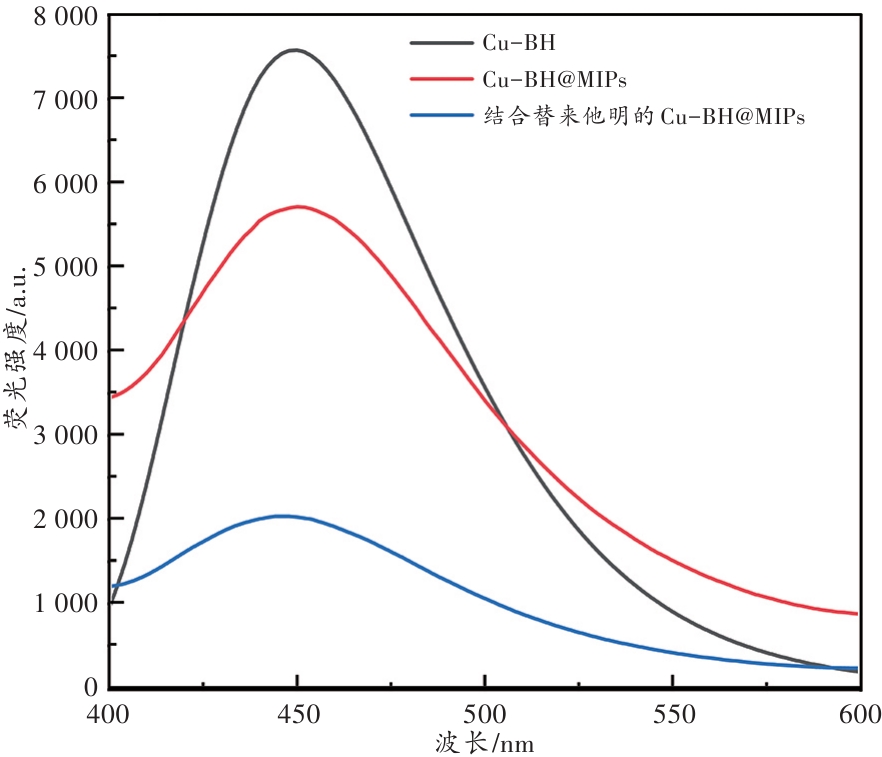
Fig. 1 Comparison of the fluorescence spectra amongCu-BH, Cu-BH@MIPs, and Cu-BH@MIPscombined with tiletamine
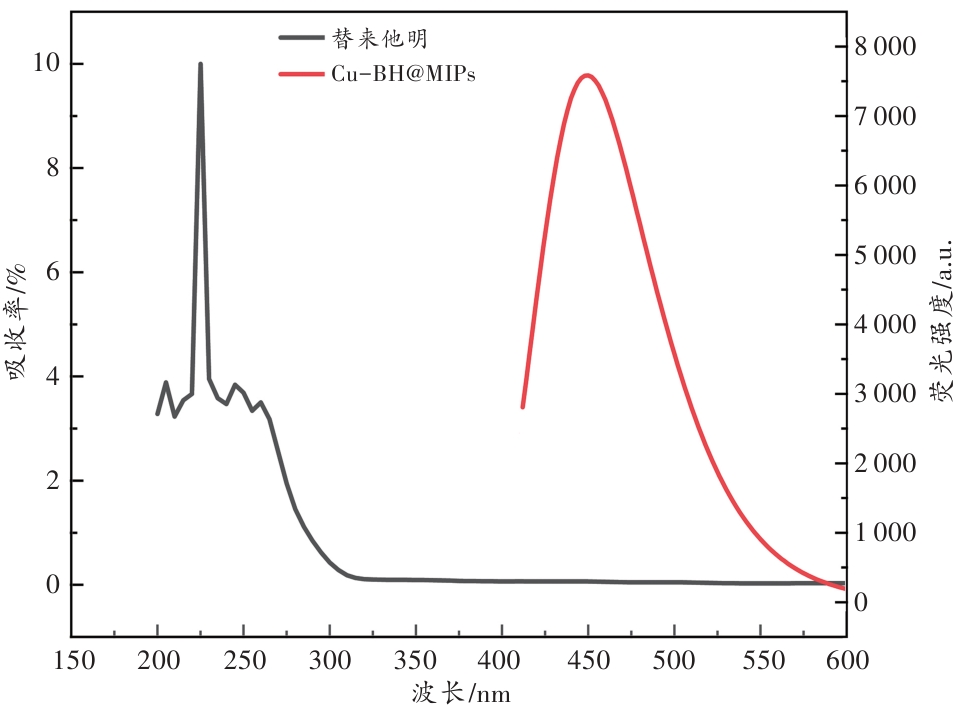
Fig. 2 Comparison of the ultraviolet absorption spectrumof tiletamine and the emission spectrum ofthe Cu-BH@MIPs probe
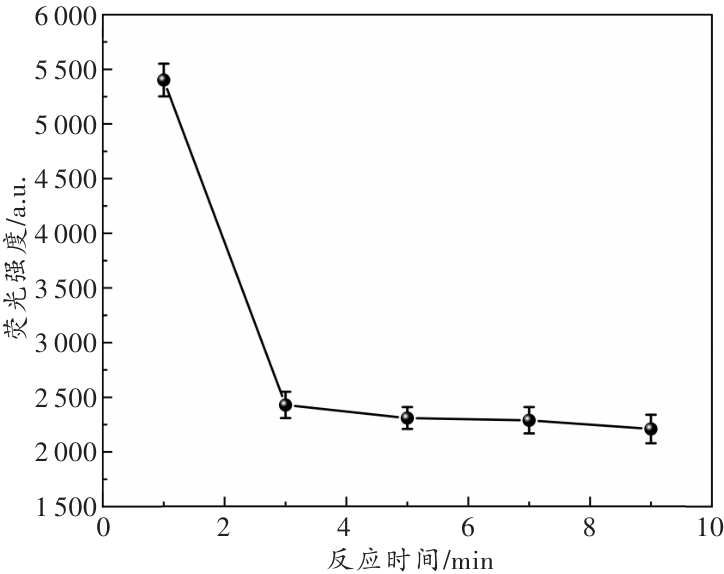
Fig. 3 Effects of different reaction times on the fluorescenceintensity of the Cu-BH@MIPs probe
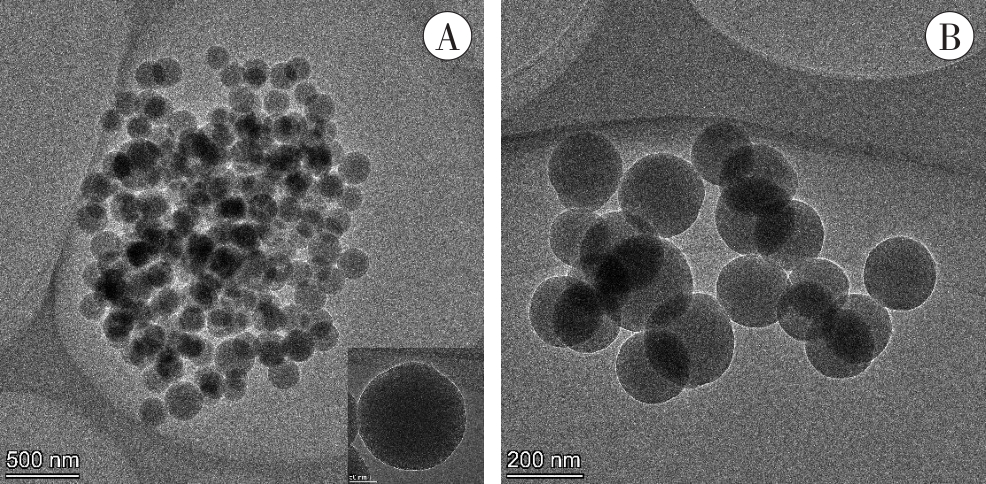
Fig. 4 Microscopy images of the Cu-BH@MIPs probe
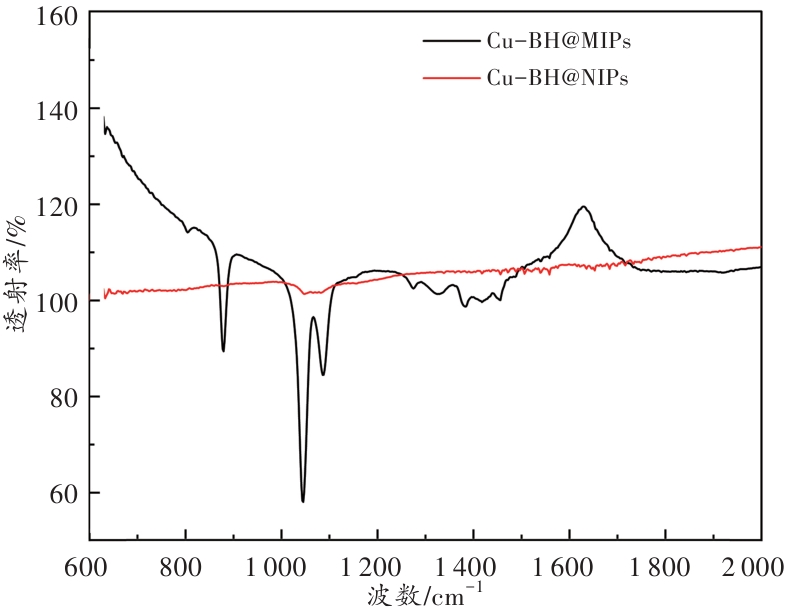
Fig. 5 Comparison of the Fourier transform infraredspectrum of the Cu-BH@MIPs probe and thenon-imprinted polymer Cu-BH@NIPs
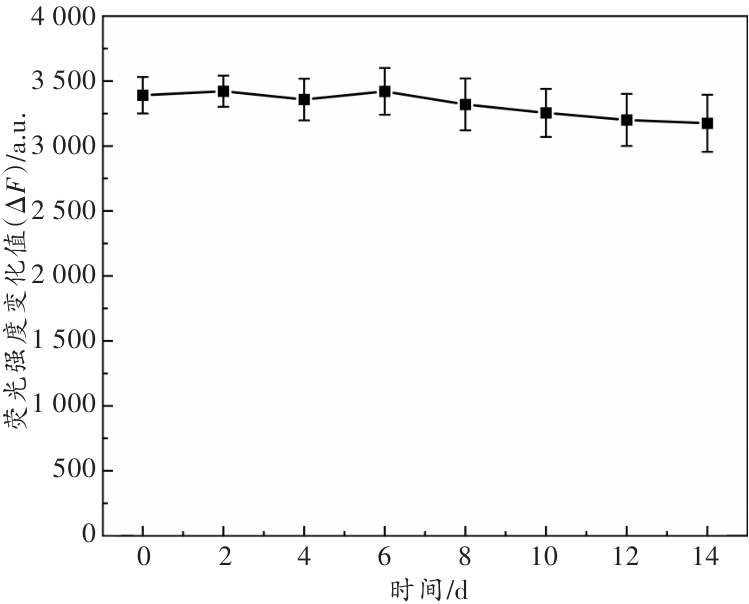
Fig. 6 The fluorescence intensity changes ofthe Cu-BH@MIPs probe within 14 daysafter binding with tiletamine
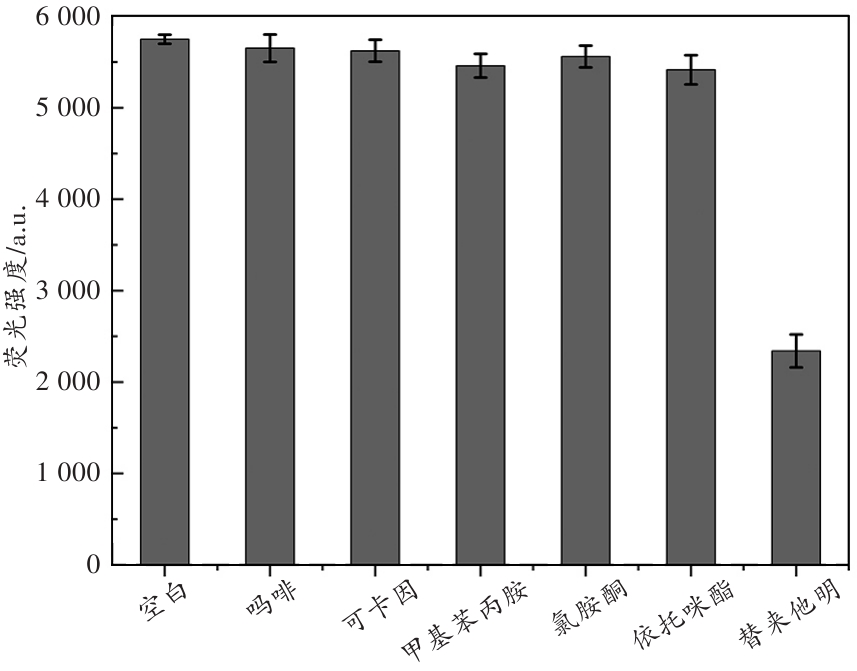
Fig. 7 Fluorescence intensities of the Cu-BH@MIPs probeafter reacting with different psychoactive substances
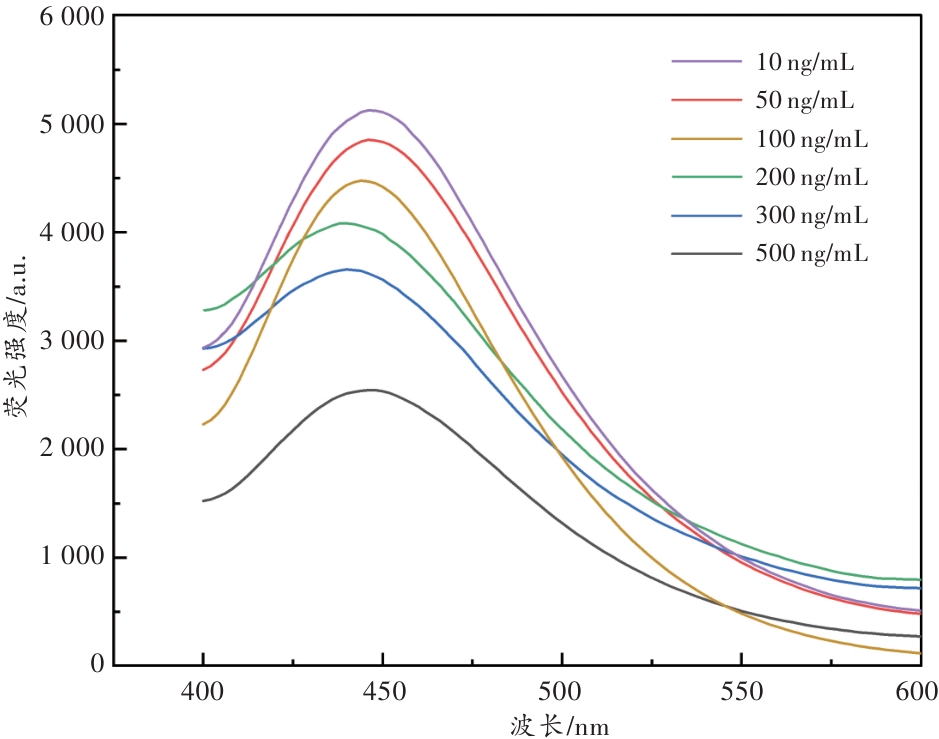
Fig. 8 Fluorescence spectra of the Cu-BH@MIPs probe afterreacting with tiletamine at different mass concentrations
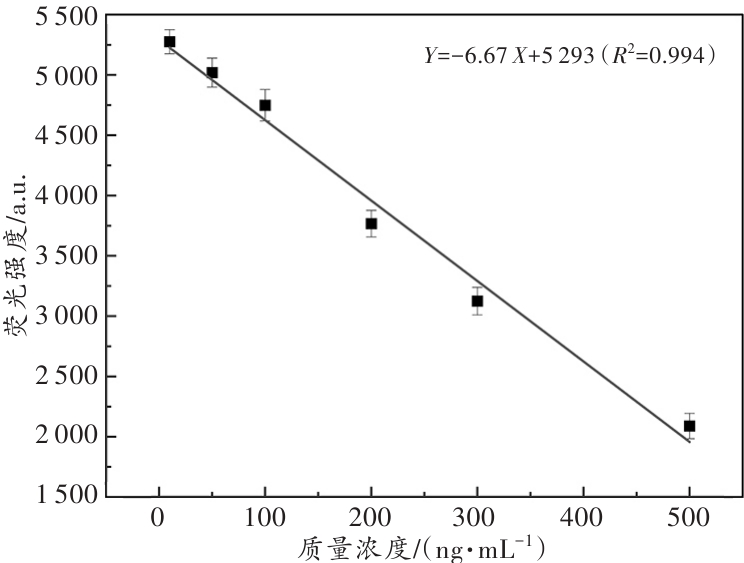
Fig. 9 Linear fitting for the mass concentration andfluorescence intensity of tiletamine
| 加标样本 | 添加值/(ng·mL-1) | 电子烟油 | 血液 | ||||||
|---|---|---|---|---|---|---|---|---|---|
| 检测值/(ng·mL-1) | 回收率/% | 日内差(n=3) | 日间差(n=9) | 检测值/(ng·mL-1) | 回收率/% | 日内差(n=3) | 日间差(n=9) | ||
| 1 | 100 | 96 | 96.0 | 4.76 | 5.05 | 93 | 93.0 | 5.01 | 5.29 |
| 2 | 200 | 205 | 102.5 | 3.62 | 3.55 | 189 | 94.5 | 4.66 | 4.95 |
| 3 | 500 | 493 | 98.6 | 3.11 | 3.31 | 484 | 96.8 | 2.79 | 3.22 |
Tab. 1 Detection of tiletamine in e-cigarette oil and blood samples using the Cu-BH@MIPs probe
| 加标样本 | 添加值/(ng·mL-1) | 电子烟油 | 血液 | ||||||
|---|---|---|---|---|---|---|---|---|---|
| 检测值/(ng·mL-1) | 回收率/% | 日内差(n=3) | 日间差(n=9) | 检测值/(ng·mL-1) | 回收率/% | 日内差(n=3) | 日间差(n=9) | ||
| 1 | 100 | 96 | 96.0 | 4.76 | 5.05 | 93 | 93.0 | 5.01 | 5.29 |
| 2 | 200 | 205 | 102.5 | 3.62 | 3.55 | 189 | 94.5 | 4.66 | 4.95 |
| 3 | 500 | 493 | 98.6 | 3.11 | 3.31 | 484 | 96.8 | 2.79 | 3.22 |
| 样本 | Cu-BH@MIPs | LC-MS/MS |
|---|---|---|
| 实际样本1 | 347 | 370 |
| 实际样本2 | 未检出 | 8 |
| 空白血样 | 未检出 | 未检出 |
Tab. 2 Comparison of the Cu-BH@MIPs probe methodand the LC-MS/MS method for the detection oftiletamine in actual blood samples(ng/mL)
| 样本 | Cu-BH@MIPs | LC-MS/MS |
|---|---|---|
| 实际样本1 | 347 | 370 |
| 实际样本2 | 未检出 | 8 |
| 空白血样 | 未检出 | 未检出 |
| [1] | 中国国家禁毒委员会办公室. 2023年中国毒情形势报告[EB/OL].(2024-06-20)[2025-03-01]. . |
| China National Narcotic Control Committee. China drug situation report 2023[EB/OL]. (2024-06-20)[2025-03-01]. . | |
| [2] | 沈敏. 新精神活性物质的应对与挑战[J].法医学杂志,2021,37(4):453-458. doi:10.12116/j.issn.1004-5619.2021.310204 . |
| SHEN M. The response and challenge of new psychoactive substances[J]. Fayixue Zazhi,2021,37(4):453-458. | |
| [3] | 包涵. 新精神活性物质管制的国际经验和中国路径[J].公安学研究,2018(3):43-62,122. |
| BAO H. International experience and China’s path of new psychoactive substances regulation[J]. Gong-anxue Yanjiu,2018(3):43-62,122. | |
| [4] | 何思阳,龚飞君,连茹,等. 药物辅助性犯罪案件中替来他明和唑拉西泮及其代谢物的GC-QTOF-MS鉴定[J].法医学杂志,2019,35(5):581-585. doi:10.12116/j.issn.1004-5619.2019.05.013 . |
| HE S Y, GONG F J, LIAN R, et al. Identification of tiletamine, zolazepam and their metabolites in drug facilitated sexual assault by GC-QTOF-MS[J]. Fayixue Zazhi,2019,35(5):581-585. | |
| [5] | 吕欣,潘庆山,汤小朋,等. 舒泰对犬心血管系统呼吸系统和体温的影响[J].中国兽医杂志,2006,42(8):45-47. doi:10.3969/j.issn.0529-6005.2006.08.023 . |
| LÜ X, PAN Q S, TANG X P, et al. Effects of Zoletil on the cardiovascular system, respiratory system, and body temperature in dogs[J]. Zhongguo Shouyi Zazhi,2006,42(8):45-47. | |
| [6] | 向平,沈保华,严慧,等. 药物辅助性犯罪案件中新型苯二氮卓类策划药2-氯地西泮的鉴定[J].法医学杂志,2018,34(3):248-252. doi:10.12116/j.issn.1004-5619.2018.03.006 . |
| XIANG P, SHEN B H, YAN H, et al. Identification of new designer benzodiazepine diclazepam in drug facilitated sexual assault[J]. Fayixue Zazhi,2018,34(3):248-252. | |
| [7] | 闻武,陈盼盼,张婷婷,等. 超高效液相色谱-串联质谱法检测大气颗粒物中5种电子烟油非法添加物质[J].分析科学学报,2025,41(1):28-32. doi:10.13526/j.issn.1006-6144.2025.01.005 . |
| WEN W, CHEN P P, ZHANG T T, et al. Detection of 5 illegal additives in electronic cigarette oil in atmospheric particulate matter using ultra performance liquid chromatography-tandem mass spectrometry[J]. Fenxi Kexue Xuebao,2025,41(1):28-32. | |
| [8] | 马俊,闫昕,张腾,等. 高效液相色谱-串联质谱法测定电子烟油中的替来他明和依托咪酯[J].中国司法鉴定,2024(3):55-59. doi:10.3969/j.issn.1671-2072.2024.03.008 . |
| MA J, YAN X, ZHANG T, et al. Determination of tiletamine and etomidate in E-cigarette oil by HPLC-MS/MS[J]. Zhongguo Sifa Jianding,2024(3):55-59. | |
| [9] | NEUKAMM M A, HALTER S, AUWÄRTER V, et al. Death after smoking of fentanyl, 5F-ADB, 5F-MDMB-P7AICA and other synthetic cannabinoids with a bucket bong[J]. Forensic Toxicol,2024,42(1):82-92. doi:10.1007/s11419-023-00666-w . |
| [10] | CHUNG H, CHOI H, KIM E, et al. A fatality due to injection of tiletamine and zolazepam[J]. J Anal Toxicol,2000,24(4):305-308. doi:10.1093/jat/24.4.305 . |
| [11] | 中华人民共和国农业农村部 中华人民共和国公安部公告 第800号[EB/OL]. (2024-07-11)[2025-03-15]. |
| 0711_6458784.htm. | |
| Joint Announcement No. 800 of the Ministry of Agriculture and Rural Affairs of the People’s Republic of China and the Ministry of Public Security of the People’s Republic of China[EB/OL].(2024-07-11)[2025-03-15]. . | |
| [12] | FAKAYODE S O, LISSE C, MEDAWALA W, et al. Fluorescent chemical sensors: Applications in analytical, environmental, forensic, pharmaceutical, biological, and biomedical sample measurement, and clinical diagnosis[J]. Appl Spectrosc Rev,2024,59(1):1-89. doi:10.1080/05704928.2023.2177666 . |
| [13] | XIN J, ZOU H, JIANG Y, et al. Ultrasmall metal nanoclusters: Multifunctional materials used in medical research[J]. Part Part Syst Char,2023,40(8):2300031. doi:10.1002/ppsc.202300031 . |
| [14] | GOSWAMI N, ZHENG K, XIE J. Bio-NCs — The marriage of ultrasmall metal nanoclusters with biomolecules[J]. Nanoscale,2014,6(22):13328-13347. doi:10.1039/c4nr04561k . |
| [15] | ZHAO Z, LI Y. Developing fluorescent copper nanoclusters: Synthesis, properties, and applications[J]. Colloids Surf B Biointerfaces,2020,195:111244. doi:10.1016/j.colsurfb.2020.111244 . |
| [16] | WANG Z, ZHANG R, YAN X, et al. Structure and activity of nanozymes: Inspirations for de novo design of nanozymes[J]. Mater Today,2020,41:81-119. doi:10.1016/j.mattod.2020.08.020 . |
| [17] | WEI H, WANG E. Nanomaterials with enzyme-like characteristics (nanozymes): Next-generation artificial enzymes[J]. Chem Soc Rev,2013,42(14):6060-6093. doi:10.1039/c3cs35486e . |
| [18] | WU J, WANG X, WANG Q, et al. Nanomaterials with enzyme-like characteristics (nanozymes): Next-generation artificial enzymes (Ⅱ)[J]. Chem Soc Rev,2019,48(4):1004-1076. doi:10.1039/c8cs00457a . |
| [19] | ALBERTI G, ZANONI C, SPINA S, et al. Trends in molecularly imprinted polymers (MIPs)-based plasmonic sensors[J]. Chemosensors,2023,11(2):144. doi:10.3390/chemosensors11020144 . |
| [20] | LIU R, KO C C. Molecularly imprinted polymer-based luminescent chemosensors[J]. Biosensors(Basel),2023,13(2):295. doi:10.3390/bios13020295 . |
| [21] | LIU S, YU H, ZHU S, et al. Copper-based fluorescent nanozyme used to construct a ratiometric sensor for visual detection of thiophanate methyl[J]. Talanta,2025,285:127417. doi:10.1016/j.talanta.2024.127417 . |
| [22] | LONG R, LI T, TONG C, et al. Molecularly imprinted polymers coated CdTe quantum dots with controllable particle size for fluorescent determination of p-coumaric acid[J]. Talanta,2019,196:579-584. doi:10.1016/j.talanta.2019.01.007 . |
| [23] | 蔡子豪,严文广,李嘉豪,等. UPLC-MS/MS测定生物样本中替来他明及其代谢物方法的建立及应用分析[J].中南大学学报(医学版),2025,50(6):1002-1012. doi:10.11817/j.issn.1672-7347.2025.240609 . |
| CAI Z H, YAN W G, LI J H, et al. Establishment and application of a UPLC-MS/MS method for the determination of tiletamine and its metabolite in biological samples[J]. Zhongnan Daxue Xuebao (Medical science),2025,50(6):1002-1012. | |
| [24] | LI Y, FENG L, YAN W, et al. PVP-templated highly luminescent copper nanoclusters for sensing trinitrophenol and living cell imaging[J]. Nanoscale,2019,11(3):1286-1294. doi:10.1039/c8nr07142j . |
| [25] | LING J, LIAO Y, XIANG P, et al. A tailored ratiometric fluorescent sensor based on CdTe and MgF2 quantum dots for trace N-ethylpentylone detection[J]. Mikrochim Acta,2024,191(7):363. doi:10.1007/s00604-024-06424-y . |
| [26] | LING J, ZHANG W, CHENG Z, et al. Recyclable magnetic fluorescence sensor based on Fe3O4 and carbon dots for detection and purification of methcathinone in sewage[J]. ACS Appl Mater Interfaces,2022,14(3):3752-3761. doi:10.1021/acsami. 1c20170 . |
| [27] | LI J, LING J, CAI Z, et al. Rapid and sensitive detection of etomidate based on functionalized copper nanoclusters fluorescent probe[J]. Forensic Sci Int,2024,361:112136. doi:10.1016/j.forsciint.2024.112136 . |
| [28] | LI M, XIE Y, ZHANG J, et al. Construction of a laccase mimic enzyme with fluorescence properties for kanamycin multi-mode analysis[J]. Chem Eng J,2023,471:144184. doi:10.1016/j.cej.2023.144184 . |
| [1] | Yan GAO, Fang CHEN, Wen-tao XIA, Xiao-ping YANG, Ze-yu WANG, Ze-ren YANG, Xia LIU, Yan-liang SHENG. Research Progress of Chirp ABR and Its Application in Forensic Auditory Identification [J]. Journal of Forensic Medicine, 2025, 41(4): 387-393. |
| [2] | Wen-yan LI, Jin-feng ZHAO, Wei-chen LIU, Shi-jing LÜ, Jia-xin ZHANG, Xu-dong ZHANG, Zhi-wen WEI, Ke-ming YUN, Chao ZHANG. Toxicokinetics of Chlorfenapyr and Its Metabolites in Rats [J]. Journal of Forensic Medicine, 2025, 41(4): 380-387. |
| [3] | Min SHEN. Practice and Reflection on Forensic Toxicology from the Perspective of Evidence Reliability [J]. Journal of Forensic Medicine, 2025, 41(4): 297-306. |
| [4] | Li-xia WEI, Bo LIU, Xiao-yuan YANG, Xi ZHANG, Yi-feng LAN, Chao ZHANG, Juan JIA, Dan ZHANG, Zhi-wen WEI, Ke-ming YUN, Zhe CHEN. Detection of Ketamine and Norketamine Using an Aptamer-Functionalized Graphene Oxide Fluorescent Sensor [J]. Journal of Forensic Medicine, 2025, 41(4): 326-339. |
| [5] | Zi-wen GUO, Tian-yu QIU, Yue CAO. Rapid Identification of Etomidate and Its Structural Analogues Based on Surface-Enhanced Raman Spectroscopy and Machine Learning [J]. Journal of Forensic Medicine, 2025, 41(4): 364-370. |
| [6] | Tai-shen HE, Zhong-jiang LÜ, Yi-ming SUN, Yu-yang LI, Yi YE, Yao LIN, Lin-chuan LIAO. Rapid Analysis of Cyanide Based on a Ratiometric Fluorescent Probe Using Gold Nanoclusters-Fluorescein [J]. Journal of Forensic Medicine, 2025, 41(4): 340-347. |
| [7] | Meng-yao TANG, Bo-yu HUANG, Cui-mei LIU, Xue-yan LIU, Wei JIA, Zhen-dong HUA. Rapid Screening of Etomidate and Its Analogues Using a Portable Mass Spectrometer [J]. Journal of Forensic Medicine, 2025, 41(4): 348-354. |
| [8] | Jing-chun BAO, Jing-jing ZHAO, Jiao-yong LI, Jing-hua MENG, Xiao-long WANG, Xiao-ni ZHAN, Jun YAO, Xu WU. Construction of a Competency Evaluation Model for Forensic Practitioners [J]. Journal of Forensic Medicine, 2025, 41(4): 371-379. |
| [9] | Yi-ming TIAN, Yi-bo YAN, Di WEN, Yan SHI. Research Progress on the Application of Novel Functional Materials for Rapid Detection of New Psychoactive Substances [J]. Journal of Forensic Medicine, 2025, 41(4): 314-325. |
| [10] | Qi LIAO, Yong-hong LIU, Ying JIAO, Xiao-ying YANG, Yi-hua YANG, Cui-mei LIU, Rui-xia GAO. Development of Benchtop Low‑Field Nuclear Magnetic Resonance Technology and Its Application in Drug Control Field [J]. Journal of Forensic Medicine, 2025, 41(3): 267-276. |
| [11] | Zhuo LI, Yi-ru ZENG, Zhi-long SHU, Xue-hong SUN, Kui ZHANG. Research Status of Caenorhabditis elegans Model in Toxicology and Its Applications in Forensic Science [J]. Journal of Forensic Medicine, 2025, 41(2): 136-143. |
| [12] | Cheng-tao LI, Bin CONG. Thoughts on the Development of Forensic Medicine Discipline Standing at a New Historical Starting Point [J]. Journal of Forensic Medicine, 2025, 41(1): 9-14. |
| [13] | Hong-yu SUN, Hu ZHAO. Seventy Years of Passing on the Torch, Striving Forward in the New Era — Thoughts on the Construction of Forensic Medicine at Sun Yat-sen University [J]. Journal of Forensic Medicine, 2025, 41(1): 20-24. |
| [14] | Shu-jin LI, Chun-ling MA, Bin CONG. Uphold Fundamental Principles and Break New Ground and Work Persistently to Build a First-Class Forensic Medicine Discipline [J]. Journal of Forensic Medicine, 2025, 41(1): 5-8. |
| [15] | Guang CHEN, Rong-shuai WANG, Li SU, Yue ZHANG, Xue-xia LIU, Shi-yong FANG, Zhan-zhan LIU, Ya-jun XU, Xiang XU. Thoughts and Practices on the Development of Forensic Medicine Discipline in the Perspective of Building a Regional High-Level Medical University [J]. Journal of Forensic Medicine, 2025, 41(1): 35-39. |
| Viewed | ||||||
|
Full text |
|
|||||
|
Abstract |
|
|||||
