法医学杂志 ›› 2026, Vol. 42 ›› Issue (3): 215-219.DOI: 10.12116/j.issn.1004-5619.2026.460404

• 技术与应用法医学科技成果转化专题 • 上一篇    下一篇

溺死浮游微生物DNA快速检测技术的成果转化及应用

徐际超1(), 陈晓晖1, 苏秦1, 谷党恩2, 林添春2, 张健苗2, 韩亮3, 蔡鸣3, 赵建1(), 徐曲毅1()   

  1. 1.广州市公安局警务技术支队,广东 广州 510442
    2.广州市公安局花都分局,广东 广州 510800
    3.珠海市祥臻生物科技有限公司,广东 珠海 519080
  • 收稿日期:2026-04-03 发布日期:2026-09-09 出版日期:2026-06-25
  • 通讯作者: 赵建,徐曲毅
  • 作者简介:徐际超(1992—),男,硕士研究生,主要从事法医物证学研究;E-mail:494035232@qq.com
  • 基金资助:
    国家自然科学基金资助项目(82371901);国家重点研发计划资助项目(2023YFC3303902)

Rapid Detection of Planktonic Microorganism DNA in Drowning: Technology Transfer and Application Implications

Jichao XU1(), Xiaohui CHEN1, Qin SU1, Dang’en GU2, Tianchun LIN2, Jianmiao ZHANG2, Liang HAN3, Ming CAI3, Jian ZHAO1(), Quyi XU1()   

  1. 1.Guangzhou Forensic Science Institute, Guangzhou 510442, China
    2.Huadu District Branch of Guangzhou Public Security Bureau, Guangzhou 510800, China
    3.Zhuhai Xiangzhen Biotechnology Co. , Ltd. , Zhuhai 519080, Guangdong Province, China
  • Received:2026-04-03 Online:2026-09-09 Published:2026-06-25
  • Contact: Jian ZHAO, Quyi XU

摘要:

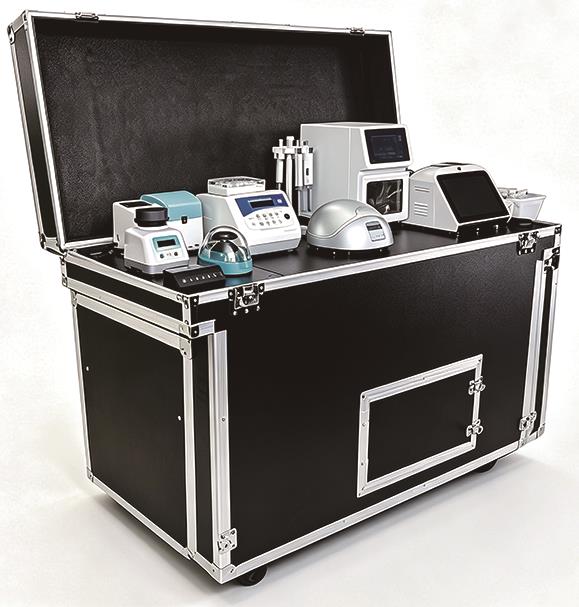
传统溺死案件硅藻检验方法存在周期冗长、现场适配性差、低硅藻水域检出困难及证据维度单一等局限。针对上述问题,本团队以硅藻、蓝藻、浮游细菌等溺死相关浮游微生物为检测靶标,构建了基于实时荧光定量PCR法(real-time quantitative PCR,qPCR)的浮游微生物DNA快速检测体系,并研发了车载式现场浮游微生物DNA检测工作站。依托“公安科研实战部门+企业”产学研协同模式推进成果转化,同时依据硅藻检验行业标准与qPCR设备性能评价相关标准完成系统性能验证。该体系可在1.5 h内完成现场检测,最低检出限达0.000 1 ng,设备关键参数优于行业标准,具备取材便捷、灵敏度高、特异性强、检测快速、操作简易等优势。成果不仅满足法医现场勘验与司法鉴定实际需求,还与经典形态学检验形成“分子生物学+形态学”互补证据链,为溺死快速辅助诊断提供了新路径,也为法庭科学领域的科技成果转化提供参考。

关键词: 法医学, 科技成果转化, 溺死, 浮游微生物, DNA检测, 实时荧光定量PCR

Abstract:

Conventional diatom-based assays for drowning diagnosis present multiple inherent limitations, including prolonged testing durations, poor adaptability to field examination, compromised detecta‑ bility in aquatic environments with low diatom abundance, and reliance on a single type of forensic evidence. To address the above limitations, our team selected drowning-relevant planktonic microorga‑ nisms, including diatoms, cyanobacteria, and planktonic bacteria, as molecular biomarkers and established a rapid planktonic microorganism DNA detection system based on real-time quantitative polymerase chain reaction (qPCR). Correspondingly, a vehicle-mounted field DNA detection workstation was developed to enable on-site testing. Technology transfer was facilitated through an integrated industry-academia-research collaborative model involving public security forensic research divisions and industrial enterprises. Meanwhile, system performance validation was implemented in accordance with industrial specifications for diatom identification and standardized evaluation criteria for qPCR instruments. The developed system enabled on-site detection to be completed within 1.5 h, with a limit of detection (LOD) of 0.000 1 ng. All core technical parameters of the instrument exceeded existing industrial standards, with the advantages of convenient sample collection, high sensitivity, strong specificity, rapid testing, and ease of operation. This system not only satisfies the practical demands of forensic scene investigations but also complements morphological analysis by establishing an integrated “molecular biology + morphology” evidence framework. Furthermore, it provides a new strategy for the rapid diagnosis of drowning and offers valuable insights into the technology transfer achievements within the field of forensic science.

Key words: forensic medicine, technology transfer, drowning, planktonic microorganisms, DNA detection, real-time quantitative PCR

中图分类号: