
Journal of Forensic Medicine ›› 2026, Vol. 42 ›› Issue (1): 8-16.DOI: 10.12116/j.issn.1004-5619.2024.241108
• Original Articles • Previous Articles Next Articles
Run-ting DOU1( ), Shun CHENG2(), Xin ZHOU2, Xing YE1, Zhi-min WANG1, Guang-hui HONG1, Qi ZHANG2, Qing XIA3(), Yi-wen SHEN1()
Received:2024-11-29
Online:2026-04-28
Published:2026-02-25
Contact:
Qing XIA, Yi-wen SHEN
CLC Number:
Run-ting DOU, Shun CHENG, Xin ZHOU, Xing YE, Zhi-min WANG, Guang-hui HONG, Qi ZHANG, Qing XIA, Yi-wen SHEN. Machine Learning Model Based on Structured Injury Features for Knee Mobility Discriminations after Traumatic Injury[J]. Journal of Forensic Medicine, 2026, 42(1): 8-16.
Add to citation manager EndNote|Ris|BibTeX
URL: http://www.fyxzz.cn/EN/10.12116/j.issn.1004-5619.2024.241108
| 特征名 | 数据类型 | 含义 |
|---|---|---|
| 年龄 | 连续 | 被鉴定人接受鉴定时的年龄,要求为成年人 |
| 摄片间隔天数 | 连续 | 被鉴定人首次摄片距离鉴定前最近一次摄片经过的时间,以月为单位 |
| 骨折类型 | 分类 | 线性骨折或粉碎性骨折 |
| 是否移位 | 分类 | 原发性损伤骨折断端是否移位 |
| 是否累及关节面 | 分类 | 骨折是否累及胫骨平台或髌股关节面 |
| 是否经手术治疗 | 分类 | 被鉴定人骨折后是否接受过手术治疗 |
| 骨折愈合情况 | 分类 | 分为正常愈合、轻度畸形愈合、严重畸形愈合 |
| 骨折部位 | 分类 | 骨折及所累及的骨性解剖结构 |
| 末次内置物 | 分类 | 末次摄片时内固定是否在位 |
Tab. 1 Features and their meanings
| 特征名 | 数据类型 | 含义 |
|---|---|---|
| 年龄 | 连续 | 被鉴定人接受鉴定时的年龄,要求为成年人 |
| 摄片间隔天数 | 连续 | 被鉴定人首次摄片距离鉴定前最近一次摄片经过的时间,以月为单位 |
| 骨折类型 | 分类 | 线性骨折或粉碎性骨折 |
| 是否移位 | 分类 | 原发性损伤骨折断端是否移位 |
| 是否累及关节面 | 分类 | 骨折是否累及胫骨平台或髌股关节面 |
| 是否经手术治疗 | 分类 | 被鉴定人骨折后是否接受过手术治疗 |
| 骨折愈合情况 | 分类 | 分为正常愈合、轻度畸形愈合、严重畸形愈合 |
| 骨折部位 | 分类 | 骨折及所累及的骨性解剖结构 |
| 末次内置物 | 分类 | 末次摄片时内固定是否在位 |
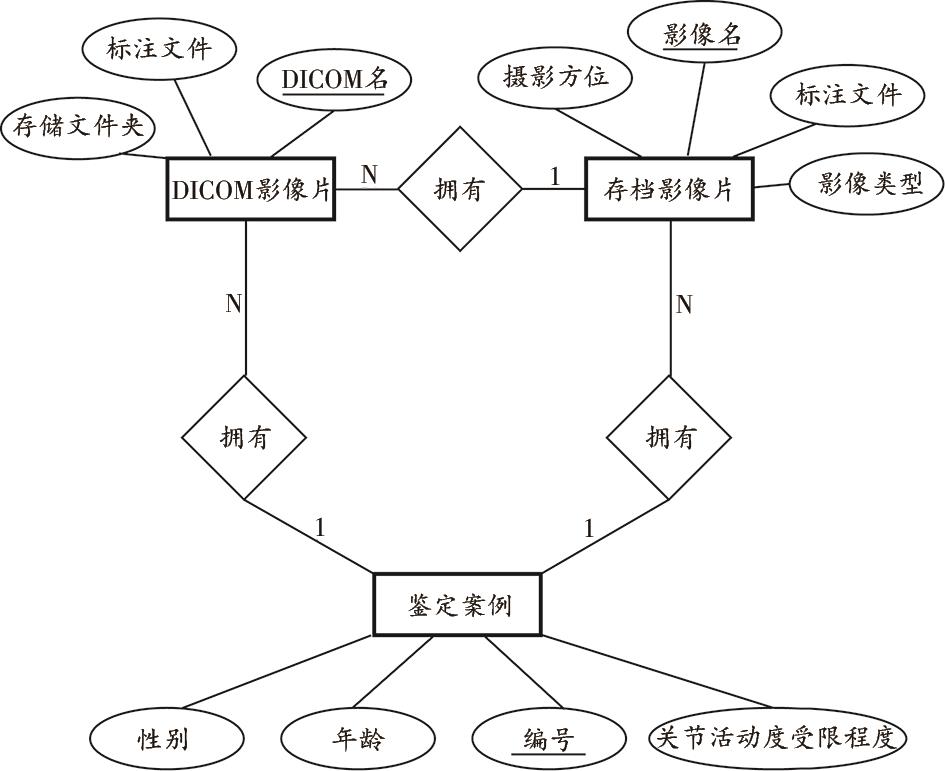
Fig. 1 Entity-relationship diagram of knee joint injury assessment data
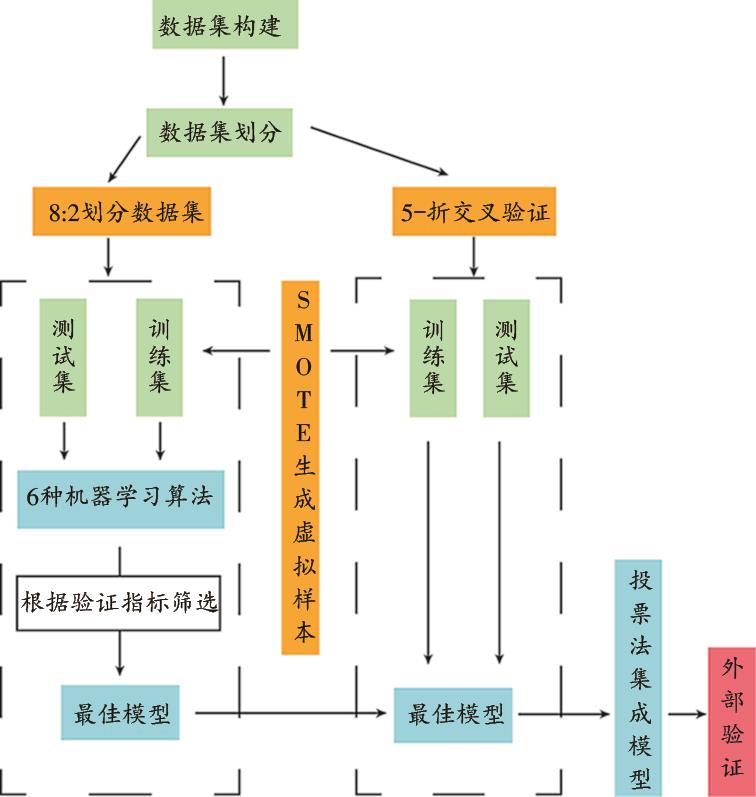
Fig. 2 Machine learning model training process

Fig. 3 ROC and AUC for models
| 模型 | 交叉验证 | AUC值 | 准确率 | 精确率 | 灵敏度 | 特异度 | 约登指数 | F1值 |
|---|---|---|---|---|---|---|---|---|
| SVC | 1 | 0.90 | 0.83 | 0.93 | 0.78 | 0.90 | 0.68 | 0.85 |
| 2 | 0.90 | 0.88 | 0.94 | 0.86 | 0.90 | 0.76 | 0.90 | |
| 3 | 0.90 | 0.86 | 0.93 | 0.84 | 0.90 | 0.74 | 0.88 | |
| 4 | 0.90 | 0.88 | 0.95 | 0.84 | 0.94 | 0.78 | 0.89 | |
| 5 | 0.87 | 0.83 | 0.91 | 0.80 | 0.87 | 0.67 | 0.85 | |
| RF | 1 | 0.88 | 0.83 | 0.93 | 0.78 | 0.90 | 0.68 | 0.85 |
| 2 | 0.89 | 0.83 | 0.91 | 0.80 | 0.87 | 0.67 | 0.85 | |
| 3 | 0.89 | 0.80 | 0.90 | 0.76 | 0.87 | 0.63 | 0.83 | |
| 4 | 0.92 | 0.85 | 0.93 | 0.82 | 0.90 | 0.72 | 0.87 | |
| 5 | 0.88 | 0.84 | 0.93 | 0.80 | 0.90 | 0.70 | 0.86 | |
| XGBoost | 1 | 0.88 | 0.83 | 0.89 | 0.82 | 0.83 | 0.66 | 0.86 |
| 2 | 0.91 | 0.86 | 0.90 | 0.88 | 0.83 | 0.72 | 0.89 | |
| 3 | 0.87 | 0.79 | 0.88 | 0.76 | 0.84 | 0.60 | 0.82 | |
| 4 | 0.92 | 0.85 | 0.90 | 0.86 | 0.84 | 0.70 | 0.88 | |
| 5 | 0.88 | 0.83 | 0.93 | 0.78 | 0.90 | 0.68 | 0.85 |
Tab. 2 SVC, RF and XGBoost 5-fold cross-validation verification indicators
| 模型 | 交叉验证 | AUC值 | 准确率 | 精确率 | 灵敏度 | 特异度 | 约登指数 | F1值 |
|---|---|---|---|---|---|---|---|---|
| SVC | 1 | 0.90 | 0.83 | 0.93 | 0.78 | 0.90 | 0.68 | 0.85 |
| 2 | 0.90 | 0.88 | 0.94 | 0.86 | 0.90 | 0.76 | 0.90 | |
| 3 | 0.90 | 0.86 | 0.93 | 0.84 | 0.90 | 0.74 | 0.88 | |
| 4 | 0.90 | 0.88 | 0.95 | 0.84 | 0.94 | 0.78 | 0.89 | |
| 5 | 0.87 | 0.83 | 0.91 | 0.80 | 0.87 | 0.67 | 0.85 | |
| RF | 1 | 0.88 | 0.83 | 0.93 | 0.78 | 0.90 | 0.68 | 0.85 |
| 2 | 0.89 | 0.83 | 0.91 | 0.80 | 0.87 | 0.67 | 0.85 | |
| 3 | 0.89 | 0.80 | 0.90 | 0.76 | 0.87 | 0.63 | 0.83 | |
| 4 | 0.92 | 0.85 | 0.93 | 0.82 | 0.90 | 0.72 | 0.87 | |
| 5 | 0.88 | 0.84 | 0.93 | 0.80 | 0.90 | 0.70 | 0.86 | |
| XGBoost | 1 | 0.88 | 0.83 | 0.89 | 0.82 | 0.83 | 0.66 | 0.86 |
| 2 | 0.91 | 0.86 | 0.90 | 0.88 | 0.83 | 0.72 | 0.89 | |
| 3 | 0.87 | 0.79 | 0.88 | 0.76 | 0.84 | 0.60 | 0.82 | |
| 4 | 0.92 | 0.85 | 0.90 | 0.86 | 0.84 | 0.70 | 0.88 | |
| 5 | 0.88 | 0.83 | 0.93 | 0.78 | 0.90 | 0.68 | 0.85 |
| 模型 | AUC值 | 准确率 | 精确率 | 灵敏度 | 特异度 |
|---|---|---|---|---|---|
| SVC | 0.89±0.01 | 0.85±0.02 | 0.93±0.01 | 0.83±0.03 | 0.90±0.02 |
| RF | 0.89±0.02 | 0.83±0.02 | 0.92±0.01 | 0.79±0.02 | 0.89±0.02 |
| XGBoost | 0.89±0.02 | 0.83±0.03 | 0.90±0.02 | 0.82±0.05 | 0.85±0.03 |
| 投票法集成模型 | 0.91±0.01 | 0.84±0.01 | 0.92±0.01 | 0.82±0.02 | 0.88±0.02 |
Tab. 3 5-Fold cross-validation metrics for SVC, RF, XGBoost, and the voting ensemble model
| 模型 | AUC值 | 准确率 | 精确率 | 灵敏度 | 特异度 |
|---|---|---|---|---|---|
| SVC | 0.89±0.01 | 0.85±0.02 | 0.93±0.01 | 0.83±0.03 | 0.90±0.02 |
| RF | 0.89±0.02 | 0.83±0.02 | 0.92±0.01 | 0.79±0.02 | 0.89±0.02 |
| XGBoost | 0.89±0.02 | 0.83±0.03 | 0.90±0.02 | 0.82±0.05 | 0.85±0.03 |
| 投票法集成模型 | 0.91±0.01 | 0.84±0.01 | 0.92±0.01 | 0.82±0.02 | 0.88±0.02 |
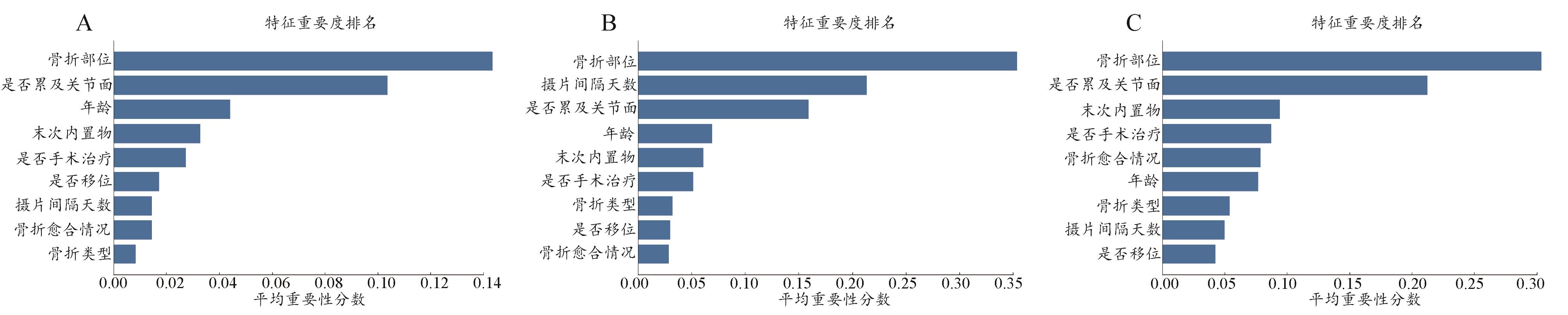
Fig. 4 The mean permutation importance of SVC,RF and XGBoost
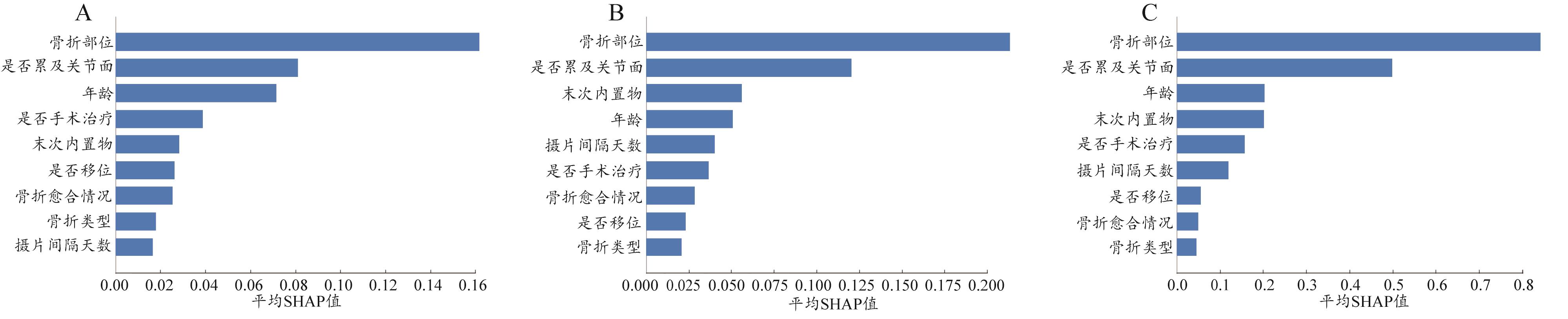
Fig. 5 The SHAP Bar Plots for SVC, RF and XGBoost with 5-fold Cross-validation
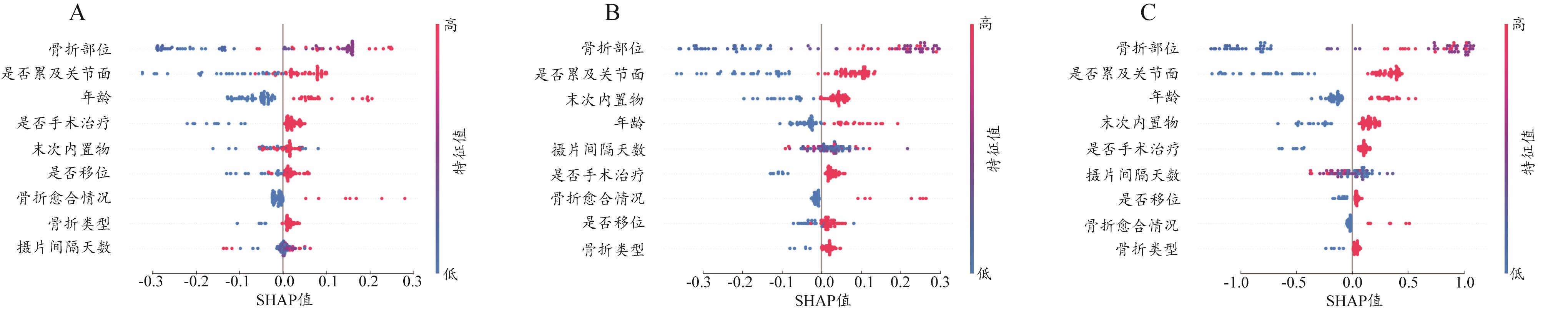
Fig. 6 The SHAP Scatter Plots for SVC, RF and XGBoost with 5-fold Cross-validation
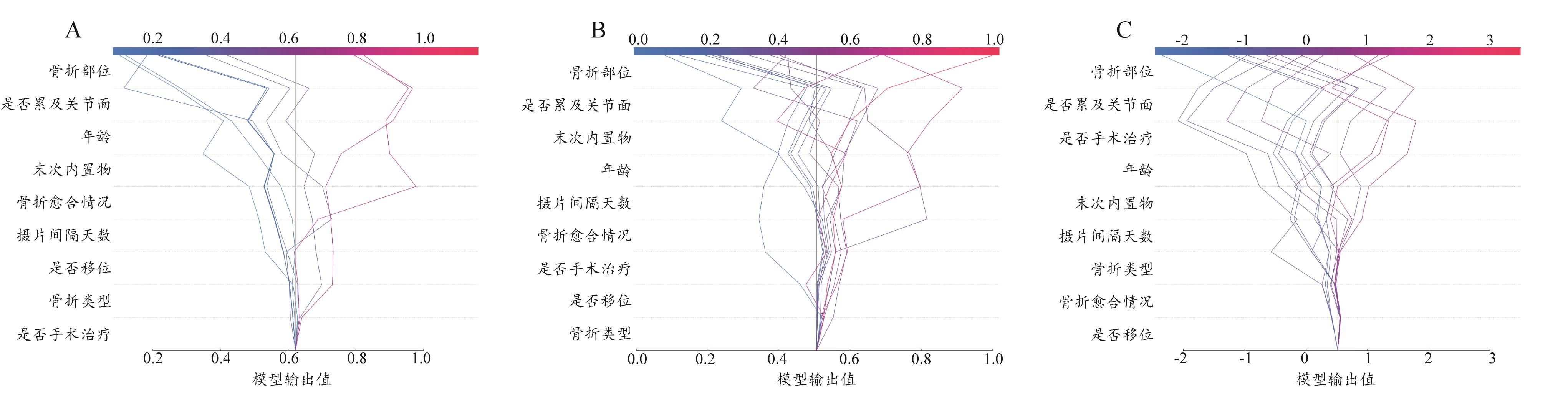
Fig. 7 The SHAP decision plots for misclassified samples from SVC, RF and XGBoost with 5-fold cross-validation
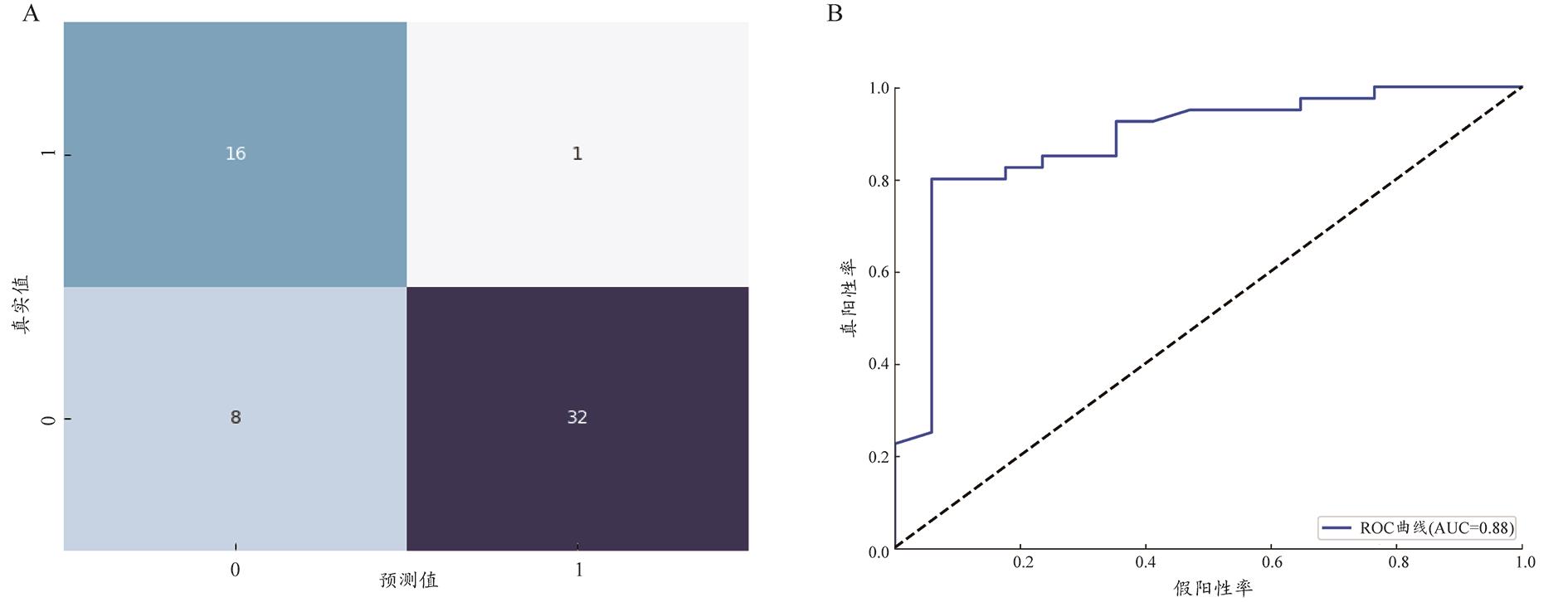
Fig. 8 External validation results of the voting ensemble model
| [1] | SIOURAS A, MOUSTAKIDIS S, GIANNAKIDIS A, et al. Knee injury detection using deep lear-ning on MRI studies: A systematic review[J]. Diagnostics(Basel),2022,12(2):537. doi:10.3390/diagnostics12020537 . |
| [2] | GANGAVALLI A K, NWACHUKU C O. Management of distal femur fractures in adults: An overview of options[J]. Orthop Clin North Am,2016,47(1):85-96. doi:10.1016/j.ocl.2015.08.011 . |
| [3] | KEIL L G, MULLIS B H, III P T, et al. Proximal tibia fracture dislocations: Management and outcomes of a severe and under-recognized injury[J]. Injury,2022,53(3):1260-1267. doi:10.1016/j.injury. 2021.09.035 . |
| [4] | HERZOG G A, SERRANO-RIERA R, SAGI H C. Traumatic proximal tibiofibular dislocation: A marker of severely traumatized extremities[J]. J Orthop Trauma,2015,29(10):456-459. doi:10.1097/BOT.0000000000000348 . |
| [5] | LOGERSTEDT D S, EBERT J R, MACLEOD T D, et al. Effects of and response to mechanical loading on the knee[J]. Sports Med,2022,52(2):201-235. doi:10.1007/s40279-021-01579-7 . |
| [6] | 王辉,李箭,邹宏,等. 膝关节骨软骨损伤评估及治疗方法[J].中国修复重建外科杂志,2019,33(11):1384-1388. |
| doi:10.7507/1002-1892.201903085.WANG H, LI J, ZOU H, et al. Evaluation and treatment of osteochondral injury of knee joint[J]. Zhongguo Xiufu Chongjian Waike Zazhi,2019,33(11):1384-1388. | |
| [7] | YIN Q D, WANG J B, GU S J, et al. Clinical observation of C3-type patellar fractures treated by operation methods with or without a turned-over patella[J]. Injury,2019,50(4):966-972. doi:10.1016/j.injury.2019.03.028 . |
| [8] | KAREKAR H J, AKHUJ A, RAMTEKE S U. Physical rehabilitation post-surgery in a distal femur fracture post removal of implant[J]. Cureus,2023,15(12):e51358. doi:10.7759/cureus.51358 . |
| [9] | DAMODARAN B D, SALIM S, VARGESE S M. Performance evaluation of MySQL and MongoDB databases[J]. Int J Cybern Inform,2016,5(2):387-394. doi:10.5121/ijci.2016.5241 . |
| [10] | 董纪英,燕志伟,梁正玉. SQLite、MySQL、PostgreSQL关系型数据库管理系统比较[J].电脑编程技巧与维护,2014(14):55-58. doi:10.3969/j.issn.1006-4052.2014.14.023.DONG J Y , |
| YAN Z W, LIANG Z Y. A comparison of relational database management systems: SQLite vs MySQL vs postgre SQL[J]. Diannao Biancheng Jiqiao Yu Weihu,2014(14):55--58. | |
| [11] | 方雅婷,兰琼,解通,等. 人工智能技术时代法医学科面临的新机遇与挑战[J].法医学杂志,2020,36(1):77-85. |
| doi:10.12116/j.issn.1004-5619.2020.01.016.FANG Y T, LAN Q, XIE T, et al. New opportunities and challenges for forensic medicine in the era of artificial intelligence technology[J]. Fayixue Zazhi,2020,36(1):77-85. | |
| [12] | 窦润庭,陈邵文,叶星,等. 基于ConSinGAN模型生成多样的膝关节畸形愈合虚拟图像[J].中国法医学杂志,2025,40(S1):7-12. |
| doi:10.13618/j.issn.1001-5728.2025.S.001.DOU R T, CHEN S W, YE X, et al. Synthesi-zing diverse virtual images of knee deformity hea-ling using the ConSinGAN model[J]. Zhongguo Fayixue Zazhi,2025,40(S1):7-12. | |
| [13] | TOURNOIS L, TROUSSET V, HATSCH D, et al. Artificial intelligence in the practice of forensic medicine: A scoping review[J]. Int J Legal Med,2024,138(3):1023-1037. doi:10.1007/s00414-023-03140-9 . |
| [14] | PATHIRANNAHALAGE I, VIDANAPATHIRANA M, SUBASHINGHE A. Artificial intelligence for forensic medicine[J]. Med-Leg J Sri Lank,2022,10(2):17. doi:10.4038/mljsl.v10i2.7469 . |
| [15] | MEENA T, ROY S. Bone fracture detection using deep supervised learning from radiological images: A paradigm shift[J]. Diagnostics,2022,12(10):2420. doi:10.3390/diagnostics12102420 . |
| [16] | XIE Y L, LI X M, CHEN F X, et al. Artificial intelligence diagnostic model for multi-site fracture X-ray images of extremities based on deep convolutional neural networks[J]. Quant Imaging Med Surg,2024,14(2):1930-1943. doi:10.21037/qims-23-878 . |
| [17] | 宰超,张玲莉,何方刚. 133 例膝关节损伤的法医学鉴定分析[J].法医学杂志,2020,36(5):688-690,698. |
| doi:10.12116/j.issn.1004-5619.2020.05.015.ZAI C, ZHANG L L, HE F G. Forensic analysis of 133 cases of knee injuries[J]. Fayixue Zazhi,2020,36(5):688-690,698. | |
| [18] | SENEL A, SERT S, AKTAS M A, et al. Patterns of orthopedic injuries associated with increa-sing e-scooter-related trauma: A retrospective observational study with a 4-year evaluation from a tertiary center in Istanbul, Turkey[J]. Medicine (Baltimore),2024,103(46):e40609. doi:10.1097/MD. 0000000000040609 . |
| [19] | WANG Q, LI K H, XU C Y, et al. Predicting two-year return-to-sport failure after medial patellofemoral ligament reconstruction in patellar dislocation patients with bone abnormalities[J]. J Orthop Surg Res,2024,19(1):766. doi:10.1186/s13018-024-05253-2 . |
| [20] | AHMAD T, MUHAMMAD Z A, ZEHRA F. Effect of patient factors and procedure on proximal tibia fracture recovery - A retrospective analysis[J]. Pak J Med Sci,2024,40(10):2281-2286. doi:10.12669/pjms.40.10.9154 . |
| [21] | KWAK Y H, KO Y J, KWON H, et al. Application of a machine learning and optimization method to predict patellofemoral instability risk factors in children and adolescents[J]. Knee Surg Sports Traumatol Arthrosc,2025,33(2):487-499. doi:10.1002/ksa.12372 . |
| [22] | SIDDIQUE S, HAQUE M A, GEORGE R, et al. Survey on machine learning biases and mitigation techniques[J]. Digital,2024,4(1):1-68. doi:10.3390/digital4010001 . |
| [23] | AN Q, RAHMAN S, ZHOU J, et al. A comprehensive review on machine learning in healthcare industry: Classification, restrictions, opportunities and challenges[J]. Sensors (Basel),2023,23(9):4178. doi:10.3390/s23094178 . |
| [24] | FORTIER L M, ADELSTEIN J M, SINKLER M A, et al. Patellar tendon restoration techniques: A systematic review of outcomes for repair and reconstruction methods[J]. Eur J Orthop Surg Traumatol,2024,34(8):3827-3845. doi:10.1007/s00590-024-04 078-3 . |
| [25] | AZIZ S, KHAN N, DINA T K, et al. Clinical and functional outcome of traumatic osteochondral fracture in adolescent patella[J]. J Pak Med Assoc,2024,74(8):1508-1510. doi:10.47391/JPMA.9782 . |
| [26] | ZHANG J Y, LAI S K, LI J Q, et al. Early postoperative rapid rehabilitation yields more fa-vorable short‒term outcomes in patients undergoing patellar realignment surgery for recurrent patellar dislocation: A prospective randomized controlled study[J]. Am J Sports Med,2024,52(9):2205-2214. doi:10.1177/03635465241254524 . |
| [27] | XUE A Y, QI J Z, XIE X, et al. Solving the data sparsity problem in destination prediction[J]. The VLDB J,2015,24:219-243. doi:10.1007/s00778-014-0369-7 . |
| [28] | OLADEJI L O, WORLEY J R, CRIST B D. Age-related variances in patients with tibial plateau fractures[J]. J Knee Surg,2020,33(6):611-615. doi:10.1055/s-0039-1683893 . |
| [29] | ALLEY M C, KAIN M, MITCHELL S, et al. Anterior hook plating of patella fractures: A biomechanical analysis and clinical series[J]. J Orthop Trauma,2023,37(6):e258-e263. doi:10.1097/BOT.0000000000002565 . |
| [30] | HESSMANN M H, BUHL M, FINKEMEIER C, et al. Suprapatellar nailing of fractures of the tibia[J]. Oper Orthop Traumatol,2020,32(5):440-454. doi:10.1007/s00064-020-00649-9 . |
| [1] | Xiangyan ZHANG, Fan YANG, Sheng HU, Qiong JIA, Hao NIE, Xingchun ZHAO, Yadong GUO. Construction of a Segmented PMI Estimation Model Integrating Intestinal Microbial Signatures and Machine Learning in Nude Mice [J]. Journal of Forensic Medicine, 2026, 42(2): 87-93. |
| [2] | Jinyuan ZHAO, Yujia XUAN, Anqi CHEN, Yanfang LU, Mengxiao LIAO, Sitong LIU, Yu XING, Yali WANG, Liqin CHEN, Chengtao LI. Effect of RNA Sequencing Normalization on Forensic Age Estimation [J]. Journal of Forensic Medicine, 2026, 42(2): 112-120. |
| [3] | Hou-ying ZOU, Yin-lei LEI, Ruo-cheng XIA, Yan SHI, Cheng-tao LI. Exploring Microbial Detection of Psychoactive Substances in Wastewater Based on Micobiome Analysis [J]. Journal of Forensic Medicine, 2025, 41(5): 468-476. |
| [4] | Zi-wen GUO, Tian-yu QIU, Yue CAO. Rapid Identification of Etomidate and Its Structural Analogues Based on Surface-Enhanced Raman Spectroscopy and Machine Learning [J]. Journal of Forensic Medicine, 2025, 41(4): 364-370. |
| [5] | Zhi-lu ZHOU, Dong-fei ZHANG, Jie-min CHEN, Ya-hui WANG, Hong-xia HAO, Tai-ang LIU, Yu-heng HE, Ding-nian LONG, Rui-jue LIU, Lei WAN. MRI Application in Quantification of Epiphyseal Development in the Wrist and Bone Age Estimation of Han Male Adolescents in East China [J]. Journal of Forensic Medicine, 2024, 40(6): 589-596. |
| [6] | Xuan WEI, Yu-shan CHEN, Jie DING, Chang-xing SONG, Jun-jing WANG, Zhao PENG, Zhen-hua DENG, Xu YI, Fei FAN. Age Estimation by Machine Learning and CT-Multiplanar Reformation of Cranial Sutures in Northern Chinese Han Adults [J]. Journal of Forensic Medicine, 2024, 40(2): 128-134. |
| [7] | Jia-xuan HAN, Shi-hui SHEN, Yi-wen WU, Xiao-dan SUN, Tian-nan CHEN, Jiang TAO. Adolescents and Children Age Estimation Using Machine Learning Based on Pulp and Tooth Volumes on CBCT Images [J]. Journal of Forensic Medicine, 2024, 40(2): 143-148. |
| [8] | Yu-xin GUO, Wen-qing BU, Yu TANG, Di WU, Hui YANG, Hao-tian MENG, Yu-cheng GUO. Dental Age Estimation in Northern Chinese Han Children and Adolescents Using Demirjian’s Method Combined with Machine Learning Algorithms [J]. Journal of Forensic Medicine, 2024, 40(2): 135-142. |
| [9] | Dan-yang LI, Yu PAN, Hui-ming ZHOU, Lei WAN, Cheng-tao LI, Mao-wen WANG, Ya-hui WANG. Application of Medical Statistical and Machine Learning Methods in the Age Estimation of Living Individuals [J]. Journal of Forensic Medicine, 2024, 40(2): 118-127. |
| [10] | Xing-yu MA, Hao CHENG, Zhong-duo ZHANG, Ye-ming LI, Dong ZHAO. Research Progress of Metabolomics Techniques Combined with Machine Learning Algorithm in Wound Age Estimation [J]. Journal of Forensic Medicine, 2023, 39(6): 596-600. |
| [11] | Yu-qi CAO, Yan SHI, Ping XIANG, Yin-long GUO. Research Progress on Machine Learning Assisted Non-Targeted Screening Strategy for Identification of Fentanyl Analogs [J]. Journal of Forensic Medicine, 2023, 39(4): 406-416. |
| [12] | Qing-qing XIANG, Li-fang CHEN, Qin SU, Yu-kun DU, Pei-yan LIANG, Xiao-dong KANG, He SHI, Qu-yi XU, Jian ZHAO, Chao LIU, Xiao-hui CHEN. Research Progress on Microbial Community Succession in the Postmortem Interval Estimation [J]. Journal of Forensic Medicine, 2023, 39(4): 399-405. |
| [13] | Hong-xia HAO, Ya-hui WANG, Zhi-lu ZHOU, Tai-ang LIU, Jin CHEN, Yu-heng HE, Lei WAN, Wen-tao XIA. Research Progress of Age Estimation in the Living by Knee Joint MRI [J]. Journal of Forensic Medicine, 2023, 39(1): 66-71. |
| [14] | FAN Fei, ZHAN Meng-jun, DAI Xin-hua , et al.. Research Progress of Adult Age Determination with Imaging Methods [J]. Journal of Forensic Medicine, 2020, 36(5): 605-613. |
| [15] | CHEN Shao-wen, CUI Dan-ni, XIA Qing,et al.. Application of Convolutional Neural Network in Identifying Different Levels of Isokinetic Exercise Efforts [J]. 法医学杂志, 2020, 36(2): 210-215. |
| Viewed | ||||||
|
Full text |
|
|||||
|
Abstract |
|
|||||
