
Journal of Forensic Medicine ›› 2025, Vol. 41 ›› Issue (5): 421-440.DOI: 10.12116/j.issn.1004-5619.2025.550704
Received:2025-07-31
Online:2026-01-27
Published:2025-10-25
CLC Number:
Add to citation manager EndNote|Ris|BibTeX
URL: http://www.fyxzz.cn/EN/10.12116/j.issn.1004-5619.2025.550704
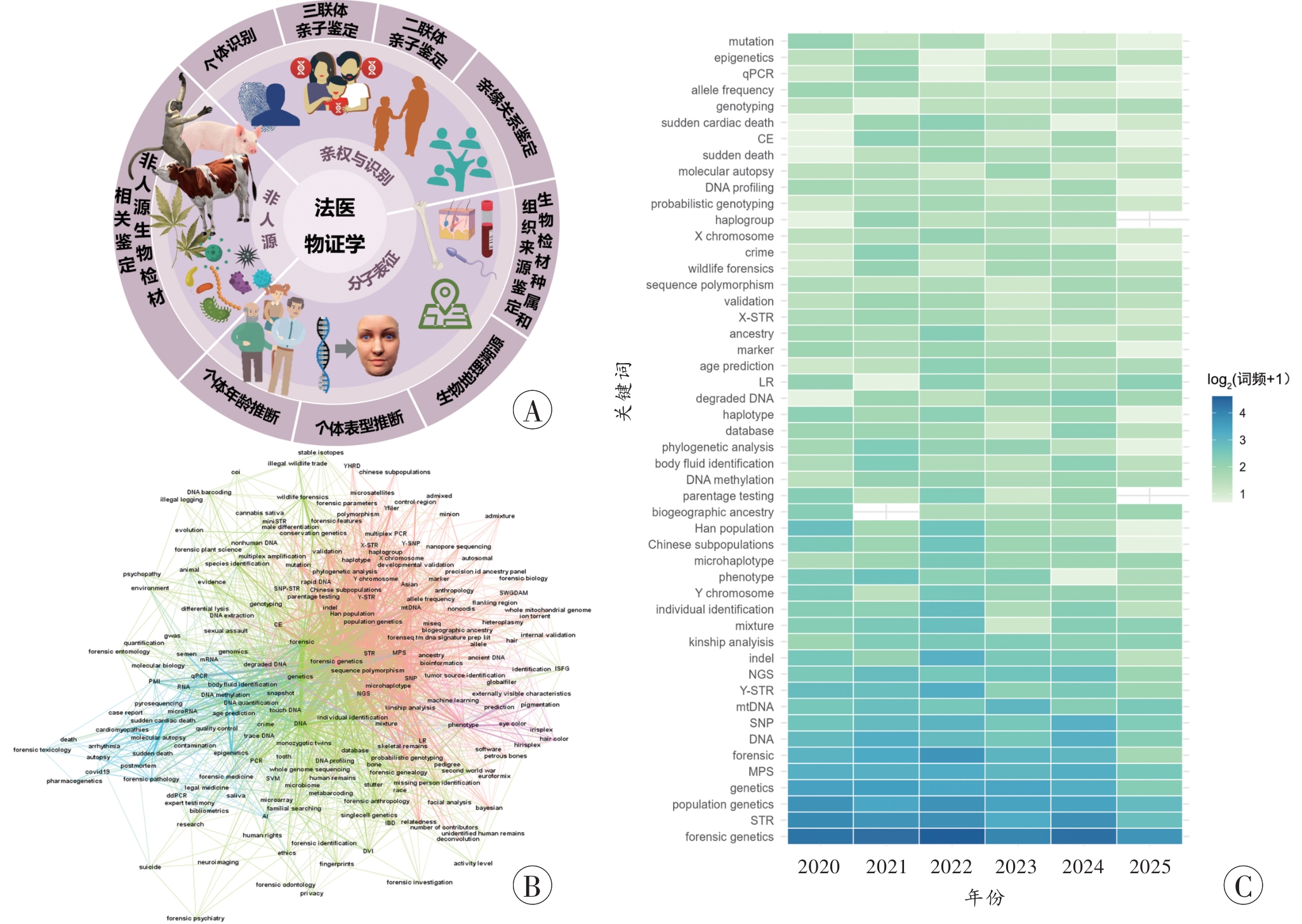
Fig. 1 Overview of publications in forensic genetics from the SCIE database (2020—2025)
| [1] | THANAKIATKRAI P, KITPIPIT T. Current STR-based techniques in forensic science[J]. Maejo Int J Sci Tech,2013,7(1):1-15. |
| [2] | PROCOPIO N, BONICELLI A. From flesh to bones: Multi-omics approaches in forensic science[J]. Proteomics,2024,24(12/13):2200335. doi:10.1002/pmic.202200335 . |
| [3] | 陈峰. DNA微单倍型的研究现状、挑战与展望[J].南京医科大学学报(自然科学版),2020,40(8):1081-1084. doi:10.7655/NYDXBNS20200801 . |
| CHEN F. Research progress,challenge and prospect of DNA microhaplotype[J]. Nanjing Yikedaxue Xuebao(Natural Science),2020,40(8):1081-1084. | |
| [4] | 王琳,董春楠,丛斌. 降解生物检材DNA分析研究新进展[J].中国法医学杂志,2021,36(2):184-187. doi:10.13618/j.issn.1001-5728.2021.02.015 . |
| WANG L, DONG C N, CONG B. New progress in DNA analysis of degradation biological samples[J]. Zhongguo Fayixue Zazhi,2021,36(2):184-187. | |
| [5] | 李淑瑾,豆书杰,丛斌. 我国非人源法医遗传学鉴识研究的成果、挑战与展望[J].中国法医学杂志,2022,37(3):217-222,231. doi:10.13618/j.issn.1001-5728.2022.03.001 . |
| LI S J, DOU S J, CONG B. The outcome, challenges, and prospect of non-human forensic genetics in China[J]. Zhongguo Fayixue Zazhi,2022,37(3):217-222,231. | |
| [6] | 李燃,孙宏钰. 法医学亲缘关系鉴定方法和研究热点[J].法医学杂志,2023,39(3):231-239. doi:10.12116/j.issn.1004-5619.2023.530208 . |
| LI R, SUN H Y. Methods and research hotspots of forensic kinship testing[J]. Fayixue Zazhi,2023,39(3):231-239. | |
| [7] | 孙启凡,李冉冉,胡胜,等. 应用分子生物学技术鉴定体液斑迹组织来源的研究进展[J].刑事技术,2018,43(1):47-52. doi:10.16467/j.1008-3650.2018.01.010 . |
| SUN Q F, LI R R, HU S, et al. Progress and prospect of identifying body fluid source by molecular biology approaches[J]. Xingshi jishu,2018,43(1):47-52. | |
| [8] | 孟昊天,兰琼,朱波峰. 人体表型特征的DNA分子鉴识—5年新进展[J].法医学杂志,2019,35(5):512-518,524. doi:10.12116/j.issn.1004-5619.2019.05.002 . |
| MENG H T, LAN Q, ZHU B F. DNA molecular identification of human phenotypic characteristics—New progress over the past five years[J]. Fayixue Zazhi,2019,35(5):512-518,524. | |
| [9] | 路艳芳,李成涛. 转录组分子在法医疑难检材鉴定的分子基础及其在年龄推断中的应用[J].中国法医学杂志,2025,40(1):90-95. doi:10.13618/j.issn.1001-5728.2025.01.016 . |
| LU Y F, LI C T. The molecular basis of transcriptome molecules in forensic identification of challenging samples and their application in age estimation[J]. Zhongguo Fayixue Zazhi,2025,40(1):90-95. | |
| [10] | HUANG Y M, WANG J, JIAO Z P, et al. Assessment of application value of 19 autosomal short tandem repeat loci of GoldenEyeTM 20A kit in forensic paternity testing[J]. Int J Leg Med,2013,127(3):587-590. doi:10.1007/s00414-013-0842-7 . |
| [11] | HE G L, WANG Z, WANG M G, et al. Genetic diversity and phylogenetic differentiation of Southwestern Chinese Han: A comprehensive and comparative analysis on 21 non-CODIS STRs[J]. Sci Rep,2017,7:13730. doi:10.1038/s41598-017-13190-w . |
| [12] | ZHANG Y D, TANG X L, MENG H T, et al. Genetic variability and phylogenetic analysis of Han population from Guanzhong Region of China based on 21 non-CODIS STR loci[J]. Sci Rep,2015,5:8872. doi:10.1038/srep08872 . |
| [13] | CHEN C, JIN X Y, ZHANG X R, et al. Comprehensive insights into forensic features and genetic background of Chinese Northwest Hui Group using six distinct categories of 231 molecular markers[J]. Front Genet,2021,12:705753. doi:10.3389/fgene.2021.70 5753 . |
| [14] | BALLANTYNE K N, RALF A, ABOUKHALID R, et al. Toward male individualization with rapidly mutating Y-chromosomal short tandem repeats[J]. Hum Mutat,2014,35(8):1021-1032. doi:10.1002/humu.22599 . |
| [15] | WANG F, SONG F, WANG X D, et al. Mutation analysis for newly suggested 30 Y-STR loci with high mutation rates in Chinese father-son pairs[J]. Sci Rep,2022,12(1):15680. doi:10.1038/s41598-022-20014-z . |
| [16] | KIDD K K. Proposed nomenclature for microhaplotypes[J]. Hum Genomics,2016,10(1):16. doi:10. 1186/s40246-016-0078-y . |
| [17] | JIN X Y, ZHANG X R, SHEN C M, et al. A highly polymorphic panel consisting of microhaplotypes and compound markers with the NGS and its forensic efficiency evaluations in Chinese two groups[J]. Genes(Basel),2020,11(9):1027. doi:10. 3390/genes11091027 . |
| [18] | TAO R Y, YANG Q, XIA R C, et al. A sequence-based 163plex microhaplotype assay for forensic DNA analysis[J]. Front Genet,2022,13:988223. doi:10.3389/fgene.2022.988223 . |
| [19] | LAN Q, CAI M, LEI F, et al. Systematically exploring the performance of a self-developed Multi-InDel system in forensic identification, ancestry inference and genetic structure analysis of Chinese Manchu and Mongolian groups[J]. Forensic Sci Int,2023,346:111637. doi:10.1016/j.forsciint.2023.111637 . |
| [20] | JIN X Y, ZHANG H L, REN Z, et al. Developmental validation of a rapidly mutating Y-STR panel labeled by six fluoresceins for forensic research[J]. Front Genet,2022,13:777440. doi:10. 3389/fgene.2022.777440 . |
| [21] | INOKUCHI S, NAKANISHI H, TAKADA A, et al. Uncertainty in the number of contributor estimation methods applied to a Y-STR profile[J]. Forensic Sci Int Genet,2025,74:103145. doi:10.1016/j.fsigen.2024.103145 . |
| [22] | OLDONI F, BADER D, FANTINATO C, et al. A sequence-based 74plex microhaplotype assay for analysis of forensic DNA mixtures[J]. Forensic Sci Int Genet,2020,49:102367. doi:10.1016/j.fsigen. 2020.102367 . |
| [23] | YU W S, FENG Y S, KANG K L, et al. Screening of highly discriminative microhaplotype markers for individual identification and mixture deconvolution in East Asian populations[J]. Forensic Sci Int Genet,2022,59:102720. doi:10.1016/j.fsigen.2022. 102720 . |
| [24] | OLDONI F, CASTELLA V, GROSJEAN F, et al. Sensitive DIP-STR markers for the analysis of unbalanced mixtures from “touch” DNA samples[J]. Forensic Sci Int Genet,2017,28:111-117. doi:10.1016/j.fsigen.2017.02.004 . |
| [25] | TAN Y, WANG L, WANG H, et al. An investigation of a set of DIP-STR markers to detect unbalanced DNA mixtures among the southwest Chinese Han population[J]. Forensic Sci Int Genet,2017,31:34-39. doi:10.1016/j.fsigen.2017.08.014 . |
| [26] | JIAN H, WANG L, LÜ M L, et al. A novel SNP-STR system based on a capillary electrophoresis platform[J]. Front Genet,2021,12:636821. doi:10.3389/fgene.2021.636821 . |
| [27] | LIU J D, HAO T, CHENG X J, et al. DIP-microhaplotypes: New markers for detection of unbalanced DNA mixtures[J]. Int J Leg Med,2021,135(1):13-21. doi:10.1007/s00414-020-02288-y . |
| [28] | LIU J D, LI W Y, WANG J Q, et al. A new set of DIP-SNP markers for detection of unbalanced and degraded DNA mixtures[J]. Electrophoresis,2019,40(14):1795-1804. doi:10.1002/elps.201900017 . |
| [29] | ZHANG R R, TAN Y, WANG L,et al. Set of 15 SNP-SNP markers for detection of unbalanced degraded DNA mixtures and noninvasive prenatal paternity testing[J]. Front Genet,2021,12:800598. doi:10.3389/fgene.2021.800598 . |
| [30] | LIU Z D, GAO Z, WANG J Q, et al. A method of identifying the blood contributor in mixture stains through detecting blood-specific mRNA polymorphism[J]. Electrophoresis,2020,41(15):1364-1373. doi:10.1002/elps.202000053 . |
| [31] | PERLIN M W, LEGLER M M, SPENCER C E, et al. Validating TrueAllele® DNA mixture interpretation[J]. J Forensic Sci,2011,56(6):1430-1447. doi:10.1111/j.1556-4029.2011.01859.x . |
| [32] | WARD D, HENRY J, TAYLOR D. Analysis of mixed DNA profiles from the RapidHITTM ID platform using probabilistic genotyping software STRmixTM [J]. Forensic Sci Int Genet,2022,58:102664. doi:10.1016/j.fsigen.2022.102664 . |
| [33] | MARCIANO M A, ADELMAN J D. PACE: Probabilistic Assessment for Contributor Estimation — A machine learning-based assessment of the number of contributors in DNA mixtures[J]. Forensic Sci Int Genet,2017,27:82-91. doi:10.1016/j.fsigen. 2016.11.006 . |
| [34] | BENSCHOP C C G, VAN DER LINDEN J, HOOGENBOOM J, et al. Automated estimation of the number of contributors in autosomal short tandem repeat profiles using a machine learning approach[J]. Forensic Sci Int Genet,2019,43:102150. doi:10.1016/j.fsigen.2019.102150 . |
| [35] | KRUIJVER M, KELLY H, CHENG K, et al. Estimating the number of contributors to a DNA profile using decision trees[J]. Forensic Sci Int Genet,2021,50:102407. doi:10.1016/j.fsigen.2020.102407 . |
| [36] | YANG J W, CHEN J, JI Q, et al. A highly polymorphic panel of 40-plex microhaplotypes for the Chinese Han population and its application in estimating the number of contributors in DNA mixtures[J]. Forensic Sci Int Genet,2022,56:102600. doi:10.1016/j.fsigen.2021.102600 . |
| [37] | WANG Y T, HOU T Y, ZHU Q, et al. A continuous model for interpreting microhaplotype profiles of forensic DNA mixtures[J]. Forensic Sci Int Genet,2025,78:103271. doi:10.1016/j.fsigen.2025.103271 . |
| [38] | 徐倩南,李成涛,刘希玲. 同卵双生子甄别研究进展[J].法医学杂志,2018,34(6):672-677. doi:10.12116/j.issn.1004-5619.2018.06.020 . |
| XU Q N, LI C T, LIU X L. Research progress on discrimination of monozygotic twins[J]. Fayixue Zazhi,2018,34(6):672-677. | |
| [39] | KRAWCZAK M, COOPER D N, FÄNDRICH F, et al. How to distinguish genetically between an alleged father and his monozygotic twin: A thought experiment[J]. Forensic Sci Int Genet,2012,6(5):e129-e130. doi:10.1016/j.fsigen.2011.11.003 . |
| [40] | LIU M H, XIA X, WANG Y L, et al. Current progress and future perspectives in personal identification of monozygotic twins in forensic medicine[J]. Forensic Sci Int Genet,2025,76:103231. doi:10.1016/j.fsigen.2025.103231 . |
| [41] | YUAN L J, CHEN X H, LIU Z Y, et al. Identification of the perpetrator among identical twins using next-generation sequencing technology: A case report[J]. Forensic Sci Int Genet,2020,44:102167. doi:10.1016/j.fsigen.2019.102167 . |
| [42] | WEBER-LEHMANN J, SCHILLING E, GRADL G, et al. Finding the needle in the haystack: Differentiating “identical” twins in paternity testing and forensics by ultra-deep next generation sequencing[J]. Forensic Sci Int Genet,2014,9:42-46. doi:10.1016/j.fsigen.2013.10.015 . |
| [43] | HWA H L, LIN C Y, YU Y J, et al. DNA identification of monozygotic twins[J]. Forensic Sci Int Genet,2024,69:102998. doi:10.1016/j.fsigen. 2023.102998 . |
| [44] | SUN W F, WANG Z W, WEN S B, et al. Technical strategy for monozygotic twin discrimination by single-nucleotide variants[J]. Int J Leg Med,2024,138(3):767-779. doi:10.1007/s00414-023-03 150-7 . |
| [45] | HOLLOX E J, ZUCCHERATO L W, TUCCI S. Genome structural variation in human evolution[J]. Trends Genet,2022,38(1):45-58. doi:10.1016/j.tig. 2021.06.015 . |
| [46] | PÖS O, RADVANSZKY J, BUGLYÓ G, et al. DNA copy number variation: Main characteristics, evolutionary significance, and pathological aspects[J]. Biomed J,2021,44(5):548-559. doi:10.1016/j.bj. 2021.02.003 . |
| [47] | BRUDER C E G, PIOTROWSKI A, GIJSBERS A A C J, et al. Phenotypically concordant and discordant monozygotic twins display different DNA copy-number-variation profiles[J]. Am J Hum Genet,2008,82(3):763-771. doi:10.1016/j.ajhg. 2007.12.011 . |
| [48] | ABDELLAOUI A, EHLI E A, HOTTENGA J J, et al. CNV concordance in 1,097 MZ twin pairs[J]. Twin Res Hum Genet,2015,18(1):1-12. doi:10.10 17/thg.2014.86 . |
| [49] | LIU X L, ZHAO Z M, XU Q N, et al. Genome-wide copy number variation analysis in monozygotic twins[J]. Forensic Sci Int Genet Suppl Ser,2017,6:e218-e220. doi:10.1016/j.fsigss.2017.09.075 . |
| [50] | CHEN L, WANG J Q, TAN L, et al. Highly accurate mtGenome haplotypes from long-read SMRT sequencing can distinguish between monozygotic twins[J]. Forensic Sci Int Genet,2020,47:102306. doi:10.1016/j.fsigen.2020.102306 . |
| [51] | LIU J, ZHANG S Y, WEN Y F, et al. Exploring rare differences in mitochondrial genome between MZ twins using Ion Torrent semiconductor sequencing[J]. Forensic Sci Int,2023,348:111708. doi:10.1016/j.forsciint.2023.111708 . |
| [52] | JONES M J, GOODMAN S J, KOBOR M S. DNA methylation and healthy human aging[J]. Aging Cell,2015,14(6):924-932. doi:10.1111/acel.12349 . |
| [53] | LAW P P, HOLLAND M L. DNA methylation at the crossroads of gene and environment interactions[J]. Essays Biochem,2019,63(6):717-726. doi:10.1042/EBC20190031 . |
| [54] | MOORE L D, LE T, FAN G P. DNA methylation and its basic function[J]. Neuropsychopharmacology,2013,38(1):23-38. doi:10.1038/npp.2012.112 . |
| [55] | KIM J Y, LEE H Y, LEE S Y, et al. DNA methylome profiling of blood to identify individuals in a pair of monozygotic twins[J]. Genes Genomics,2023,45(10):1273-1279. doi:10.1007/s13258-023-01396-4 . |
| [56] | DU Q Q, ZHU G J, FU G P, et al. A genome-wide scan of DNA methylation markers for distinguishing monozygotic twins[J]. Twin Res Hum Genet,2015,18(6):670-679. doi:10.1017/thg. 2015.73 . |
| [57] | MARQUETA-GRACIA J J, ÁLVAREZ-ÁLVAREZ M, BAETA M, et al. Differentially methylated CpG regions analyzed by PCR-high resolution melting for monozygotic twin pair discrimination[J]. Forensic Sci Int Genet,2018,37:e1-e5. doi:10.1016/j.fsigen.2018.08.013 . |
| [58] | VIDAKI A, DÍEZ LÓPEZ C, CARNERO-MONTORO E, et al. Epigenetic discrimination of identical twins from blood under the forensic scenario[J]. Forensic Sci Int Genet,2017,31:67-80.doi: 10.1016/j.fsigen.2017.07.014 . |
| [59] | XU J, FU G P, YAN L N, et al. LINE-1 DNA methylation: A potential forensic marker for discriminating monozygotic twins[J]. Forensic Sci Int Genet,2015,19:136-145. doi:10.1016/j.fsigen.2015. 07.014 . |
| [60] | VIDAKI A, KAYSER M. Recent progress, methods and perspectives in forensic epigenetics[J]. Forensic Sci Int Genet,2018,37:180-195. doi:10. 1016/j.fsigen.2018.08.008 . |
| [61] | FANG C, ZHAO J, LIU X, et al. MicroRNA profile analysis for discrimination of monozygotic twins using massively parallel sequencing and real-time PCR[J]. Forensic Sci Int Genet,2019,38:23-31. doi:10.1016/j.fsigen.2018.09.011 . |
| [62] | XIAO C, PAN C, LIU E L, et al. Differences of microRNA expression profiles between monozygotic twins’ blood samples[J]. Forensic Sci Int Genet,2019,41:152-158. doi:10.1016/j.fsigen.2019.05.003 . |
| [63] | WANG J Y, FU G P, WANG Q, et al. Differences of circular RNA expression profiles between monozygotic twins’ blood, with the forensic application in bloodstain and saliva[J]. Forensic Sci Int Genet,2024,69:103001. doi:10.1016/j.fsigen.2023.103001 . |
| [64] | EBERT T, TRAN N, SCHURGERS L, et al. Ageing — Oxidative stress, PTMs and disease[J]. Mol Aspects Med,2022,86:101099. doi:10.1016/j.mam.2022.101099 . |
| [65] | VADGAMA N, LAMONT D, HARDY J, et al. Distinct proteomic profiles in monozygotic twins discordant for ischaemic stroke[J]. Mol Cell Biochem,2019,456(1/2):157-165. doi:10.1007/s11010-019-03501-2 . |
| [66] | QIN Z H. Autophagy: Biology and Diseases[M]. Singapore: Springer Singapore,2019:237-259. |
| [67] | ZENG K, DU J, CHEN Y Z, et al. Metabolomics efficiently discriminates monozygotic twins in peripheral blood[J]. Int J Leg Med,2024,138(6):2249-2258. doi:10.1007/s00414-024-03269-1 . |
| [68] | BUJAK R, STRUCK-LEWICKA W, MARKUSZEWSKI M J, et al. Metabolomics for laboratory diagnostics[J]. J Pharm Biomed Anal,2015,113:108-120. doi:10. 1016/j.jpba.2014.12.017 . |
| [69] | TOKARZ J, HAID M, CECIL A, et al. Endocrinology meets metabolomics: Achievements, pitfalls, and challenges[J]. Trends Endocrinol Metab,2017,28(10):705-721. doi:10.1016/j.tem.2017.07.001 . |
| [70] | TURNBAUGH P J, LEY R E, HAMADY M, et al. The human microbiome project[J]. Nature,2007,449(7164):804-810. doi:10.1038/nature06244 . |
| [71] | SHARON I, QUIJADA N M, PASOLLI E, et al. The core human microbiome: Does it exist and how can we find it? A critical review of the concept[J]. Nutrients,2022,14(14):2872. doi:10.3390/nu14142872 . |
| [72] | FU G P, MA G J, DOU S J, et al. Feature selection with a genetic algorithm can help improve the distinguishing power of microbiota information in monozygotic twins’ identification[J]. Front Microbiol,2023,14:1210638. doi:10.3389/fmicb.2023. 1210638 . |
| [73] | DÍEZ LÓPEZ C, VIDAKI A, KAYSER M. Integrating the human microbiome in the forensic toolkit: Current bottlenecks and future solutions[J]. Forensic Sci Int Genet,2022,56:102627. doi:10.1016/j.fsigen.2021.102627 . |
| [74] | SCHNEIDER C, MÜLLER U, KILPER R, et al. Low copy number DNA profiling from isolated sperm using the aureka®-micromanipulation system[J]. Forensic Sci Int Genet,2012,6(4):461-465. doi:10.1016/j.fsigen.2011.10.001 . |
| [75] | BARTA J L, MONROE C, KEMP B M. Further evaluation of the efficacy of contamination removal from bone surfaces[J]. Forensic Sci Int,2013,231(1/2/3):340-348. doi:10.1016/j.forsciint.2013.06.004 . |
| [76] | MAMELI A, PIRAS G, DELOGU G. The successful recovery of low copy number and degraded DNA from bones exposed to seawater suitable for generating a DNA STR profile[J]. J Forensic Sci,2014,59(2):470-473. doi:10.1111/1556-4029.12323 . |
| [77] | SEO S B, GE J Y, KING J L, et al. Reduction of stutter ratios in short tandem repeat loci typing of low copy number DNA samples[J]. Forensic Sci Int Genet,2014,8(1):213-218. doi:10.1016/j.fsigen. 2013.10.004 . |
| [78] | BARBER A L, FORAN D R. The utility of whole genome amplification for typing compromised forensic samples[J]. J Forensic Sci,2006,51(6):1344-1349. doi:10.1111/j.1556-4029.2006.00262.x . |
| [79] | GIARDINA E, PIETRANGELI I, MARTONE C, et al. Whole genome amplification and real-time PCR in forensic casework[J]. BMC Genomics,2009,10:159. doi:10.1186/1471-2164-10-159 . |
| [80] | NAGY M, RASCON J, MASSENKEIL G, et al. Evaluation of whole-genome amplification of low-copy-number DNA in chimerism analysis after allogeneic stem cell transplantation using STR marker typing[J]. Electrophoresis,2006,27(15):3028-3037. doi:10.1002/elps.200500813 . |
| [81] | XU Q N, WANG Z W, KONG Q Q, et al. Evaluating the effects of whole genome amplification strategies for amplifying trace DNA using capillary electrophoresis and massive parallel sequencing[J]. Forensic Sci Int Genet,2022,56:102599. doi:10. 1016/j.fsigen.2021.102599 . |
| [82] | CHAITANYA L, RALF A, VAN OVEN M, et al. Simultaneous whole mitochondrial genome sequencing with short overlapping amplicons suitable for degraded DNA using the Ion Torrent Personal Genome Machine[J]. Hum Mutat,2015,36(12):1236-1247. doi:10.1002/humu.22905 . |
| [83] | LEE E Y, LEE H Y, OH S Y, et al. Massively parallel sequencing of the entire control region and targeted coding region SNPs of degraded mtDNA using a simplified library preparation method[J]. Forensic Sci Int Genet,2016,22:37-43. doi:10.1016/j.fsigen.2016.01.014 . |
| [84] | KARADAYı S, YıLMAZ İ, ÖZBEK T, et al. Transfer and persistence of microbiota markers from the human hand to the knife: A preliminary study[J]. J Forensic Leg Med,2024,107:102757. doi:10.1016/j.jflm.2024.102757 . |
| [85] | PROCOPIO N, LOVISOLO F, SGUAZZI G, et al. “Touch microbiome” as a potential tool for forensic investigation: A pilot study[J]. J Forensic Leg Med,2021,82:102223. doi:10.1016/j.jflm.2021. 102223 . |
| [86] | PHAN K, BARASH M, SPINDLER X, et al. Retrieving forensic information about the donor through bacterial profiling[J]. Int J Leg Med,2020,134(1):21-29. doi:10.1007/s00414-019-02069-2 . |
| [87] | BAI X, LI S J, CONG B, et al. Construction of two fluorescence-labeled non-combined DNA index system miniSTR multiplex systems to analyze degraded DNA samples in the Chinese Han population[J]. Electrophoresis,2010,31(17):2944-2948. doi:10.1002/elps.201000163 . |
| [88] | BOSE N, CARLBERG K, SENSABAUGH G, et al. Target capture enrichment of nuclear SNP markers for massively parallel sequencing of degraded and mixed samples[J]. Forensic Sci Int Genet,2018,34:186-196. doi:10.1016/j.fsigen.2018.01.010 . |
| [89] | SHIH S Y, BOSE N, GONÇALVES A B R, et al. Applications of probe capture enrichment next generation sequencing for whole mitochondrial genome and 426 nuclear SNPs for forensically challenging samples[J]. Genes(Basel),2018,9(1):49. doi:10.3390/genes9010049 . |
| [90] | WU L J, CHU X F, ZHENG J, et al. Targeted capture and sequencing of 1 245 SNPs for forensic applications[J]. Forensic Sci Int Genet,2019,42:227-234. doi:10.1016/j.fsigen.2019.07.006 . |
| [91] | MACIEJEWSKA A, JAKUBOWSKA J, PAWŁOWSKI R. Whole genome amplification of degraded and nondegraded DNA for forensic purposes[J]. Int J Leg Med,2013,127(2):309-319. doi:10.1007/s004 14-012-0764-9 . |
| [92] | TILLMAR A, SJÖLUND P, LUNDQVIST B, et al. Whole-genome sequencing of human remains to enable genealogy DNA database searches — A case report[J]. Forensic Sci Int Genet,2020,46:102233. doi:10.1016/j.fsigen.2020.102233 . |
| [93] | CHU F, MASON K E, ANEX D S, et al. Proteomic characterization of damaged single hairs recovered after an explosion for protein-based human identification[J]. J Proteome Res,2020,19(8):3088-3099. doi:10.1021/acs.jproteome.0c00102 . |
| [94] | WATAHIKI H, FUJII K, FUKAGAWA T, et al. Frequencies of D19S433 silent alleles in a Japanese population of 1 501 individuals and their effect on likelihood ratios calculated in kinship tests[J]. Leg Med(Tokyo),2022,54:102008. doi:10.1016/j.legalmed.2021.102008 . |
| [95] | WU H Y, WANG K J, ZHANG L, et al. Genetic and structural characterisation of 20 autosomal STR loci from the Henan Han population of Central China[J]. Ann Hum Biol,2022,49(1):80-86. doi:10.1080/03014460.2022.2030406 . |
| [96] | PERERA N, WIJITHALAL R, GALHENA G, et al. Linkage, recombination and mutation rate analyses of 16 X-chromosomal STR loci in Sri Lankan Sinhalese pedigrees[J]. Int J Leg Med,2022,136(2):415-422. doi:10.1007/s00414-021-02762-1 . |
| [97] | YANG M Q, JIN X Y, REN Z, et al. X-chromosomal STRs for genetic composition analysis of Guizhou Dong group and its phylogenetic relationships with other reference populations[J]. Ann Hum Biol,2021,48(7/8):621-626. doi:10.1080/030 14460.2021.2008001 . |
| [98] | SONG M Y, WANG Z F, LÜ Q, et al. Paternal genetic structure of the Qiang ethnic group in China revealed by high-resolution Y-chromosome STRs and SNPs[J]. Forensic Sci Int Genet,2022,61:102774. doi:10.1016/j.fsigen.2022.102774 . |
| [99] | JIN X Y, LIU Y F, CUI W, et al. Development a multiplex panel of AISNPs, multi-allelic InDels, microhaplotypes, and Y-SNP/InDel loci for multiple forensic purposes via the NGS[J]. ELECTROPHORESIS,2022,43(4):632-644. doi:10.1002/elps.202100253 . |
| [100] | GORDEN E M, GREYTAK E M, STURK-ANDREAGGI K, et al. Extended kinship analysis of historical remains using SNP capture[J]. Forensic Sci Int Genet,2022,57:102636. doi:10.1016/j.fsigen.2021.102636 . |
| [101] | CHU M C, MORIMOTO C, KAWAI C, et al. Effects of DNA degradation and genotype imputation on high-density SNP microarray in pairwise kinship analysis[J]. Leg Med(Tokyo),2023,60:102158. doi:10.1016/j.legalmed.2022.102158 . |
| [102] | WEN D, XING H, LIU Y, et al. The application of short and highly polymorphic microhaplotype loci in paternity testing and sibling testing of temperature-dependent degraded samples[J]. Front Genet,2022,13:983811. doi:10.3389/fgene.2022. 983811 . |
| [103] | FAN H L, XIE Q Q, WANG L X, et al. Microhaplotype and Y-SNP/STR (MY): A novel MPS-based system for genotype pattern recognition in two-person DNA mixtures[J]. Forensic Sci Int Genet,2022,59:102705. doi:10.1016/j.fsigen.2022. 102705 . |
| [104] | NAKAYASHIKI N, SHIMAMOTO K, TAKAMIYA M, et al. Investigation of SNP haplotypes in the H19 imprinted gene[J]. Forensic Sci Int Genet Suppl Ser,2009,2(1):540-541. doi:10.1016/j.fsigss. 2009.08.088 . |
| [105] | KARIM N, PLOTT T J, DURBIN-JOHNSON B P, et al. Elucidation of familial relationships using hair shaft proteomics[J]. Forensic Sci Int Genet,2021,54:102564. doi:10.1016/j.fsigen.2021.102564 . |
| [106] | KLING D, PHILLIPS C, KENNETT D, et al. Investigative genetic genealogy: Current methods, knowledge and practice[J]. Forensic Sci Int Genet,2021,52:102474. doi:10.1016/j.fsigen.2021.102474 . |
| [107] | PHILLIPS C. The Golden State Killer investigation and the nascent field of forensic genealogy[J]. Forensic Sci Int Genet,2018,36:186-188. doi:10.101 6/j.fsigen.2018.07.010 . |
| [108] | 刘京,郭志芳,魏以梁,等. 法医SNP系谱推断技术破获古汉墓被盗案1例[J].法医学杂志,2021,37(4):600-602. doi:10.12116/j.issn.1004-5619.2021.510106 . |
| LIU J, GUO Z F, WEI Y L, et al. Using forensic SNP genealogy inference to solve ancient Han tomb robbery: A case report[J]. Fayixue Zazhi,2021,37(4):600-602. | |
| [109] | 刘京,马咪,魏以梁,等. 法医SNP系谱推断技术助破14年久冷案[J].刑事技术,2021,46(6):652-656. doi:10.16467/j.1008-3650.2021.0028 . |
| LIU J, MA M, WEI Y L, et al. Forensic SNP genealogical inference helping ferret out a 14-year-long unsolved cold case[J]. Xingshi Jishu,2021,46(6):652-656. | |
| [110] | 刘京,何传锦,张科,等. 法医SNP系谱推断技术助破23年冷案1例[J].法医学杂志,2023,39(3):312-314. doi:10.12116/j.issn.1004-5619.2023.530103 . |
| LIU J, HE C J, ZHANG K, et al. Forensic SNP genealogy inference technology helps solve a 23-year cold case: A case report[J]. Fayixue Zazhi,2023,39(3):312-314. | |
| [111] | DOWDESWELL T L. Forensic genetic genealogy: A profile of cases solved[J]. Forensic Sci Int Genet,2022,58:102679. doi:10.1016/j.fsigen.2022.102679 . |
| [112] | TILLMAR A, FAGERHOLM SA, STAAF J, et al. Getting the conclusive lead with investigative genetic genealogy ‒ A successful case study of a 16 year old double murder in Sweden[J]. Forensic Sci Int Genet. 2021,53:102525. doi:10.1016/j.fsigen.2021.102525 . |
| [113] | TILLMAR A, STURK-ANDREAGGI K, DANIELS-HIGGINBOTHAM J, et al. The FORCE panel: An all-in-one SNP marker set for confirming investigative genetic genealogy leads and for general forensic applications[J]. Genes(Basel),2021,12(12):1968. doi:10.3390/genes12121968 . |
| [114] | SNEDECOR J, FENNELL T, STADICK S, et al. Fast and accurate kinship estimation using sparse SNPs in relatively large database searches[J]. Forensic Sci Int Genet,2022,61:102769. doi:10.1016/j.fsigen.2022.102769 . |
| [115] | ZENG K, ZHAO W, FANG Z, et al. Development and validation of a capture sequencing panel containing 9 000 SNPs for inferring distant relatives in East Asian populations[J]. Forensic Sci Int Genet,2026,81:103341. doi:10.1016/j.fsigen.2025.103341 . |
| [116] | SYNDERCOMBE COURT D. Forensic genealogy: Some serious concerns[J]. Forensic Sci Int Genet,2018,36:203-204. doi:10.1016/j.fsigen.2018.07.011 . |
| [117] | 刘志勇,乌日嘎,李燃,等. 法医遗传学研究和鉴定中的伦理问题[J].遗传,2021,43(10):994-1002. doi:10.16288/j.yczz.21-202 . |
| LIU Z Y, WU R G, LI R, et al. Ethical issues of the research and practice in forensic genetics[J]. Yichuan,2021,43(10):994-1002. | |
| [118] | FLANAGAN S P, JONES A G. The future of parentage analysis: From microsatellites to SNPs and beyond[J]. Mol Ecol,2019,28(3):544-567. doi:10.1111/mec.14988 . |
| [119] | GE J Y, CHAKRABORTY R, EISENBERG A, et al. Comparisons of familial DNA database searching strategies[J]. J Forensic Sci,2011,56(6):1448-1456. doi:10.1111/j.1556-4029.2011.01867.x . |
| [120] | MANICHAIKUL A, MYCHALECKYJ J C, RICH S S, et al. Robust relationship inference in genome-wide association studies[J]. Bioinformatics,2010,26(22):2867-2873. doi:10.1093/bioinformatics/btq559 . |
| [121] | KLING D, TILLMAR A. Forensic genealogy — A comparison of methods to infer distant relationships based on dense SNP data[J]. Forensic Sci Int Genet,2019,42:113-124. doi:10.1016/j.fsigen.2019.06.019 . |
| [122] | RAMSTETTER M D, DYER T D, LEHMAN D M, et al. Benchmarking relatedness inference methods with genome-wide data from thousands of relatives[J]. Genetics,2017,207(1):75-82. doi:10.1534/genetics. 117.1122 . |
| [123] | TURNER S D, NAGRAJ V P, SCHOLZ M, et al. Evaluating the impact of dropout and genotyping error on SNP-based kinship analysis with forensic samples[J]. Front Genet,2022,13:882268. doi:10.3389/fgene.2022.882268 . |
| [124] | CHOI A, SHIN K J, YANG W I, et al. Body fluid identification by integrated analysis of DNA methylation and body fluid-specific microbial DNA[J]. Int J Leg Med,2014,128(1):33-41. doi:10.1007/s00414-013-0918-4 . |
| [125] | HAAS C, NEUBAUER J, SALZMANN A P, et al. Forensic transcriptome analysis using massively parallel sequencing[J]. Forensic Sci Int Genet,2021,52:102486. doi:10.1016/j.fsigen.2021.102486 . |
| [126] | LAATSCH C N, DURBIN-JOHNSON B P, ROCKE D M, et al. Human hair shaft proteomic profiling: Individual differences, site specificity and cuticle analysis[J]. PeerJ,2014,2:e506. doi:10.7717/peerj.506 . |
| [127] | MADI T, BALAMURUGAN K, BOMBARDI R, et al. The determination of tissue-specific DNA methylation patterns in forensic biofluids using bisulfite modification and pyrosequencing[J]. Electrophoresis,2012,33(12):1736-1745. doi:10.1002/elps. 201100711 . |
| [128] | SILVA D S B S, ANTUNES J, BALAMURUGAN K, et al. Developmental validation studies of epigenetic DNA methylation markers for the detection of blood, semen and saliva samples[J]. Forensic Sci Int Genet,2016,23:55-63. doi:10.1016/j.fsigen. 2016.01.017 . |
| [129] | LIU Z D, WANG J Q, LI Z Q, et al. mRNA for body fluid and individual identification[J]. Electrophoresis,2025,46(1/2):44-55. doi:10.1002/elps. 202400077 . |
| [130] | LIANG J B, XIE F M, FENG J, et al. Progress in the application of body fluid and tissue level mRNAs-non-coding RNAs for the early diagnosis and prognostic evaluation of systemic lupus erythematosus[J]. Front Immunol,2022,13:1020891. doi:10.3389/fimmu.2022.1020891 . |
| [131] | GLYNN C L. Potential applications of microRNA profiling to forensic investigations[J]. RNA,2020,26(1):1-9. doi:10.1261/rna.072173.119 . |
| [132] | ZUBAKOV D, BOERSMA A W M, CHOI Y, et al. MicroRNA markers for forensic body fluid identification obtained from microarray screening and quantitative RT-PCR confirmation[J]. Int J Leg Med,2010,124(3):217-226. doi:10.1007/s00414-009-04 02-3 . |
| [133] | DØRUM G, INGOLD S, HANSON E, et al. Predicting the origin of stains from whole miRNome massively parallel sequencing data[J]. Forensic Sci Int Genet,2019,40:131-139. doi:10.1016/j.fsigen. 2019.02.015 . |
| [134] | FUJIMOTO S, MANABE S, MORIMOTO C, et al. Distinct spectrum of microRNA expression in forensically relevant body fluids and probabilistic discriminant approach[J]. Sci Rep,2019,9(1):14332. doi:10.1038/s41598-019-50796-8 . |
| [135] | LOKK K, MODHUKUR V, RAJASHEKAR B, et al. DNA methylome profiling of human tissues identifies global and tissue-specific methylation patterns[J]. Genome Biol,2014,15(4):3248. doi:10.1186/gb-2014-15-4-r54 . |
| [136] | PARK J L, KWON O H, KIM J H, et al. Identification of body fluid-specific DNA methylation markers for use in forensic science[J]. Forensic Sci Int Genet,2014,13:147-153. doi:10.1016/j.fsigen. 2014.07.011 . |
| [137] | SIJEN T. Molecular approaches for forensic cell type identification: On mRNA, miRNA, DNA methylation and microbial markers[J]. Forensic Sci Int Genet,2015,18:21-32. doi:10.1016/j.fsigen.2014.11.015 . |
| [138] | LI Z, LI J, LI Y, et al. Development of a multiplex methylation-sensitive restriction enzyme-based SNP typing system for deconvolution of semen-containing mixtures[J]. Int J Legal Med,2021,135(4):1281-1294. doi:10.1007/s00414-021-02552-9 . |
| [139] | NAKANISHI H, OHMORI T, HARA M, et al. A simple identification method of saliva by detecting Streptococcus salivarius using loop-mediated isothermal amplification[J]. J Forensic Sci,2011,56(S1):158-161. doi:10.1111/j.1556-4029.2010.01579.x . |
| [140] | OHTA J, SAKURADA K. Oral gram-positive bacterial DNA-based identification of saliva from highly degraded samples[J]. Forensic Sci Int Genet,2019,42:103-112. doi:10.1016/j.fsigen.2019.06.016 . |
| [141] | SU K, ZHENG L, XIA Y, et al. Specific microbial biomarkers for distinguishing saliva from vaginal secretions: Integration of 16S rRNA sequencing and real-time quantitative PCR[J]. Forensic Sci Int. 2025,377:112648. doi:10.1016/j.forsciint.2025.112648 . |
| [142] | ZOU K N, REN L J, PING Y, et al. Identification of vaginal fluid, saliva, and feces using microbial signatures in a Han Chinese population[J]. J Forensic Leg Med,2016,43:126-131. doi:10.1016/j.jflm.2016.08.003 . |
| [143] | ALTMÄE S, FRANASIAK J M, MÄNDAR R. The seminal microbiome in health and disease[J]. Nat Rev Urol,2019,16(12):703-721. doi:10.1038/s41585-019-0250-y . |
| [144] | YAO T, HAN X L, GUAN T S, et al. Effect of indoor environmental exposure on seminal microbiota and its application in body fluid identification[J]. Forensic Sci Int,2020,314:110417. doi:10.1016/j.forsciint.2020.110417 . |
| [145] | QUAAK F C A, DE GRAAF M M, WETERINGS R, et al. Microbial population analysis improves the evidential value of faecal traces in forensic investigations[J]. Int J Leg Med,2017,131(1):45-51. doi:10.1007/s00414-016-1390-8 . |
| [146] | QUAAK F C A, VAN DE WAL Y, MAASKANT-VAN WIJK P A, et al. Combining human STR and microbial population profiling: Two case reports[J]. Forensic Sci Int Genet,2018,37:196-199. doi:10.1016/j.fsigen.2018.08.018 . |
| [147] | SMYTHE P, WILKINSON H N. The skin microbiome: Current landscape and future opportunities[J]. Int J Mol Sci,2023,24(4):3950. doi:10.3390/ijms 24043950 . |
| [148] | YAO T, HAN X L, GUAN T S, et al. Exploration of the microbiome community for saliva, skin, and a mixture of both from a population living in Guangdong[J]. Int J Leg Med,2021,135(1):53-62. doi:10.1007/s00414-020-02329-6 . |
| [149] | SCHNEIDER T D, ROSCHITZKI B, GROSSMANN J, et al. Determination of the time since deposition of blood traces utilizing a liquid chromatography-mass spectrometry-based proteomics approach[J]. Anal Chem,2022,94(30):10695-10704. doi:10.1021/acs.analchem.2c01009 . |
| [150] | IGOH A, DOI Y, SAKURADA K. Identification and evaluation of potential forensic marker proteins in vaginal fluid by liquid chromatography/mass spectrometry[J]. Anal Bioanal Chem,2015,407(23):7135-7144. doi:10.1007/s00216-015-8877-x . |
| [151] | MCKIERNAN H E, BROWN C O, ARANTES L C, et al. NextGen serology: Leveraging mass spectrometry for protein-based human body fluid identification[M]// MERKLEY E D. Applications in Forensic Proteomics: Protein Identification and Profiling. Washington, DC: American Chemical Society,2019: 47-80. |
| [152] | CAMPANELLA B, LEGNAIOLI S, ONOR M, et al. The role of the preanalytical step for human saliva analysis via vibrational spectroscopy[J]. Metabolites,2023,13(3):393. doi:10.3390/metabo13030393 . |
| [153] | SHARMA S, CHOPHI R, SINGH R. Forensic discrimination of menstrual blood and peripheral blood using attenuated total reflectance (ATR)-Fourier transform infrared (FT-IR) spectroscopy and chemometrics[J]. Int J Legal Med,2020,134(1):63-77. doi:10.1007/s00414-019-02134-w . |
| [154] | SHARMA S, SINGH R. Detection of vaginal fluid stains on common substrates via ATR FT-IR spectroscopy[J]. Int J Legal Med,2020,134(5):1591-1602. doi:10.1007/s00414-020-02333-w . |
| [155] | MCLAUGHLIN G, LEDNEV I K. In situ identification of semen stains on common substrates via Raman spectroscopy[J]. J Forensic Sci,2015,60(3):595-604. doi:10.1111/1556-4029.12708 . |
| [156] | SIKIRZHYTSKAYA A, SIKIRZHYTSKI V, LEDNEV I K. Raman spectroscopy coupled with advanced statistics for differentiating menstrual and peripheral blood[J]. J Biophotonics,2014,7(1/2):59-67. doi:10.1002/jbio.201200191 . |
| [157] | CHEN P, ZHU W, TONG F, et al. Identifying novel microhaplotypes for ancestry inference[J]. Int J Legal Med. 2019,133(4):983‒988. doi:10.1007/s00414-018-1881-x . |
| [158] | FONDEVILA M, PHILLIPS C, SANTOS C, et al. Forensic performance of two insertion-deletion marker assays[J]. Int J Leg Med,2012,126(5):725-737. doi:10.1007/s00414-012-0721-7 . |
| [159] | KIDD J R, FRIEDLAENDER F R, SPEED W C, et al. Analyses of a set of 128 ancestry informative single-nucleotide polymorphisms in a global set of 119 population samples[J]. Investig Genet,2011,2(1):1. doi:10.1186/2041-2223-2-1 . |
| [160] | KIDD K K, SPEED W C, PAKSTIS A J, et al. Progress toward an efficient panel of SNPs for ancestry inference[J]. Forensic Sci Int Genet,2014,10:23-32. doi:10.1016/j.fsigen.2014.01.002 . |
| [161] | CAO Y Y, ZHU Q, HUANG Y G, et al. An efficient ancestry informative SNPs panel for further discriminating East Asian populations[J]. Electrophoresis,2022,43(16/17):1774-1783. doi:10.1002/elps. 202100349 . |
| [162] | ZHU Q, CAO Y Y, ZHANG S, et al. A targeted ancestry informative InDels panel on capillary electrophoresis for ancestry inference in Asian populations[J]. Electrophoresis,2021,42(16):1605-1613. doi:10.1002/elps.202100016 . |
| [163] | CAI M, LEI F, CHEN M, et al. Systematic analyses of AISNPs screening and classification algorithms based on genome-wide data for forensic biogeographic ancestry inference[J]. Forensic Sci Int,2024,357:111975. doi:10.1016/j.forsciint.2024. 111975 . |
| [164] | ZOU X, HE G L, LIU J, et al. Screening and selection of 21 novel microhaplotype markers for ancestry inference in ten Chinese subpopulations[J]. Forensic Sci Int Genet,2022,58:102687. doi:10. 1016/j.fsigen.2022.102687 . |
| [165] | BECKER J, BÖHME P, RECKERT A, et al. Evidence for differences in DNA methylation between Germans and Japanese[J]. Int J Legal Med,2022,136(2):405-413. doi:10.1007/s00414-021-02736-3 . |
| [166] | SHABALALA S, GHAI M, OKPEKU M. Analysis of Y-STR diversity and DNA methylation variation among Black and Indian males from KwaZulu-Natal, South Africa[J]. Forensic Sci Int,2023,348:111682. doi:10.1016/j.forsciint.2023.111682 . |
| [167] | 丰蕾,江丽,李姗飞,等. 基于毛干蛋白质组的族群推断技术的建立与验证[J].生物化学与生物物理进展,2019,46(1):81-88. doi:10.16476/j.pibb.2018.0179 . |
| FENG L, JIANG L, LI S F, et al. Development and validation of protein-based forensic ancestry inference method using hair shaft proteome[J]. Shengwuhuaxue Yu Shengwuwuli Jinzhan,2019,46(1):81-88. | |
| [168] | WHITE D, RABAGO-SMITH M. Genotype-phenotype associations and human eye color[J]. J Hum Genet,2011,56(1):5-7. doi:10.1038/jhg.2010.126 . |
| [169] | WALSH S, LIU F, BALLANTYNE K N, et al. IrisPlex: A sensitive DNA tool for accurate prediction of blue and brown eye colour in the absence of ancestry information[J]. Forensic Sci Int Genet,2011,5(3):170-180. doi:10.1016/j.fsigen.2010.02.004 . |
| [170] | SIMCOE M, VALDES A, LIU F, et al. Genome-wide association study in almost 195,000 indivi duals identifies 50 previously unidentified genetic loci for eye color[J]. Sci Adv,2021,7(11):eabd1239. doi:10.1126/sciadv.abd1239 . |
| [171] | WALSH S, LIU F, WOLLSTEIN A, et al. The HIrisPlex system for simultaneous prediction of hair and eye colour from DNA[J]. Forensic Sci Int Genet,2013,7(1):98-115. doi:10.1016/j.fsigen.2012. 07.005 . |
| [172] | CHAITANYA L, BRESLIN K, ZUÑIGA S, et al. The HIrisPlex-S system for eye, hair and skin colour prediction from DNA: Introduction and forensic developmental validation[J]. Forensic Sci Int Genet,2018,35:123-135. doi:10.1016/j.fsigen.2018.04.004 . |
| [173] | ATWOOD L, RAYMOND J, SEARS A, et al. From identification to intelligence: An assessment of the suitability of forensic DNA phenotyping service providers for use in Australian law enforcement casework[J]. Front Genet,2021,11:568701. doi:10.3389/fgene.2020.568701 . |
| [174] | ZUPANIČ PAJNIČ I. Identification of a Slovenian prewar elite couple killed in the Second World War[J]. Forensic Sci Int,2021,327:110994. doi:10.1016/j.forsciint.2021.110994 . |
| [175] | KAISER J. Growth spurt for height genetics[J]. Science,2020,370(6517):645. doi:10.1126/science. 370.6517.645 . |
| [176] | ROTWEIN P. Revisiting the population genetics of human height[J]. J Endocr Soc,2020,4(4):bvaa025. doi:10.1210/jendso/bvaa025 . |
| [177] | LIU F, ZHONG K Y, JING X X, et al. Update on the predictability of tall stature from DNA markers in Europeans[J]. Forensic Sci Int Genet,2019,42:8-13. doi:10.1016/j.fsigen.2019.05.006 . |
| [178] | FRAYLING T M, TIMPSON N J, WEEDON M N, et al. A common variant in the FTO gene is associated with body mass index and predisposes to childhood and adult obesity[J]. Science,2007,316(5826):889-894. doi:10.1126/science.1141634 . |
| [179] | LIVINGSTON E H. Reimagining obesity in 2018: A JAMA theme issue on obesity[J]. JAMA,2018,319(3):238-240. doi:10.1001/jama.2017.21779 . |
| [180] | CHOI E K, PARK H B, LEE K H, et al. Body mass index and 20 specific cancers: Re-analyses of dose-response meta-analyses of observational studies[J]. Ann Oncol,2018,29(3):749-757. doi:10. 1093/annonc/mdx819 . |
| [181] | LOOS R J. The genetics of adiposity[J]. Curr Opin Genet Dev,2018,50:86-95. doi:10.1016/j.gde.2018. 02.009 . |
| [182] | DO W L, SUN D J Y, MEEKS K, et al. Epigenome-wide meta-analysis of BMI in nine cohorts: Examining the utility of epigenetically predicted BMI[J]. Am J Hum Genet,2023,110(2):273-283. doi:10.1016/j.ajhg.2022.12.014 . |
| [183] | LIU D J, ALHAZMI N, MATTHEWS H, et al. Impact of low-frequency coding variants on human facial shape[J]. Sci Rep,2021,11(1):748. doi:10. 1038/s41598-020-80661-y . |
| [184] | NAQVI S, SLEYP Y, HOSKENS H, et al. Shared heritability of human face and brain shape[J]. Nat Genet,2021,53(6):830-839. doi:10.1038/s415 88-021-00827-w . |
| [185] | CHEN Y, HYSI P, MAJ C, et al. Genetic prediction of male pattern baldness based on large independent datasets[J]. Eur J Hum Genet,2023,31(3):321-328. doi:10.1038/s41431-022-01201-y . |
| [186] | ZHANG M, WU S, DU S, et al. Genetic variants underlying differences in facial morphology in East Asian and European populations[J]. Nat Genet,2022,54(4):403-411. doi:10.1038/s41588-022-010 38-7 . |
| [187] | WANG Q, JIN B, LIU F, et al. DNA-based eyelid trait prediction in Chinese Han population[J]. Int J Legal Med,2021,135(5):1743-1752. doi:10. 1007/s00414-021-02570-7 . |
| [188] | SRETTABUNJONG S, SATITSRI S, THONGNOP- PAKHUN W, et al. The study on telomere length for age estimation in a Thai population[J]. Am J Forensic Med Pathol,2014,35(2):148-153. doi:10.1097/PAF.0000000000000095 . |
| [189] | SLIJEPCEVIC P. DNA damage response, telomere maintenance and ageing in light of the integrative model[J]. Mech Ageing Dev,2008,129(1/2):11-16. doi:10.1016/j.mad.2007.10.012 . |
| [190] | RAJKUMARI S, NIRMAL M, SUNIL P M, et al. Estimation of age using aspartic acid racemisation in human dentin in Indian population[J]. Forensic Sci Int,2013,228(1/2/3):38-41. doi:10.1016/j.forsciint.2013.02.021 . |
| [191] | MARCANTE B, MARINO L, CATTANEO N E, et al. Advancing forensic human chronological age estimation: Biochemical, genetic, and epigenetic approaches from the last 15 years: A systematic review[J]. Int J Mol Sci,2025,26(7):3158. doi:10. 3390/ijms26073158 . |
| [192] | DENG X D, GAO Q, ZHANG W, et al. The age-related expression decline of ERCC1 and XPF for forensic age estimation: A preliminary study[J]. J Forensic Leg Med,2017,49:15-19. doi:10.1016/j.jflm.2017.05.005 . |
| [193] | ZUBAKOV D, LIU F, KOKMEIJER I, et al. Human age estimation from blood using mRNA, DNA methylation, DNA rearrangement, and telomere length[J]. Forensic Sci Int Genet,2016,24:33-43. doi:10.1016/j.fsigen.2016.05.014 . |
| [194] | FANG C, LIU X, ZHAO J, et al. Age estimation using bloodstain miRNAs based on massive parallel sequencing and machine learning: A pilot study[J]. Forensic Sci Int Genet,2020,47:102300. doi:10.1016/j.fsigen.2020.102300 . |
| [195] | WANG J Y, WANG C Y, WEI Y Y, et al. Circular RNA as a potential biomarker for forensic age prediction[J]. Front Genet,2022,13:825443. doi:10.3389/fgene.2022.825443 . |
| [196] | CORREIA DIAS H, CORDEIRO C, CORTE REAL F, et al. Age estimation based on DNA methylation using blood samples from deceased individuals[J]. J Forensic Sci,2020,65(2):465-470. doi:10.1111/1556-4029.14185 . |
| [197] | CORREIA DIAS H, CUNHA E, CORTE REAL F, et al. Age prediction in living: Forensic epigenetic age estimation based on blood samples[J]. Leg Med(Tokyo),2020,47:101763. doi:10.1016/j.legalmed.2020.101763 . |
| [198] | CUI H Y, XIN Y, CAO F Q, et al. The correlation between CpG island methylation of hTERT promoter and human age prediction[J]. Leg Med(Tokyo),2023,63:102270. doi:10.1016/j.legalmed. 2023.102270 . |
| [199] | OGATA A, KONDO M, YOSHIKAWA M, et al. Dental age estimation based on DNA methylation using real-time methylation-specific PCR[J]. Forensic Sci Int,2022,340:111445. doi:10.1016/j.forsciint.2022.111445 . |
| [200] | YANG F L, QIAN J L, QU H Z, et al. DNA methylation-based age prediction with bloodstains using pyrosequencing and random forest regression[J]. ELECTROPHORESIS,2023,44(9/10):835-844. doi:10.1002/elps.202200250 . |
| [201] | VIDAKI A, BALLARD D, ALIFERI A, et al. DNA methylation-based forensic age prediction using artificial neural networks and next generation sequencing[J]. Forensic Sci Int Genet,2017,28:225-236. doi:10.1016/j.fsigen.2017.02.009 . |
| [202] | FOKIAS K, DIERCKX L, VAN DE VOORDE W, et al. Age determination through DNA methylation patterns in fingernails and toenails[J]. Forensic Sci Int Genet,2023,64:102846. doi:10.1016/j.fsigen.2023.102846 . |
| [203] | MÁRQUEZ-RUIZ A B, GONZÁLEZ-HERRERA L, DE DIOS LUNA J, et al. DNA methylation levels and telomere length in human teeth: Usefulness for age estimation[J]. Int J Leg Med,2020,134(2):451-459. doi:10.1007/s00414-019-02242-7 . |
| [204] | SO M H, LEE H Y. Genetic analyzer-dependent DNA methylation detection and its application to exis-ting age prediction models[J]. ELECTROPHORESIS,2021,42(14/15):1497-1506. doi:10.1002/elps.20200 0312 . |
| [205] | SO M H, LEE J E, LEE H Y. Strategies to deal with genetic analyzer-specific DNA methylation measurements[J]. ELECTROPHORESIS,2024,45(9/10):906-915. doi:10.1002/elps.202300185 . |
| [206] | SALIGNON J, FARIDANI O R, MILIOTIS T, et al. Age prediction from human blood plasma using proteomic and small RNA data: A comparative analysis[J]. Aging(Albany NY),2023,15(12):5240-5265. doi:10.18632/aging.204787 . |
| [207] | YUEN Z W, SHANMUGANANDAM S, STANLEY M, et al. Profiling age and body fluid DNA methylation markers using nanopore adaptive sampling[J]. Forensic Sci Int Genet,2024,71:103048. doi:10.1016/j.fsigen.2024.103048 . |
| [208] | SHI L, JIANG F, OUYANG F X, et al. DNA methylation markers in combination with skeletal and dental ages to improve age estimation in children[J]. Forensic Sci Int Genet,2018,33:1-9. doi:10.1016/j.fsigen.2017.11.005 . |
| [209] | PAN C, YI S H, XIAO C, et al. The evaluation of seven age-related CpGs for forensic purpose in blood from Chinese Han population[J]. Forensic Sci Int Genet,2020,46:102251. doi:10.1016/j.fsigen.2020.102251 . |
| [210] | SPÓLNICKA M, POŚPIECH E, PEPŁOŃSKA B, et al. DNA methylation in ELOVL2 and C1orf132 correctly predicted chronological age of individuals from three disease groups[J]. Int J Leg Med,2018,132(1):1-11. doi:10.1007/s00414-017-1636-0 . |
| [211] | 贾松华,王洪,魏杰,等. 用于实验用猫群体遗传分析的微卫星位点筛选[J].中国比较医学杂志,2018,28(12):55-60,97. doi:10.3969/j.issn.1671-7856.2018.12.010 . |
| JIA S H, WANG H, WEI J, et al. Selection of microsatellite loci for genetic analysis of experimental cat populations[J]. Zhongguo Bijiaoyixue Zazhi,2018,28(12):55-60,97. | |
| [212] | FANG Y T, YANG J L, DENG Y J, et al. Forensic application evaluation of a novel canine STR system in Pembroke Welsh corgi and Shiba Inu groups[J]. BioMed Res Int,2021,2021:5355109. doi:10.1155/2021/5355109 . |
| [213] | WANG M L, JIN X Y, XIONG X, et al. Polymorphism analyses of 19 STRs in Labrador Retriever population from China and its heterozygosity comparisons with other retriever breeds[J]. Mol Biol Rep,2019,46(2):1577-1584. doi:10.1007/s110 33-019-04601-4 . |
| [214] | SHANG S, JIANG R, LUO R, et al. Development of a 19-plex short tandem repeat typing system for individual identification and parentage testing of horses (Equus caballus)[J]. Anim Genet,2021,52(5):754-758. doi:10.1111/age.13119 . |
| [215] | 熊磊,夏若成,陶瑞旸,等. 牛的13个STR基因座复合扩增体系的构建及法医学验证[J].中国法医学杂志,2022,37(2):128-134,142. doi:10.13618/j.issn.1001-5728.2022.02.004 . |
| XIONG L, XIA R C, TAO R Y, et al. A multiplex amplification system containing 13 cattle STRs: Construction and validation[J]. Zhongguo Fayixue Zazhi,2022,37(2):128-134,142. | |
| [216] | KITPIPIT T, THONGJUED K, PENCHART K, et al. Mini-SNaPshot multiplex assays authenticate elephant ivory and simultaneously identify the species origin[J]. Forensic Sci Int Genet,2017,27:106-115. doi:10.1016/j.fsigen.2016.12.007 . |
| [217] | MAGLIOLO M, PROST S, OROZCO-TERWENGEL P, et al. Unlocking the potential of a validated single nucleotide polymorphism array for genomic monitoring of trade in cheetahs (Acinonyx jubatus)[J]. Mol Biol Rep,2021,48(1):171-181. doi:10.1007/s11033-020-06030-0 . |
| [218] | GUPTA S K, BHAGAVATULA J, THANGARAJ K, et al. Establishing the identity of the massacred tigress in a case of wildlife crime[J]. Forensic Sci Int Genet,2011,5(1):74-75. doi:10.1016/j.fsigen.2010.05.004 . |
| [219] | MAZDAI L, FABBRI M, TIRRI M, et al. Epigenetic studies for evaluation of NPS toxicity: Focus on synthetic cannabinoids and cathinones[J]. Biomedicines,2022,10(6):1398. doi:10.3390/biomedicines10061398 . |
| [220] | OLIVEIRA M, AZEVEDO L, BALLARD D, et al. Using plants in forensics: State-of-the-art and prospects[J]. Plant Sci,2023,336:111860. doi:10. 1016/j.plantsci.2023.111860 . |
| [221] | 李辉,夏攀,王创,等. 植物类物证DNA遗传标记鉴定系统的建立[J].法医学杂志,2018,34(2):138-141. doi:10.3969/j.issn.1004-5619.2018.02.006 . |
| LI H, XIA P, WANG C, et al. Establishment of DNA genetic marker identification system for plant evidence[J]. Fayixue Zazhi,2018,34(2):138-141. | |
| [222] | LIU Y L, XU C, DONG W P, et al. Determination of a criminal suspect using environmental plant DNA metabarcoding technology[J]. Forensic Sci Int,2021,324:110828. doi:10.1016/j.forsciint. 2021.110828 . |
| [223] | ZHANG J, WANG M C, QI X Q, et al. Predicting the postmortem interval of burial cadavers based on microbial community succession[J]. Forensic Sci Int Genet,2021,52:102488. doi:10.1016/j.fsigen.2021.102488 . |
| [224] | SCHMEDES S E, SAJANTILA A, BUDOWLE B. Expansion of microbial forensics[J]. J Clin Microbiol,2016,54(8):1964-1974. doi:10.1128/JCM.0 0046-16 . |
| [225] | HUANG L H, XU C Q, YANG W X, et al. A machine learning framework to determine geolocations from metagenomic profiling[J]. Biol Direct,2020,15(1):27. doi:10.1186/s13062-020-00278-z . |
| [226] | 刘超,丛斌. 水中尸体溺死诊断的回顾与展望[J].法医学杂志,2022,38(1):3-13. doi:10.12116/j.issn.10 04-5619.2021.410625 . |
| LIU C, CONG B. Review and prospect of diagnosis of drowning deaths in water[J]. Fayixue Zazhi,2022,38(1):3-13. |
| [1] | Yan GAO, Fang CHEN, Wen-tao XIA, Xiao-ping YANG, Ze-yu WANG, Ze-ren YANG, Xia LIU, Yan-liang SHENG. Research Progress of Chirp ABR and Its Application in Forensic Auditory Identification [J]. Journal of Forensic Medicine, 2025, 41(4): 387-393. |
| [2] | Yi-ming TIAN, Yi-bo YAN, Di WEN, Yan SHI. Research Progress on the Application of Novel Functional Materials for Rapid Detection of New Psychoactive Substances [J]. Journal of Forensic Medicine, 2025, 41(4): 314-325. |
| [3] | Jing CHEN, Ya-ping WANG, Yun-peng FENG, Xiao-xin HU, Zhen-jun JIA, Hong-di LIU, An-xin YAN, Yong-jiu LI, Zhu PENG, Zhi-fang LIU, Jian-gang CHEN. Validation and Forensic Application of a Domestic Human DNA Quantitative Detection Kit [J]. Journal of Forensic Medicine, 2025, 41(3): 252-259. |
| [4] | Ze-qin LI, Fang YUAN, Na LIU, Jiang-wei YAN, Geng-qian ZHANG. Dental Floss-derived Biological Sample Collection, DNA Extraction and STR Typing [J]. Journal of Forensic Medicine, 2025, 41(3): 237-243. |
| [5] | Hui-ming ZHOU, Dan-yang LI, Lei WAN, Tai-ang LIU, Yuan-zhe LI, Mao-wen WANG, Ya-hui WANG. Dual-Channel Shoulder Joint X-ray Bone Age Estimation in Chinese Han Adolescents Based on the Fusion of Segmentation Labels and Original Images [J]. Journal of Forensic Medicine, 2025, 41(3): 208-216. |
| [6] | Bao-yan XIE, Ruo-cheng XIA, Ting-ting JIANG, Rui-yang TAO, Cheng-tao LI. Bibliometric and Visual Analysis of Forensic Research on Body Fluid Identification [J]. Journal of Forensic Medicine, 2025, 41(3): 217-227. |
| [7] | Yi-fan BAI, He-miao ZHAO, Jing CHEN, Hong-di LIU, Rui-qin YANG, Chong WANG. Application of Forensic Transcriptomics in the Identification of Tissue Origin of Body Fluid Stains [J]. Journal of Forensic Medicine, 2025, 41(3): 260-266. |
| [8] | Qi LIAO, Yong-hong LIU, Ying JIAO, Xiao-ying YANG, Yi-hua YANG, Cui-mei LIU, Rui-xia GAO. Development of Benchtop Low‑Field Nuclear Magnetic Resonance Technology and Its Application in Drug Control Field [J]. Journal of Forensic Medicine, 2025, 41(3): 267-276. |
| [9] | Xi HE, Zhen TANG, Ming-ying XIA, Yi-qi ZHAO, Yu-ran LUO, Shi-lin LI. Analysis of Genetic Structure among Different Populations Based on 13 Auto-somal STR Loci in CODIS Core [J]. Journal of Forensic Medicine, 2025, 41(3): 228-236. |
| [10] | Xuan-long CHEN, Qiang YUAN, Yong SUN, Die ZHANG, Jian-bin FU, Li-liang LI. Forensic Research Progress on Bongkrekic Acid Poisoning [J]. Journal of Forensic Medicine, 2025, 41(2): 111-119. |
| [11] | Shuai ZHANG, Hong-fei XU, Zhi-xiang ZHANG, Ying WANG, Shao-hua ZHU. Research on Doxorubicin-Induced Cardiotoxicity Mechanism and Its Forensic Application [J]. Journal of Forensic Medicine, 2025, 41(2): 120-126. |
| [12] | Yu-meng ZUO, Wei HAN, Jian-bo ZHANG, Tao LI. Molecular Mechanisms and Toxic Effects of Ketamine [J]. Journal of Forensic Medicine, 2025, 41(2): 127-135. |
| [13] | Zhuo LI, Yi-ru ZENG, Zhi-long SHU, Xue-hong SUN, Kui ZHANG. Research Status of Caenorhabditis elegans Model in Toxicology and Its Applications in Forensic Science [J]. Journal of Forensic Medicine, 2025, 41(2): 136-143. |
| [14] | Gao-fang SHEN, Yong-song ZHOU, Jian-qiu ZHANG, Shi-you JI, Ying-feng WU, Hao SHANG, Bo-feng ZHU. Establishment and Application of TaqMan qPCR Detection Method for Human DNA Contamination in DNA Laboratory [J]. Journal of Forensic Medicine, 2025, 41(1): 66-73. |
| [15] | Dan-yang LI, Hui-ming ZHOU, Lei WAN, Tai-ang LIU, Yuan-zhe LI, Mao-wen WANG, Ya-hui WANG. Bone Age Estimation of Chinese Han Adolescents’s and Children’s Elbow Joint X-rays Based on Multiple Deep Convolutional Neural Network Models [J]. Journal of Forensic Medicine, 2025, 41(1): 48-58. |
| Viewed | ||||||
|
Full text |
|
|||||
|
Abstract |
|
|||||
